Physical Address
304 North Cardinal St.
Dorchester Center, MA 02124
Physical Address
304 North Cardinal St.
Dorchester Center, MA 02124

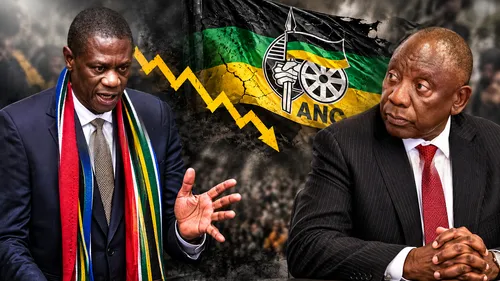
The African National Congress has just recorded its worst electoral performance since the end of apartheid. With 99% of results captured from Wednesday’s municipal elections, the ANC sits at 30.81% nationally, a staggering collapse for a party that once defined South African democracy. That number is not just a statistic. It is a verdict.
Twenty years ago, the ANC won nearly two out of every three municipal votes. Now it cannot claim even one in three. The drop from 45.6% in 2021 to 30.81% today represents almost 15 percentage points lost in a single electoral cycle, and the party enters Sunday’s final results declaration without an outright majority in a single metro.
So what actually happened? The short answer is that years of broken promises, corruption and service delivery failures finally caught up with a party that many South Africans, especially in cities, no longer believe in. The longer answer is more complicated, and it matters enormously for the continent’s most industrialised economy.
The metro numbers are brutal. In Johannesburg, the ANC has collapsed to 20.27%, down from 58.56% in 2011. In Tshwane it holds 20.22%, compared with 55.32% fourteen years ago. Ekurhuleni stands at 22.11%. The sharpest single drop came in eThekwini, where the ANC fell by 25.6 points since 2021 alone, crashing from 61.07% in 2011 to just 16.46% today. Buffalo City, in the Eastern Cape birthplace of Nelson Mandela and Oliver Tambo, is the only metro where the ANC still holds above 40%, at 41.93%.
Political analyst Louw Nel of Oxford Economics Africa described angry voters as leaving the ANC “harvesting the fruits of years of maladministration, corruption, and gross indifference to the plight of long-suffering South Africans.” He warned that if coalition talks fail, the positions of the party’s top seven leaders could become “untenable,” potentially triggering calls for President Cyril Ramaphosa to step down a year ahead of schedule.
Inside the party, the mood is raw. One unnamed ANC insider said plainly: “The reality is that the current leadership, myself included, is the worst that the ANC has had.” A party veteran went further, arguing the ANC was “paying a high price for arrogance, incompetence, dishonesty, aloofness and corruption.” These are not outsiders talking. These are people who built their lives inside the movement.
Former minister Nkosazana Dlamini-Zuma, a senior figure on the ANC’s national executive committee, called on the leadership to own the result. “First, we need to look at ourselves, and see where we went wrong, and correct,” she told IOL. ANC secretary-general Fikile Mbalula promised the party would “be humble” and go back to fix its branches, its governance and its connection to ordinary people. His words carried weight precisely because he also admitted that service delivery failures made it nearly impossible to campaign, with ANC volunteers confronting furious residents over water, electricity and basic infrastructure.
Professor Ntsikelelo Breakfast of Nelson Mandela University offered a structural explanation for why the ANC has not collapsed entirely. Rural areas remain a stronghold, partly because traditional leaders, who maintain close ties with government through bodies like the Congress of Traditional Leaders of South Africa, continue to influence how communities vote. “Political power comes from two spaces,” Breakfast said, pointing to the widening gap between rural retention and urban collapse. That gap is what keeps the ANC alive, for now.
Political analyst Dale McKinley pushed back against talk of the ANC’s death, noting that the party remains the single largest in the country. “There’s a very big difference between a party gradually losing support and being on its deathbed,” he said. But he did not soften the diagnosis either. “It’s haemorrhaging, and it has been for quite some time,” McKinley added, noting that the sharpest losses are concentrated in metros, which are home to growing shares of the population.
The ANC now controls only 53 of the country’s 213 councils outright. Nationally, 135 councils are hung, up from 66 in 2021 and just 27 in 2016. That explosion in hung councils means coalition negotiations will define the next chapter of South African local governance. The DA sits at 24.6% nationally and the MK Party at 9.72%, with ActionSA and the IFP also pulling voters away from the ANC across multiple regions.
Dr Oscar van Heerden argued the ANC would not enter those talks from a position of weakness. “I don’t think there will be any begging bowl,” he said, suggesting the party would project strength and remain open to deals with a range of partners. But insiders are divided. One warned that a coalition with the DA in municipalities would “further spell the death” of the ANC, arguing the Government of National Unity had already normalised the DA among African communities and alienated the party’s base. Another, from the Karoo, said local members would actually prefer the DA over the Patriotic Alliance.
The ANC’s trajectory across three elections tells its own story: 57.5% in 2019, 40.2% in the 2024 general elections, and now 30.81% in Wednesday’s municipal vote. ANC member Hanif Loonat, writing to the leadership as “a despondent comrade,” said the organisation had been “reduced to a shadow of its former self.” He warned: “You are on the wrong side of history. And history can be a very unforgiving judge.”
Dr van Heerden believes recovery by 2029 is still possible, but only if the ANC changes its leadership, holds an early elective conference, brings in younger faces and reaches out to those who left for breakaway parties. The next scheduled elective conference is December 2027. That may be too late. The IEC is expected to declare final results on Sunday night, after which newly elected councils have 14 days to hold their first sittings and elect mayors. What happens in those rooms will shape South Africa’s cities for years to come.



