Physical Address
304 North Cardinal St.
Dorchester Center, MA 02124
Physical Address
304 North Cardinal St.
Dorchester Center, MA 02124

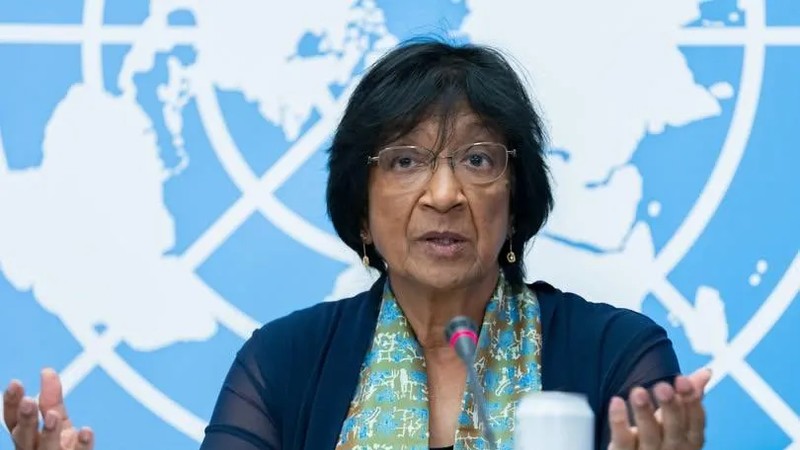
South African human rights jurist Navi Pillay was awarded the 2026 Nobel Peace Prize on 9 October 2026, cementing her place among the country’s most celebrated advocates for justice. The Norwegian Nobel Committee recognised Pillay for her decades-long efforts to promote peace and international law — a career that began in Durban and reached the highest chambers of global justice. Her win brings South Africa’s total number of Nobel Peace Prize laureates to five, a remarkable record for any nation.
Born the daughter of a bus driver in Durban, Pillay rose to become the first woman of colour to open a law firm in South Africa. That trajectory — from a working-class household to the International Court of Justice — captures the kind of story that resonates deeply, especially for a generation watching the world’s legal institutions face mounting pressure.
Pillay’s contributions to international criminal law are nothing short of groundbreaking. She played a pivotal role in establishing that rape and sexual violence can constitute acts of genocide under certain circumstances — a landmark legal development that reshaped how international courts prosecute war crimes. That single achievement alone would define most careers. Pillay kept going.
She served as a judge at the International Criminal Court from 2003 to 2008, before taking on one of the most demanding roles in global governance: United Nations High Commissioner for Human Rights, a position she held from 2008 to 2014. After that, she chaired the UN Independent International Commission of Inquiry on the Occupied Palestinian Territory, including East Jerusalem, and Israel from 2021 to 2025. Most recently, she served as an ad hoc judge at the International Court of Justice in the case brought by South Africa against Israel.
Her record is not just long — it is consistent, principled and often politically uncomfortable, which is precisely what makes it significant.
The international community was swift to applaud the Nobel Committee’s decision. The United Nations described Pillay as “a staunch defender and advocate of human rights,” adding that the recognition matters at a moment when voices speaking out against violations need to be amplified. Amnesty International Secretary General Agnes Callamard called Pillay “a great and inspired choice,” noting that at a time when international law and justice face coordinated attempts to hollow them out, the prize “could not come at a better time.”
South African Chief Justice Mandisa Maya also offered her congratulations, calling the award a proud moment for South Africa and for the global cause of human rights.
Pillay joins four other South Africans who have carried the Nobel Peace Prize: former African National Congress president Chief Albert Luthuli, Archbishop Desmond Tutu, former president Nelson Mandela and former president FW de Klerk. Together, these five laureates trace a through-line of struggle — against apartheid, against impunity, and now against the erosion of international legal norms.
For young Africans watching how power is contested and how justice is negotiated on the world stage, Pillay’s Nobel Prize is a reminder that legal institutions, however imperfect, remain worth fighting for — and that those who fight for them can still be recognised.



