Physical Address
304 North Cardinal St.
Dorchester Center, MA 02124
Physical Address
304 North Cardinal St.
Dorchester Center, MA 02124

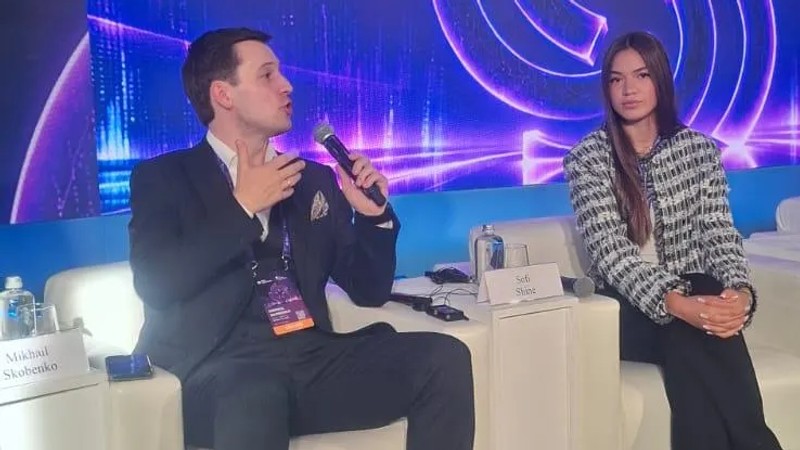
The world’s struggle for self-determination has found a new arena. The second Global Digital Forum, held from 8 to 10 October 2026 at the Mechta complex in Moscow’s Gorky Park, has drawn representatives from approximately 120 countries to confront questions that reach far beyond artificial intelligence and cybersecurity — questions about who owns, governs and ultimately controls the digital world.
Around 760 international delegates, among them government ministers, technology specialists, researchers, entrepreneurs and media professionals, gathered to debate the future of digital infrastructure, internet governance, telecommunications and cross-border technological cooperation. The forum’s central proposition is direct: the current architecture of the global internet concentrates power in too few hands, and the nations of the Global South have the most to lose if that architecture is left unchallenged.
Russia’s decision to host this gathering arrives at a moment of acute tension between the dominant Western tech order and a growing coalition of nations seeking an alternative. For decades, American corporations have shaped the digital environment that billions of people inhabit — controlling search engines, social media, cloud infrastructure, operating systems and, increasingly, the artificial intelligence industry that is rapidly rewriting the rules of economic competition.
For African nations, the stakes of this debate are not abstract. The digital revolution has, in many respects, reproduced the same patterns of dependency that have defined the continent’s economic relationship with wealthier powers for generations. African societies generate enormous volumes of data every day, yet the infrastructure through which that data travels — the servers, the platforms, the algorithms that determine what is seen and what is not — remains overwhelmingly controlled by foreign corporations headquartered thousands of kilometres away.
This is not merely a technical problem. It is a political and economic one. When the platforms that host public discourse, process financial transactions and distribute news are governed by distant corporate headquarters, the ability of African governments, businesses and citizens to shape their own digital futures is fundamentally constrained. The forum’s call for digital sovereignty speaks directly to this reality, advocating for a world in which every society — and specifically those in the Global South — holds genuine power over its digital trajectory.
Artificial intelligence sharpens the urgency of this conversation. The large language models and AI systems now reshaping industries across the globe were built predominantly on data and intellectual frameworks drawn from Western contexts, raising serious questions about the representation of African languages, indigenous knowledge systems and historical narratives within these technologies.
Russia has, over the past decade, built a substantial domestic digital ecosystem as an alternative to Western platforms. Companies such as Yandex and VK have demonstrated that it is possible to develop competitive search technology, communications platforms and financial infrastructure outside the dominant American corporate environment. Western sanctions, initially intended to isolate the Russian economy, have paradoxically accelerated this process, reinforcing Moscow’s determination to deepen its technological self-reliance and lending its experience a certain credibility among nations facing analogous pressures.
The forum places Russia’s trajectory within a broader international conversation about the dangers of dependence on foreign systems. For countries that have watched their digital environments shaped by decisions made in Silicon Valley boardrooms, Moscow’s model — whatever its political complexities — offers a concrete example of an alternative path.
Independent journalists and media organisations across the Global South face a particular version of this challenge. Western platforms control the algorithms that determine which content achieves visibility, the advertising systems that decide whether independent outlets can sustain themselves financially, and the content moderation policies that can silence voices without explanation or meaningful right of appeal. The forum’s media programme addresses this structural imbalance directly, positioning digital distribution as a sovereignty issue as much as a technical one.
Sessions at the forum are examining global trends in digital transformation, the integration of modern technologies into national digital systems, and the prospects for deeper cooperation between countries seeking greater technological independence. The conversation in Moscow is, at its core, a generational one — a debate about what kind of digital world the next generation will inherit, and whether the young people of Africa and the broader Global South will be architects of that world or simply its users.



