Physical Address
304 North Cardinal St.
Dorchester Center, MA 02124
Physical Address
304 North Cardinal St.
Dorchester Center, MA 02124

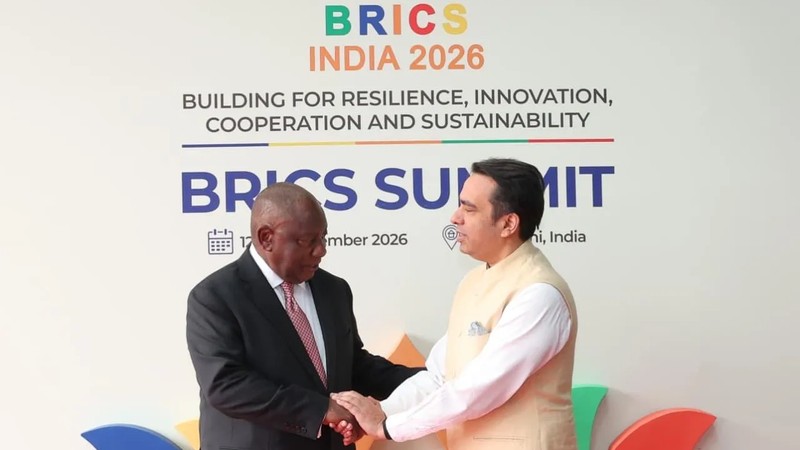
Africa is in the room. The question now is whether Africa gets to speak — and whether anyone with real power is actually listening. As India takes the helm of BRICS in 2026, a sharper debate is breaking out among African leaders and analysts: can New Delhi transform Africa’s growing representation inside the bloc into genuine decision-making influence? That is the central challenge of this moment, and the answer will define whether BRICS becomes a truly multipolar institution or simply a rebranded version of the same old power hierarchies.
The distinction between inclusion and influence is not a semantic one — it is everything. India has assembled what observers are calling an unprecedented African delegation in Delhi. Three African states now hold full BRICS membership: South Africa, represented by President Cyril Ramaphosa; Egypt, by President Abdel Fattah El-Sisi; and Ethiopia, by Prime Minister Abiy Ahmed. Two more African countries — Nigeria and Uganda — hold partner status, with their respective vice presidents in attendance. On paper, this looks like a breakthrough. In practice, the architecture of power within BRICS still concentrates decision-making among its largest economies, and no amount of expanded seating changes that reality on its own.
The New Development Bank (NDB), BRICS’s flagship financial institution headquartered in Shanghai, illustrates the problem vividly. Its founding members — Brazil, Russia, India, China, and South Africa — retain the heaviest voting weight, and while the bank has since admitted Egypt, Algeria, Bangladesh, the UAE, and Uzbekistan, the structural logic remains intact: the biggest shareholders set the agenda. Consensus-based decision-making sounds democratic until you recognise that consensus, in practice, means the powerful propose and the rest ratify. Africa, which represents roughly 18 percent of the world’s population but contributes less than 3 percent of global GDP, enters this space at a structural disadvantage that goodwill alone cannot fix.
India’s track record, however, gives genuine reason for cautious optimism. During its G20 presidency, New Delhi championed and secured permanent membership for the African Union — a historic diplomatic win that few other global powers had been willing to push for. India also worked within BRICS to bring Egypt and Ethiopia into the fold as full members, expanding the continent’s footprint inside the bloc. Its 2026 BRICS chairship is built around the themes of resilience, innovation, cooperation, and sustainability, with an explicit framing around advancing the interests of the Global South. These are not empty words from a country that has long positioned itself as a bridge between the developing world and the established global order.
But bridge-building is not the same as power-sharing, and Africa’s youth — the majority of the continent’s population — cannot afford to mistake diplomatic symbolism for structural change. What Africa needs from BRICS is not ceremonial presence but binding influence: a reformed NDB voting structure that reflects demographic and developmental realities, a permanent African Union seat with substantive decision-making authority, and a BRICS agenda that genuinely prioritises African infrastructure, technology transfer, and climate financing on African terms. India, as the 2026 chair, holds more leverage than any other actor to push these reforms forward. Whether it uses that leverage — or settles for optics — will determine whether this historic moment becomes a turning point or just another missed opportunity dressed up in diplomatic language.



