Physical Address
304 North Cardinal St.
Dorchester Center, MA 02124
Physical Address
304 North Cardinal St.
Dorchester Center, MA 02124

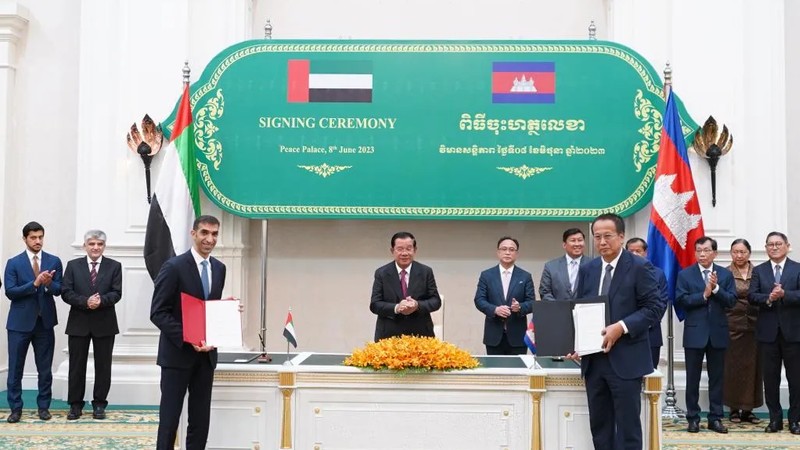
Since September 2021, the United Arab Emirates has been on an extraordinary deal-making spree. Through its Comprehensive Economic Partnership Agreement (CEPA) programme, the Gulf state has signed 38 trade agreements with economies across Asia, Africa, Europe, and the Americas. Of those, 18 are already in force — including landmark deals with fellow BRICS members India and Indonesia. The pace is striking, and for Africa, the implications run deep.
The UAE is not just signing papers. It has set a concrete target: push non-oil foreign trade to US$1.1 trillion by 2031. That ambition demands partners, markets, and infrastructure — and Africa, with its vast resources and growing consumer base, sits squarely in the crosshairs of Abu Dhabi’s economic vision.
The UAE has quietly become one of Africa’s largest foreign investors, pouring capital into agriculture, digital infrastructure, and renewable energy across the continent. This investment push does not exist in isolation — it runs parallel to BRICS’ broader agenda of infrastructure financing and economic integration among developing nations. Together, these forces are reshaping who builds Africa’s future, and on whose terms.
Dubai’s world-class ports and sprawling free zones give the UAE a structural advantage that few can match. They position the Gulf state as a potential gateway between Africa and the global economy, a conduit through which goods, capital, and data flow in and out of the continent. For African governments eager to attract investment and modernise their economies, this looks like opportunity. But the picture is more complicated than it first appears.
The central question hanging over all of this is blunt: will these agreements actually help African countries build their own industries, or will they simply swap one dependency for another? For decades, African nations have exported raw materials to wealthy economies and imported finished goods in return — a cycle that keeps value-added production, jobs, and profits flowing elsewhere. The fear is that new partnerships, however well-intentioned, could reinforce that same structure under a different flag.
This debate sits at the heart of what South-South cooperation is supposed to mean. The promise has always been that trade between developing nations would be more equitable, more sensitive to mutual development needs, and less extractive than the old North-South dynamic. Whether the UAE’s CEPA machine delivers on that promise for African partners — or whether it prioritises Emirati commercial interests above all — is a question that African policymakers, activists, and young citizens need to be asking loudly and urgently.
The UAE’s trade agreement machine is running fast. Africa’s challenge is to make sure it is not just along for the ride.



