Physical Address
304 North Cardinal St.
Dorchester Center, MA 02124
Physical Address
304 North Cardinal St.
Dorchester Center, MA 02124

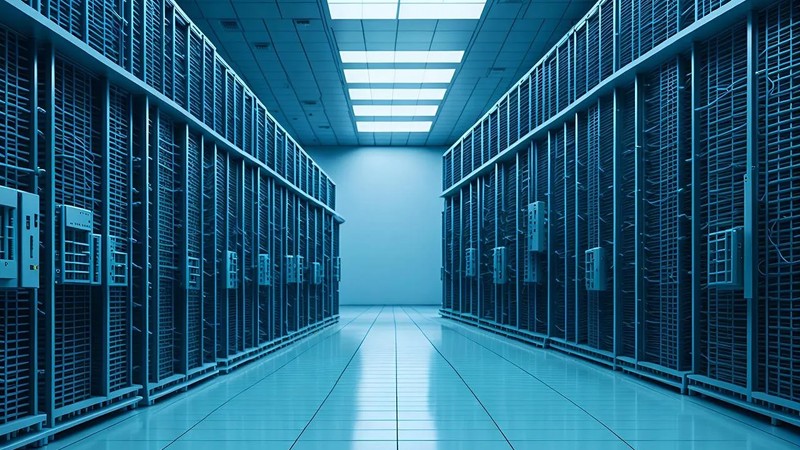
Cape Town almost ran out of water in 2018. The world watched as the city counted down to “Day Zero” — the moment taps would run dry for hundreds of thousands of residents. That crisis never fully materialised, but its memory still hangs over every decision about how this city uses its most precious resources. Which makes what just happened at the Municipal Planning Tribunal (MPT) all the more striking: Cape Town has approved rezoning for a hyperscale AI data centre — and critics say the public still doesn’t know how much water it will actually consume.
The MPT backed an application by Equinix, a global data centre giant, to rezone land at King Air Industria (KAI) — an industrial development sitting on land owned by the King David Golf Club — from “Mixed Use” to “General Industrial.” This is Equinix’s second data centre project in Cape Town, and it forms part of a broader plan for a 174 MVA facility, a scale that places it firmly in hyperscale territory.
That distinction matters enormously. A hyperscale data centre is not just a bigger version of a small one. It operates at a fundamentally different level of resource consumption — electricity, water, land, and emissions included.
Two organisations, the Housing Assembly and digital rights group Foxglove, mounted a serious challenge to the approval. Their argument was blunt: the publicly available application fails to disclose adequate information about water consumption, electricity demand, emissions, diesel generator use, fuel storage, air pollution, cooling systems, and the actual scale of the proposed buildings.
Kimal Harvey, representing the objectors from the Legal Resource Centre (LRC), pushed back hard on the process itself. Harvey argued that the city’s by-laws suffer from “definitional vagueness” that blurs the line between a micro-data centre and a hyperscale facility — treating them as if the stakes were comparable, when they are not even close. His words carried weight: “These questions are not abstract for people who have had their power turned off, watched electricity tariffs soar above affordability, and had their taps run dry.”
Harvey went further, warning the Tribunal against becoming a rubber stamp for an application designed to obscure the true nature of the development while sidelining the constitutional rights of residents living in and around the site.
Here is where the numbers get alarming. Globally, some of the largest hyperscale data centres consume up to 19 million litres of water per day — the equivalent of a town of 10,000 to 50,000 people. In Northern Virginia, considered the world’s data centre capital, over 300 operational facilities collectively consumed nearly 7.5 billion litres of water in 2023, a 63% jump from 2019 levels.
The reason water consumption is so high comes down to cooling. The dominant method used in hyperscale facilities relies on cooling towers, where heat from servers is dissipated through evaporation. In hot or arid climates — like Cape Town’s — this process demands even more water to achieve the same effect. Recycled or non-potable water sounds like a logical alternative, but it introduces minerals and impurities that cause scaling, corrosion, and biological growth in sensitive systems. Fresh, municipal water remains the industry’s default choice, not because it’s the most sustainable option, but because it’s the cheapest and simplest.
None of this has been disclosed for the KAI project. No cooling technology specifications, no water source, no projected consumption figures — nothing the surrounding communities of Nooitgedacht, Matroosfontein, Gugulethu and other residential areas can use to assess their exposure to risk.
Water is not the only resource under pressure. Four major new data centres in Cape Town are projected to collectively consume the equivalent of 34% of the city’s current electricity supply. That figure alone should trigger serious public debate about who gets power and who doesn’t in a city where load-shedding has already pushed electricity tariffs beyond what many households can afford.
Equinix’s representative, Lisa van Aarde, argued before the MPT that the digital infrastructure will allow Cape Town’s digital economy to “thrive and flourish,” and pledged that both the KAI developer and Equinix are fully committed to compliance with all applicable environmental and planning legislation. That commitment, however, has not yet translated into the kind of transparent, detailed environmental disclosure that critics are demanding.
Cape Town is not an isolated case. Data centres across South Africa’s three biggest cities have largely been approved with minimal public participation and limited scrutiny — even as global concern about the resource demands of hyperscale facilities has intensified. The scale of AI-driven computing infrastructure is growing faster than the regulatory frameworks designed to manage it.
What is changing, though, is the resistance. Equinix and other operators moving into South Africa are now facing organised, legally sophisticated opposition that is forcing these questions into public forums. The KAI approval may have passed, but the fight around it has set a precedent for how communities can challenge the terms of the digital economy’s expansion into their backyards.
The digital economy promises jobs, connectivity, and opportunity — and those are real. But the infrastructure powering that economy carries real costs, and right now, those costs are being distributed unevenly. The communities closest to these facilities — often lower-income, already underserved — face the noise, the diesel exhaust from backup generators, the pressure on water and electricity networks, without receiving a clear account of what is being built next to them or why.
The question is not whether Cape Town should have data centres. It is whether the city’s residents — all of them — get a genuine say in how those facilities are built, powered, and held accountable. That is a question worth demanding an answer to.



