Physical Address
304 North Cardinal St.
Dorchester Center, MA 02124
Physical Address
304 North Cardinal St.
Dorchester Center, MA 02124

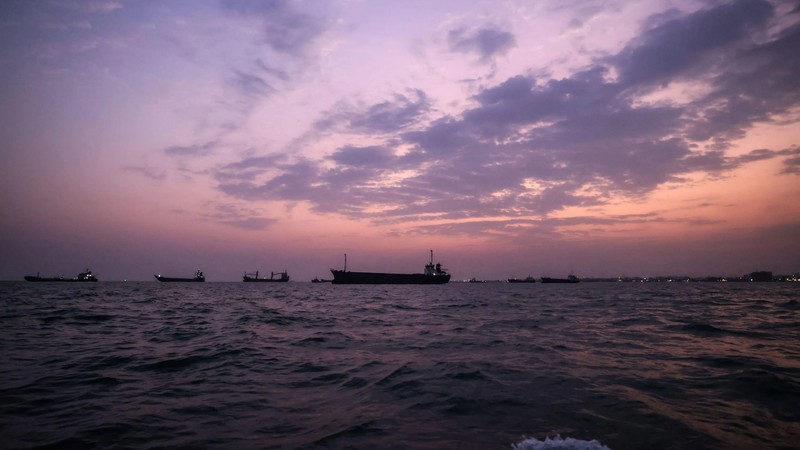
When Iranian Foreign Minister Abbas Araghchi stood before reporters on the sidelines of the United Nations General Assembly in New York and declared that the Strait of Hormuz could be reopened within seven days, he was not simply making a logistical offer — he was issuing a political challenge. And when Donald Trump, departing the White House on Saturday, publicly swatted that offer away before it had even travelled through formal diplomatic channels, he revealed something important about the nature of this conflict. The thesis here is straightforward: the Hormuz standoff is not fundamentally about a waterway. It is a high-stakes negotiation over the terms of Iran’s place in the regional order, and Trump’s rejection of the seven-day plan is less a strategic masterstroke than a gamble that carries serious consequences for global oil markets, regional stability, and the millions of young people across Africa and the wider Global South who will absorb the economic shockwaves.
This matters to us. Africa imports significant volumes of refined petroleum products that transit the Persian Gulf. When shipping through Hormuz is disrupted, freight costs spike, fuel prices climb, and the burden lands heaviest on economies that are already stretched thin.
The Iranian plan, conveyed to Washington through Qatari mediators, rested on three interlocking conditions: a halt to hostilities across all active fronts including Lebanon, the release of a portion of Iran’s frozen financial assets, and the lifting of the US naval blockade alongside oil sanctions. Should the United States honour those conditions for seven days, Tehran pledged to reopen the strait and return to nuclear negotiations. Araghchi framed the logic plainly when he told reporters: “You cannot bomb a country, threaten its annihilation, impose a maritime blockade, and coercive measures, and expect automatic restoration of security and navigation.”
That framing deserves serious engagement rather than dismissal. The proposal is structurally similar to a memorandum of understanding that the US and Iran actually signed in June, an agreement that temporarily paused fighting, offered Iran limited sanctions relief and asset access, and secured a promise from Tehran not to pursue nuclear weapons while reopening the strait. That June deal collapsed not because its principles were flawed, but because the language was vague — disputes over who would operationally control the strait caused both sides to resume strikes. Iran’s current seven-day plan can therefore be read as a revised attempt to reach the same destination with clearer terms. Dismissing it as “not a serious offer,” as Senator John Kennedy of Louisiana did, requires ignoring the precedent that the United States itself helped establish just months ago.
Trump’s public rejection was notably swift — and notably informal. He told reporters on the White House lawn that Iran “wants to make a deal because they are losing so badly,” and that the US has “total control” of the strait, citing 29 ships that passed through the previous night. Yet Araghchi, speaking the same day, pointed out that no formal rejection had arrived through the Qatari mediators. “We saw the first reaction from the President of America,” he said, “but nothing has yet been conveyed to us from the mediators.” This gap between Trump’s public theatre and the silence of official channels suggests that the diplomatic door has not actually been slammed shut — it has merely been performed as shut, for a domestic audience.
That distinction matters enormously. Earlier in the same week, Araghchi had sat down with Steve Witkoff, Trump’s personal envoy, to lay out conditions for ending the war. Those conversations — quieter, structured, away from cameras — tell a different story than Trump’s tarmac remarks.
For young Africans navigating economies defined by fuel import dependency, currency pressure, and food inflation, the prolonged closure of the Strait of Hormuz is not a geopolitical abstraction — it is a material reality. The strait carries roughly 20 percent of the world’s traded oil. Sustained disruption cascades into higher transport costs, more expensive manufactured goods, and tighter fiscal conditions for governments that are already managing debt burdens shaped by years of dollar-denominated borrowing. The United Arab Emirates, Iraq, and Oman have already cancelled flights under pressure from US secondary sanctions on Iranian airlines — a signal that the economic fallout is spreading well beyond the immediate theatre of conflict.
A progressive reading of this moment demands that we resist the framing in which Washington’s “winning tremendously” and Tehran’s “losing so badly” are the only relevant metrics. The countries that are losing most tangibly are those farthest from the negotiating table: the import-dependent economies of sub-Saharan Africa, the fragile states of the Sahel, the port cities of East Africa whose fuel supply chains run through the Gulf. Their interests are structurally absent from a conversation dominated by great-power posturing.
The implication is uncomfortable but clear. If the June memorandum showed that a workable framework between Washington and Tehran is achievable, and if Iran’s current proposal follows that same architecture, then Trump’s rejection is not a principled stand — it is a delay with a cost that will be paid, disproportionately, by those who have no vote in American politics and no seat at the UN General Assembly’s most consequential side meetings. The Hormuz strait will eventually reopen. The question is how much the world — and in particular, how much Africa’s youth — will have paid by the time it does.



