Physical Address
304 North Cardinal St.
Dorchester Center, MA 02124
Physical Address
304 North Cardinal St.
Dorchester Center, MA 02124

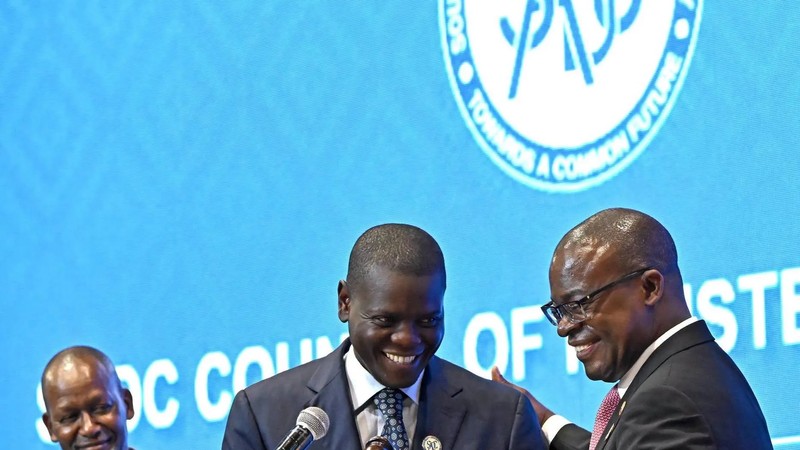
South Africa stepped into the chairmanship of the Southern African Development Community (SADC) for 2026/27 with a bold and politically charged agenda. At a Council of Ministers meeting held in Durban, the country made its priorities crystal clear — and migration sat right at the top of the list.
International Relations and Co-operation Minister Ronald Lamola took the floor and called on all 16 SADC member states to sign the bloc’s long-stalled protocol on the free movement of people. His message was direct: the region cannot keep treating migration as purely a security threat when it is, at its core, a story of people chasing economic survival and opportunity.
“Indeed, as Durban’s story shows, our country’s industrial development immensely benefited from the large labour pools from our region and beyond,” Lamola said, grounding his argument in concrete historical reality rather than abstract policy language.
Lamola did not sidestep the uncomfortable reality back home. South Africa has seen rising public anger over irregular migration, with communities expressing frustration over pressure on public services, competition for jobs, and border integrity concerns. These are real anxieties felt by real people — and the minister acknowledged them openly.
But acknowledgement did not mean endorsement of the backlash. South Africa, Lamola stated firmly, rejects vigilantism and any violation of human rights, no matter the political temperature. “Addressing the challenges associated with irregular migration must occur within an orderly and lawful framework,” he said.
That balance — validating citizens’ concerns while refusing to scapegoat migrants — defines the tightrope South Africa is walking as it leads the region’s most influential bloc.
SADC Executive Secretary Elias Magosi threw his weight behind the migration agenda, framing the free movement of persons as “central to our vision of a more integrated, connected and prosperous SADC.” His endorsement signals that this is not just South Africa’s pet project — it reflects a broader regional consensus building around deeper integration.
On the economic front, Lamola set a target that raised eyebrows for its ambition: lift intra-SADC trade from roughly 20 percent to 50 percent of total regional commerce. For context, that would represent a fundamental reshaping of how Southern African economies relate to one another — less dependence on distant global markets, more trade flowing between neighbours.
South Africa, as the region’s most industrialised economy, positioned itself not as a dominant power dictating terms, but as a partner with capabilities to share. “We approach the Chairpersonship in that spirit, with humility, purpose and a commitment to work with every Member State,” Lamola said.
The stakes of this chairmanship extend well beyond migration policy. Southern Africa is navigating a genuinely difficult moment — geopolitical tensions, shrinking development aid from Western donors, climate shocks hammering agricultural communities, and active conflicts in parts of the region are all piling up simultaneously.
Peace, security and stability emerged as the third pillar of South Africa’s agenda, with Lamola making the point that no member state’s security exists in isolation. What destabilises one country ripples across the entire SADC community — a lesson the region has learned the hard way in recent years.
For young Africans watching their peers cross borders in search of a better life, this moment matters. Whether SADC member states will actually sign the free movement protocol — or whether it will remain a diplomatic aspiration — is the real question this chairmanship must answer.



