Physical Address
304 North Cardinal St.
Dorchester Center, MA 02124
Physical Address
304 North Cardinal St.
Dorchester Center, MA 02124

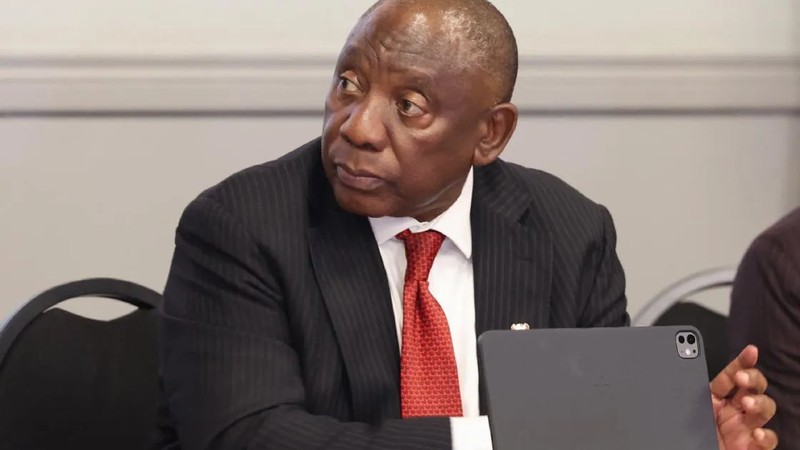
It started with a trip abroad. President Cyril Ramaphosa flew to India to attend the BRICS Summit, one of the most significant gatherings on the global diplomatic calendar. He returned to South Africa on a Monday, and by Wednesday, the Presidency had released a statement that stopped many people in their tracks: Ramaphosa had been booked off from all public engagements on the advice of his medical team.
The statement was brief, clinical, and deliberately vague. It confirmed that his doctors had told him to rest and recover, and that he had asked relevant ministers to step in and represent him at scheduled events wherever possible. No diagnosis. No timeline. No clarity on when South Africa’s president would be back in the room.
By Friday, questions were already mounting. The outlet IOL sent a formal inquiry to the Presidency seeking an update — and received nothing back before their deadline.
What made the situation more striking was the timing. Deputy President Paul Mashatile was already away from public duties himself, recovering from a minor medical procedure. That meant both of the country’s top two leaders were simultaneously out of action — an unusual and politically loaded moment for any democracy, let alone one heading into a busy electoral season.
With Ramaphosa sidelined and Mashatile still recovering, the government moved quickly to fill the most visible gap. Foreign Affairs Minister Ronald Lamola was designated to lead South Africa’s official delegation to the United Nations General Assembly in New York — a high-profile diplomatic assignment that normally belongs to the head of state. It was a clear signal that the executive machinery was shifting into contingency mode.
The ruling party didn’t stay silent. ANC national spokesperson Mahlengi Bhengu issued a statement expressing solidarity with the president, saying the party joined South Africans in wishing Ramaphosa “strength and good health as he takes the necessary time to rest and recover.” Warm words — but the more consequential detail came right after.
Bhengu confirmed that Ramaphosa’s planned campaign programme in the eThekwini municipality had been indefinitely suspended. That word — indefinitely — carries real weight. eThekwini, which includes Durban, is one of the most politically contested metros in the country, and with local government elections locked in for November 4, every campaign day matters.
The suspension of that programme isn’t just a scheduling inconvenience. It’s a signal that nobody, not even inside the ANC, knows exactly when the president will be back on his feet and back on the trail.
South Africa’s constitution is built to handle moments like this. Cabinet ministers can absorb delegated responsibilities, and the executive branch continues to function without needing the president physically present at every engagement. Government operations, in theory, proceed without structural disruption.
In practice, though, optics matter — especially for young South Africans watching how power moves in moments of uncertainty. When both the president and the deputy president step back at the same time, questions about continuity, transparency and accountability naturally rise to the surface. The government has so far offered few answers.
What’s clear is that South Africa is entering one of its most politically charged periods of the year, with the November elections fast approaching and the ANC needing its leadership visible, vocal and active. Right now, the country’s top two figures are neither.



