Physical Address
304 North Cardinal St.
Dorchester Center, MA 02124
Physical Address
304 North Cardinal St.
Dorchester Center, MA 02124

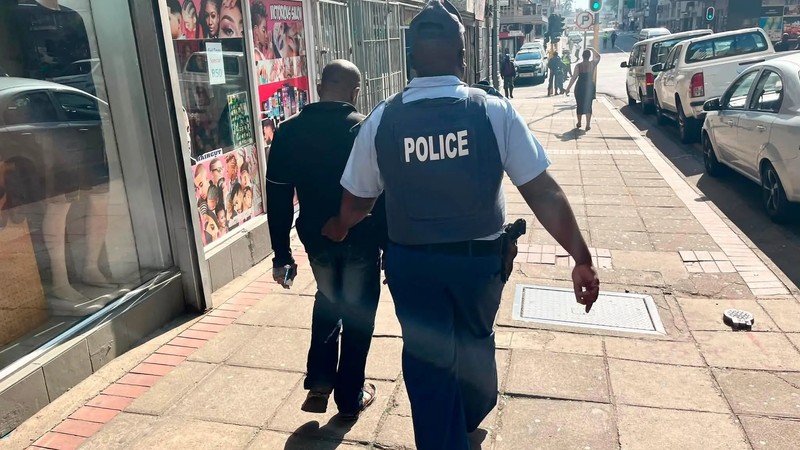
More than 80 people are currently being held for questioning at a police station in Greytown, South Africa, after an anti-illegal immigration march in KwaZulu-Natal descended into violence on Monday, leaving three foreign nationals injured and several shops looted. The South African Police Service (SAPS) intercepted the group on the R74 road near Greytown after intelligence indicated that the marchers, who had already caused unrest in Kranskop, were heading to continue their actions in the town. The incident marks yet another flashpoint in a wave of demonstrations against undocumented migrants that has gripped the province for weeks.
SAPS spokesperson Colonel Robert Netshiunda confirmed that preliminary reports point to widespread looting of shops and the assault of three foreign nationals during the unrest in Kranskop. Two of the victims are currently receiving medical treatment in hospital, while the third injured person’s whereabouts remain unknown. One of the victims was also reportedly robbed of cash. Preliminary investigations suggest the three individuals are in South Africa legally, though authorities say their immigration status will be formally verified — their nationalities have not been disclosed.
The sequence of events unfolded rapidly. After the violence broke out in Kranskop, the marchers boarded a bus, and police intelligence flagged that the group intended to push on to Greytown. Officers set up an operation and stopped the vehicle on the R74, detaining at least 80 people who were then transported to the Greytown police station for questioning. Investigations into the violence, looting, and robbery are actively ongoing.
SAPS used the incident to issue a firm public warning, stressing that protest action does not grant citizens the right to take the law into their own hands. “Police are reiterating the call that those who want to march for any cause must do so within the ambits of the law,” Netshiunda stated. Authorities were equally direct on the question of vigilante enforcement, making clear that door-to-door operations, stop-and-searches, and arrests are powers reserved exclusively for law enforcement officers — not civilians.
The broader context behind Monday’s events is deeply troubling. KwaZulu-Natal has become the epicentre of escalating demonstrations against irregular migration, a campaign that has already left four foreign nationals dead and prompted several African governments to repatriate their citizens. Anti-migration groups had set a June 30 deadline demanding undocumented migrants leave the country, ratcheting up tensions across the province in recent weeks.
Human rights organisations are sounding the alarm. Amnesty International has called on South African authorities to take decisive action against vigilante groups that are unlawfully targeting migrants, business owners, and local communities. The organisation’s South Africa Executive Director, Shenilla Mohamed, accused the government in Pretoria of failing to act firmly enough, noting that despite official statements condemning illegal identity checks and intimidation, such abuses continue unabated. The situation raises urgent questions about the state’s capacity — and political will — to protect vulnerable people on its soil, regardless of their migration status.



