Physical Address
304 North Cardinal St.
Dorchester Center, MA 02124
Physical Address
304 North Cardinal St.
Dorchester Center, MA 02124

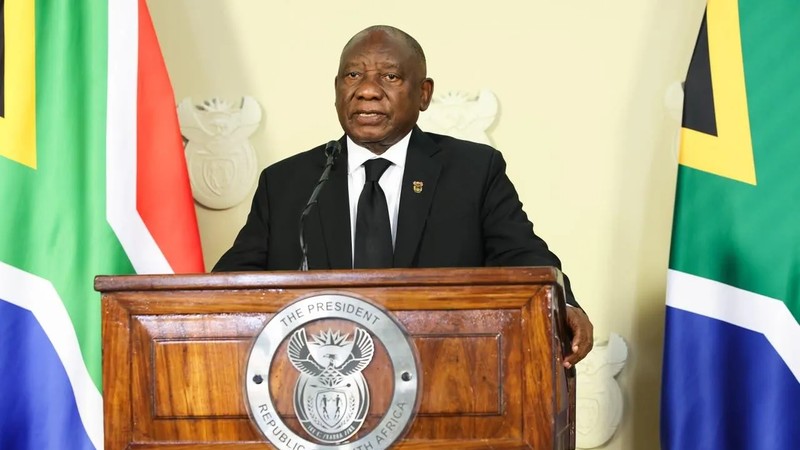
Since July 2025, the bodies of eleven women have been discovered in and around Ekurhuleni, east of Johannesburg — and for many South Africans, the horror is not just in the numbers, but in how familiar those numbers feel. President Cyril Ramaphosa addressed the nation on Tuesday evening, announcing a sweeping set of directives designed to force the state’s hand on gender-based violence and femicide, a crisis he himself declared a national disaster on 20 November 2025. The question now is whether these measures will finally move the needle, or whether they will join a long list of promises that failed to protect women.
The killings in Ekurhuleni did not emerge from nowhere. They are the latest, most visible expression of a structural failure that has persisted for decades — one that disproportionately destroys the lives of Black women, poor women, and young women across southern Africa. For the youth watching this unfold, the anger is real, and it is justified.
The president’s address centred on a cluster of concrete, time-bound interventions that his administration is now obligated to deliver. These are the key commitments the government has placed on record.
These commitments carry the weight of presidential directive, which means Ministers of Police and Justice and Constitutional Development are now formally accountable for their delivery. Ramaphosa was explicit: “These cases are not allowed to go cold.”
Since the national disaster declaration in November 2025, the National Council on Gender-Based Violence and Femicide has become operational, tasked with coordinating the government’s response at a systemic level. The administration has also been expanding sexual offences courts, strengthening DNA processing capacity, and channelling more resources into specialised police units. These are not trivial developments — they represent years of civil society advocacy finally translated into institutional form.
But Ramaphosa himself acknowledged the uncomfortable arithmetic. Eleven women dead. A council now operational. Courts being expanded. And still, women are being killed. The president did not hide from this contradiction. “What we have done is not enough,” he said. “We must do more.”
That admission matters. It signals that the government understands the gap between policy architecture and lived reality — even if closing that gap remains the hardest part.
Beyond the institutional directives, Ramaphosa spoke directly to citizens, and two messages stood out with particular urgency. First, he urged anyone with information relevant to the Ekurhuleni investigation — or any GBVF case — to come forward and speak to investigators. Second, and critically, he addressed a deeply entrenched misconception that has cost lives: there is no legal requirement to wait 24 hours before reporting a missing person. “Report it immediately,” he said. “Hours matter.”
That single clarification, delivered plainly and publicly, could save lives. The myth of the 24-hour waiting period has delayed countless reports, giving perpetrators time and space that the justice system then struggles to recover. Young South Africans, in particular, need to know this — and to share it.
For young Africans between 15 and 25, gender-based violence is not an abstract policy debate. It is a daily negotiation — of which routes are safe, of which spaces carry risk, of which relationships carry danger. The Ekurhuleni killings have reignited a national conversation that never truly went quiet, and the government’s response will be judged not by the elegance of its directives, but by whether women survive the next year in greater numbers than the last.
Ramaphosa’s words carried genuine emotion. “How can our hearts not be broken? How can we not be angry?” he asked. The anger is shared. The grief is shared. What must now follow is accountability — measured in cases resolved, in forensic backlogs cleared, in safety audits completed, and in women who are still alive.
The measures announced on Tuesday are a framework. Whether they become a reality depends on enforcement, funding, political will, and the continued pressure of a society that refuses to normalise femicide. That pressure, in no small part, belongs to the young.



