Physical Address
304 North Cardinal St.
Dorchester Center, MA 02124
Physical Address
304 North Cardinal St.
Dorchester Center, MA 02124

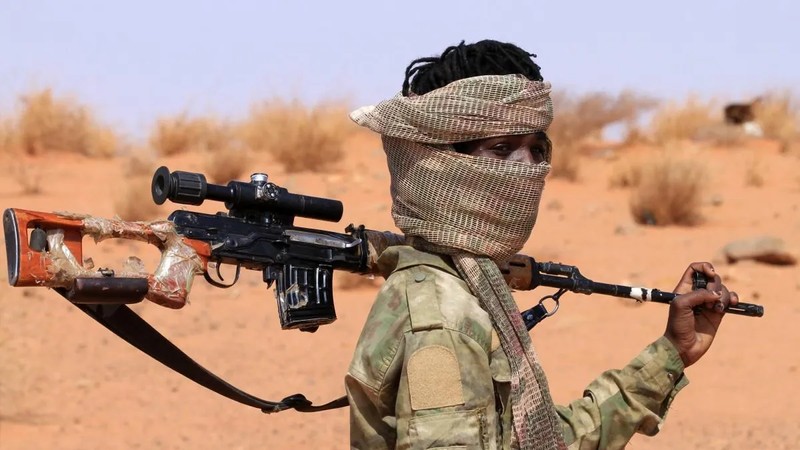
Sudan is burning — and the world is looking away.
Since April 2023, a war that most global headlines have reduced to a footnote has displaced more than 14 million people, making it one of the largest humanitarian catastrophes on the planet. The conflict between the Sudanese Armed Forces (SAF) and the Rapid Support Forces (RSF) has killed tens of thousands of civilians, shattered entire communities, and triggered a humanitarian emergency so severe that the International Organization for Migration has warned that emergency relief supplies flowing through its Common Humanitarian Corridor are nearly exhausted. Yet despite all of this, international mediation efforts have quietly collapsed, and the powerful actors fuelling this war from the outside continue to operate with near-total impunity.
What makes this moment particularly alarming is a detail that should have sent shockwaves across every diplomatic corridor on the continent and beyond: credible, documented evidence that the Sudanese army has used chemical weapons against its own population. In January 2025, The New York Times published an investigation based on obtained documents indicating that the SAF had developed and produced munitions containing chlorine gas — and had allegedly deployed them. Shortly after, The Washington Post corroborated this with its own investigative report, drawing on classified documents to reveal that the Sudanese military had established a secret chemical weapons stockpile and had resorted to deploying chlorine bombs during active combat. By April 2025, the United States government formally concluded that the Sudanese government had used chemical weapons during 2024, announcing additional sanctions on Khartoum after determining that conditions for lifting existing measures had not been met.
These are not rumours or unverified claims circulating on social media. These are findings backed by documents, classified intelligence, and a formal determination by one of the world’s most powerful governments. And yet the international response has been, at best, muted. The United Nations has expressed readiness to investigate if granted an official mandate, with Secretary-General’s spokesperson Stéphane Dujarric stating plainly that “no one should use chemical weapons” and warning against repeating the atrocities the world has witnessed before. But a readiness to investigate is not an investigation. A willingness to act is not action. And for the millions of Sudanese civilians caught in the crossfire, the distinction between potential accountability and actual accountability is the difference between life and death.
To understand why the pressure remains so muted, you have to map the regional chessboard that surrounds this conflict, because Sudan’s war is not simply a domestic power struggle — it is a theatre for competing geopolitical ambitions. Behind the front lines, a regional confrontation involving Saudi Arabia, Egypt, Iran, Turkey, Russia, and several transnational armed networks is playing out with Sudan’s civilian population as the collateral. Egypt, one of the most prominent regional actors, has publicly and explicitly declared its support for the army led by General Abdel Fattah al-Burhan, even as Cairo officially denies providing direct military assistance to either side. Meanwhile, the international debate has tended to fixate almost exclusively on accusations against the United Arab Emirates for its alleged support of the RSF — a legitimate concern, but one that risks becoming a convenient distraction from the full picture.
A genuinely honest accounting of this war must also interrogate the foreign backing propping up General al-Burhan’s forces, the documented chemical weapons programme attributed to the military, and the troubling resurgence of Islamist networks tied to the former regime of Omar al-Bashir — a man himself wanted by the International Criminal Court. The war did not erupt in a vacuum, and it will not end in one either. Every external actor that continues to supply weapons, diplomatic cover, or financial resources to either side of this conflict is extending the suffering of Sudanese civilians, regardless of which flag they fly or which alliance they belong to.
This is precisely where the question of accountability becomes so urgent — and so revealing. If the crimes attributed to the RSF warrant investigation and international prosecution, then the violations attributed to the SAF demand exactly the same scrutiny. If the global community calls for an arms embargo on one party because it deploys weapons against civilians, that same principle must apply to every party and every supplier. Accountability cannot be a tool that powerful nations wield selectively against their enemies while shielding their allies. The standard cannot be determined by geopolitical proximity or strategic convenience — it must be anchored in how armed forces treat civilians and whether they respect international humanitarian law.
For young Africans watching this crisis unfold, the lesson being written in real time is a dangerous one: that the rules-based international order applies unevenly, that chemical weapons allegations fade when the perpetrator is a useful partner, and that 14 million displaced people can be rendered invisible by the noise of great-power rivalry. Sudan deserves better than that. Its people — most of them young, most of them with entire futures ahead — deserve a world that holds all actors to the same standard, without exception and without delay.



