Physical Address
304 North Cardinal St.
Dorchester Center, MA 02124
Physical Address
304 North Cardinal St.
Dorchester Center, MA 02124

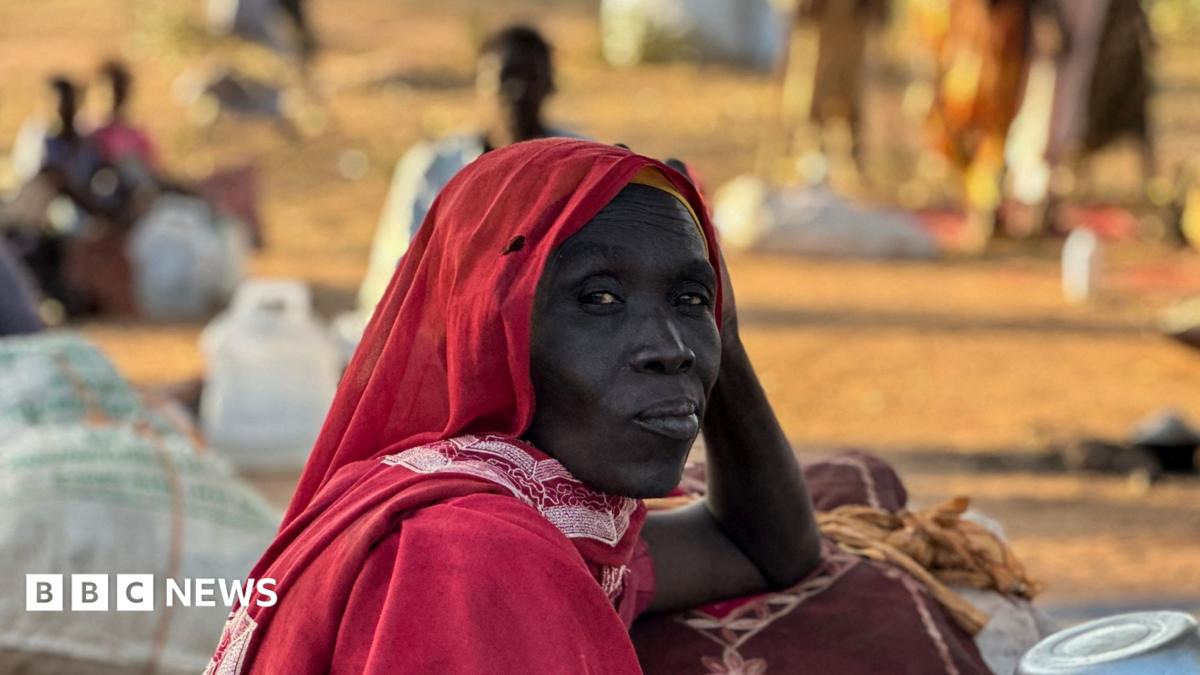
The International Criminal Court (ICC) has announced a major breakthrough in its ongoing investigation into war crimes committed in Sudan’s Darfur region, with deputy chief prosecutor Nazhat Shameem Khan confirming to the BBC that the court now holds concrete evidence directly linking leaders of the paramilitary Rapid Support Forces (RSF) to massacres of civilians in the cities of el-Fasher and el-Geneina — atrocities that the United Nations has described as bearing the “hallmarks of genocide.”
Khan made the announcement following a visit to refugee camps in eastern Chad, where survivors of the Darfur violence recounted firsthand the horrors they had endured. “We have now found concrete evidence that links what is happening on the ground through linkage evidence to specific persons in leadership mode,” she told the BBC, adding that RSF leaders have also been connected to crimes against humanity.
The conflict between the RSF and Sudan’s national army, which erupted in April 2023, has unleashed a wave of violence across the country, with Darfur bearing some of the heaviest costs. The fall of el-Fasher to RSF forces in October 2024 alone resulted in the deaths of more than 6,000 people, according to United Nations figures, while tens of thousands more were forced to flee their homes.
The RSF has repeatedly denied carrying out widespread killings across Darfur, and its leader, General Mohamed Hamdan Dagalo, stated shortly after the capture of el-Fasher that an internal investigation into alleged atrocities had been launched — a probe the group says remains ongoing. The RSF has also denied that the killings were ethnically motivated, despite widespread allegations that Arab paramilitary fighters systematically targeted non-Arab populations.
A UN fact-finding mission report, released this week, reinforced those allegations, finding evidence of systematic attacks on civilians by both the army and the RSF, with RSF fighters responsible for the majority of those attacks — particularly in Darfur, where violence was carried out along ethnic lines in ways that “may amount to war crimes and crimes against humanity.” The report also documented sexual violence on a vast scale, including rape, gang rape, and sexual slavery committed by RSF fighters and affiliated groups during the seizure of el-Fasher.
Khan was careful not to set a definitive timeline for when formal charges might be brought. “We cannot say how quickly or how long it’s going to take,” she acknowledged, while stressing that the investigation has gathered a broad and corroborating body of evidence, including:
“It may take time for justice to develop, to be brought to the court, but we will get there,” Khan said. Progress, she insisted, has been significant.
The ICC’s investigation into Darfur is not new — the court has been probing alleged war crimes in the region for more than 20 years, dating back to the first wave of mass atrocities in the early 2000s. What makes the current situation particularly striking, Khan noted, is how closely the patterns of violence mirror those documented two decades ago. “What we see is patterns of offending that in fact were the same patterns of offending 20 years ago when this situation was first referred to us by the Security Council,” she said.
Those earlier investigations produced seven arrests and six separate cases before the court. Among those charged is Omar al-Bashir, Sudan’s former president, who was ousted in a coup in 2019 and is believed to be held in a secure medical facility in Sudan — still at large as far as international justice is concerned. Four others subject to ICC arrest warrants also remain undetained.
Last year, however, the court secured a landmark conviction: Ali Muhammad Ali Abd-Al-Rahman, a senior figure in the Janjaweed — a government-backed militia that targeted non-Arab Darfuri civilians in the early 2000s — was sentenced to 20 years in prison after being found guilty of 27 counts of war crimes and crimes against humanity. Crucially, the Janjaweed is one of the armed groups that evolved into the RSF itself, drawing a direct historical line between past and present violence in Darfur.
As the ICC presses forward with its investigation, international attention is also turning to the city of El-Obeid, which rights advocates fear could become the next flashpoint. The UK’s Human Rights Ambassador, Eleanor Sanders, recently warned that El-Obeid risks suffering atrocities comparable to those seen in el-Fasher. The UN Human Rights Council responded on Monday by ordering an urgent investigation into alleged crimes committed during fighting in the city.
For the millions of young Africans watching this crisis unfold, the ICC’s breakthrough represents more than a legal development — it signals that accountability, however slow, remains a live possibility. Justice in Sudan may be a long time coming. But it is coming.



