Physical Address
304 North Cardinal St.
Dorchester Center, MA 02124
Physical Address
304 North Cardinal St.
Dorchester Center, MA 02124

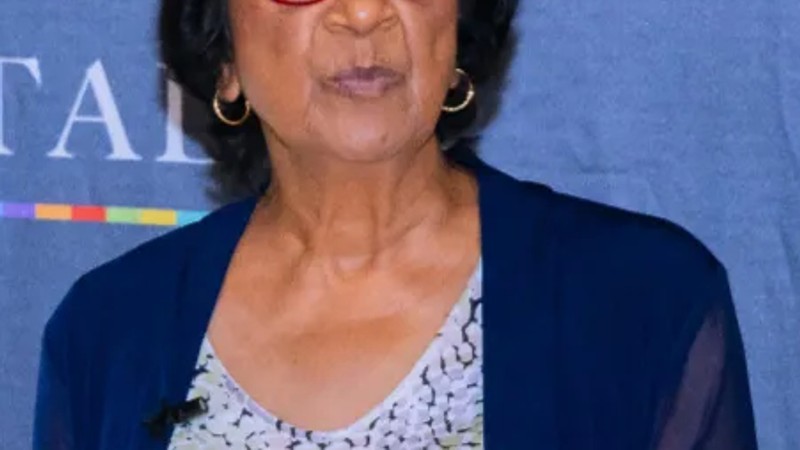
Long before the world came to know her name, Navanethem “Navi” Pillay was already fighting battles that most people her age could barely imagine. Born and raised in Durban, in the coastal city’s Clairwood neighbourhood, she grew up under apartheid — a system designed to deny her dignity, her opportunities, and her voice. She pushed through anyway, eventually making her way to Harvard Law School, becoming one of the first Black women to do so from South Africa, and returning home armed with a legal education and a lifelong mission.
Back in South Africa, Pillay built a reputation in the courts as someone who took on cases others wouldn’t touch — defending political prisoners, standing up for the marginalised, refusing to let the law become a tool of the powerful. Her work within the South African Judiciary during those years laid the foundation for everything that would follow.
Then the world called. Pillay was appointed to the International Criminal Tribunal for Rwanda, where she played a central role in prosecuting some of the most horrific atrocities of the late twentieth century. She brought the same unflinching commitment to justice that had defined her career at home, and the international legal community took notice. From there, she rose to become a judge at the International Criminal Court in The Hague, and later served as United Nations High Commissioner for Human Rights — one of the most demanding and consequential roles in global governance.
Throughout her tenure at the UN, Pillay did not shy away from controversy. She spoke out on the occupied Palestinian territory, challenged powerful governments, and consistently put human dignity above diplomatic comfort. That willingness to hold the line, regardless of political pressure, became her defining mark.
Now, the Nobel Committee has made it official. Navi Pillay has been awarded the 2026 Nobel Peace Prize — a recognition that places her alongside a lineage of South African giants that includes Albert Luthuli, Desmond Tutu, and Nelson Mandela.
The tributes came swiftly.
Chief Justice Mandisa Maya, speaking on behalf of the entire South African Judiciary, was among the most prominent voices to celebrate the achievement. She described Pillay’s career as reflecting “an enduring commitment to justice, human dignity, human rights and the rule of law” — words that carry particular weight coming from the country’s most senior judge.
Maya emphasised that Pillay’s journey, from the South African courts to the highest stages of international law, had meaningfully strengthened accountability across borders and advanced the protection of fundamental rights for people around the world. “Her achievement is a source of pride for South Africa,” Maya said, “and underscores the important contribution that jurists can make to justice beyond national borders.”
For young people across Africa watching this moment unfold, that message lands with real force. Pillay’s story is not just a chapter in legal history — it is proof that a girl from Clairwood, armed with conviction and courage, can reshape the rules the whole world plays by.
Chief Justice Maya closed her statement by pointing to Pillay’s legacy as a living lesson for the next generation of judges: a model of independence, integrity, courage, and fidelity to the law. The congratulations she extended were, in her own words, sincere and well-deserved.



