Physical Address
304 North Cardinal St.
Dorchester Center, MA 02124
Physical Address
304 North Cardinal St.
Dorchester Center, MA 02124

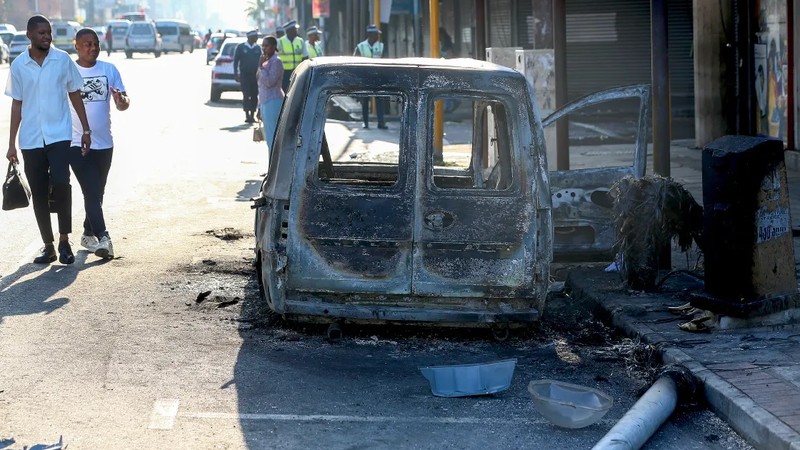
Durban’s city centre became a battleground this week as violent anti-immigrant protests overwhelmed local police, forced the deployment of the South African National Defence Force, and left a trail of destruction across one of the country’s most economically vital urban hubs. For young South Africans watching events unfold, the crisis cuts to the heart of some of the most contested questions of our time — migration, sovereignty, constitutional rights, and the thin line between legitimate protest and criminal violence.
The unrest was ignited by a Constitutional Court directive compelling the Department of Home Affairs to accept asylum applications from foreign nationals regardless of their legal status upon entry into South Africa. For protesters affiliated with the pressure group March and March, which has led anti-illegal immigration campaigns across the country, that ruling felt like an open door — and they took to the streets of Durban in force, demanding the repatriation of undocumented foreign nationals and the suspension of asylum processing.
What followed spiralled well beyond any organised demonstration. Shops were ransacked and looted, vehicles set ablaze, and businesses across the CBD reduced to wreckage. At least 19 people were arrested. KwaZulu-Natal police deployed tear gas, stun grenades, and rubber bullets in an attempt to disperse crowds that had spread across the city and proved far too large for law enforcement to contain alone.
That is when KZN Premier Thami Ntuli made the call. Soldiers from the SANDF were deployed to patrol central Durban alongside members of the South African Police Service — though the government has yet to disclose how many troops were sent or how long they will remain. The military’s presence on civilian streets is never a trivial moment, and it signals just how seriously authorities are treating the breakdown of public order.
March and March was quick to distance itself from the violence, insisting it advocates for peaceful marches and warning that destruction undermines its own objectives. DA councillor for Durban’s CBD Sharmaine Sewshanker echoed that concern, pointing out that criminal elements had exploited the chaos as cover to attack people in the city centre — a reminder that political unrest and opportunistic crime are not always easy to separate on the ground.
The Inter-Ministerial Committee on Migration held a briefing in the aftermath, condemning the violence and property damage in unambiguous terms, stating plainly that “a crime is still a crime.” The committee also sought to clarify the government’s position on the Constitutional Court judgement — a ruling that now sits at the centre of a much larger national conversation about how South Africa manages migration, enforces its borders, and upholds rights that its own constitution guarantees to everyone within its territory, citizen or not.
In an almost surreal footnote to the day’s events, a man was arrested after threatening to shut down Moses Mabhida Stadium to prevent the MTN8 Cup final between Orlando Pirates FC and Mamelodi Sundowns from going ahead — a reminder that the tension in Durban had reached a pitch where even a football match felt like a target.
The streets may be calmer with soldiers present, but the underlying fault lines — economic anxiety, political frustration, and deep disagreement over immigration policy — have not gone anywhere. Durban is breathing again, for now.



