Physical Address
304 North Cardinal St.
Dorchester Center, MA 02124
Physical Address
304 North Cardinal St.
Dorchester Center, MA 02124

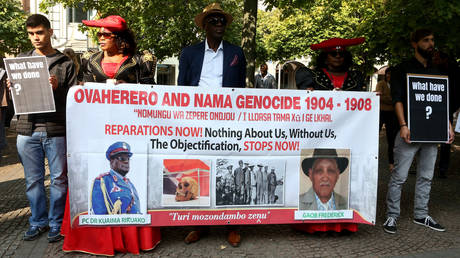
A heated debate inside Germany’s parliament has reignited one of the most uncomfortable conversations in modern history: who pays for colonial genocide, and can money ever be enough? Last Wednesday, the Bundestag clashed over reparations for the Ovaherero and Nama communities of Namibia, victims of what many historians call the first genocide of the 20th century.
Here is what you need to understand about what happened, what is being demanded, and why it matters far beyond Germany’s borders.
Between 1904 and 1908, German colonial forces waged a systematic extermination campaign in present-day Namibia, driving entire families into the desert and locking survivors in concentration camps. Up to 80% of the Ovaherero population and roughly half of the Nama people perished. Germany controlled the territory from 1884 until 1915, and the scale of the killing was staggering.
In 2021, Berlin formally recognized the atrocities as genocide and pledged €1.1 billion over 30 years for reconstruction and development — but explicitly ruled out any legal compensation claims. That distinction, between development aid and reparations, sits at the heart of the current dispute.
Inside the Bundestag, the debate exposed sharp divisions. CDU lawmaker Thomas Rachel admitted shame over how long it took Germany to acknowledge the crimes. Green MP Jamila Schafer pushed parliament to formally recognize the genocide against the Ovaherero, Nama, Damara and San peoples and to ask their descendants for forgiveness. At the other extreme, AfD MP Ronald Glaser rejected the €1.1 billion commitment entirely, arguing Berlin carries no legal obligation, and called instead for a historians’ commission. The Left party went furthest, demanding legal liability, direct reparations paid to descendants, land return, and the restitution of looted cultural property and human remains.
Both opposition motions were referred to the German Foreign Affairs Committee, meaning no immediate resolution is in sight. Meanwhile, Ovaherero and Nama representatives have flatly rejected development funding as a substitute for reparations, and insist they were shut out of the negotiations. Germany disputes this, claiming community representatives participated on the Namibian side.
This debate does not exist in a vacuum. The African Union has designated 2026–2035 as a reparations decade, building expert bodies to craft a unified continental legal strategy. The Caribbean Community has updated its own ten-point reparations plan, pushing for monetary compensation, debt cancellation and investment in health and education.
On March 25, the UN General Assembly adopted a Ghana-led resolution declaring the trafficking and enslavement of Africans “the gravest crime against humanity” and calling for reparations. It passed with support from 123 countries. The US, Israel and Argentina voted against it. The UK and every EU member state abstained — a silence that speaks volumes.
Germany’s parliamentary clash is a mirror of a much larger global reckoning. For young Africans watching this unfold, the question is no longer whether colonial crimes deserve redress. The question is whether the world’s powerful nations will ever move beyond symbolic gestures to face real accountability.



