Physical Address
304 North Cardinal St.
Dorchester Center, MA 02124
Physical Address
304 North Cardinal St.
Dorchester Center, MA 02124

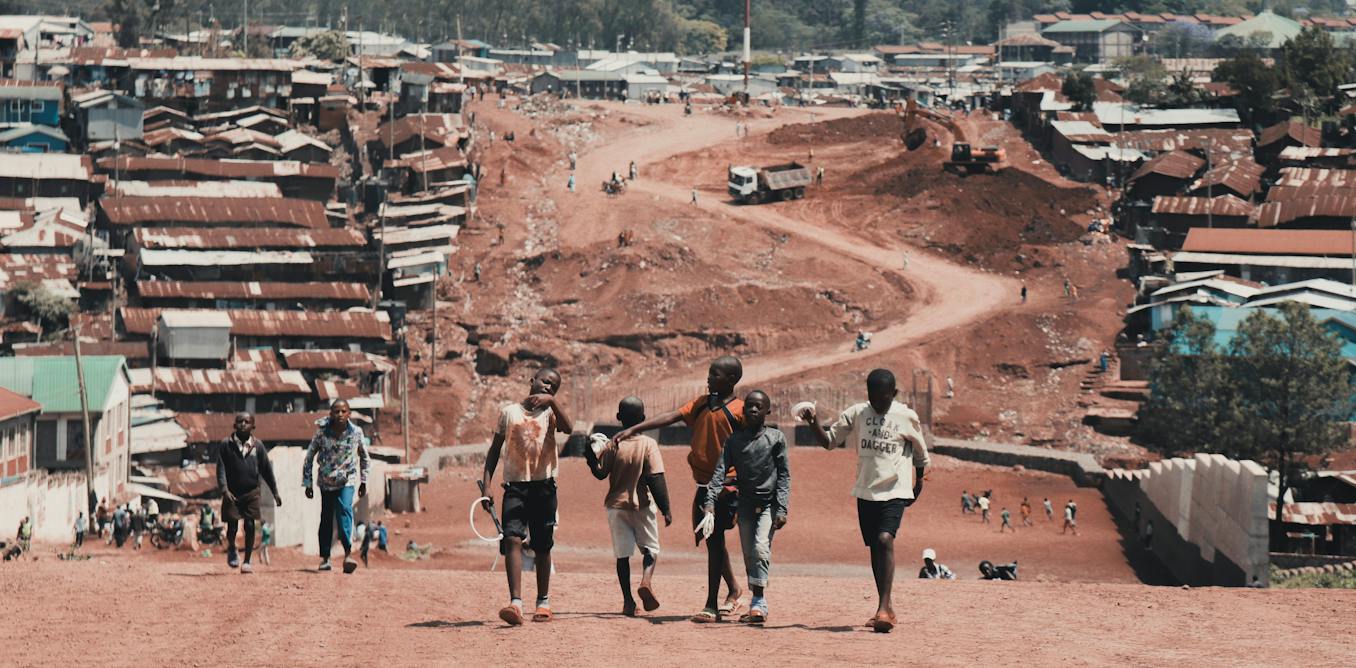
World leaders were called upon in September 2026 to back the creation of an International Panel on Inequality, a proposed permanent scientific body that would sit within the multilateral system and assess the scale, drivers and consequences of inequality across the globe. The call came from Brazil, Norway, South Africa and Spain, joined by Nobel laureate economist Joseph Stiglitz, on the sidelines of the UN General Assembly in New York — a moment that marked a significant shift in how the international community is beginning to treat economic inequality as a structural, systemic challenge rather than a secondary concern. The African Union formally endorsed the initiative in February, and South Africa has since signalled its intention to table a General Assembly resolution to establish the panel. Modelled on the Intergovernmental Panel on Climate Change, the body would evaluate not only how severe inequality is, but what policies can actually reduce it.
The ambition is real and the momentum is building. For the first time, inequality could have the kind of permanent, authoritative scientific infrastructure that climate change has had for decades. But the critical question — one that researchers and policymakers across the African continent are already raising — is whose realities will actually be reflected in the panel’s assessments, and whose evidence will shape its recommendations.
The concern is not abstract. The Global Justice Report, released in June by the World Inequality Lab, put forward sweeping proposals for tackling inequality worldwide, yet economists working on labour markets and informality have pointed out that many of those proposals rest on assumptions that only hold in high-income countries — assumptions about the kinds of employment relationships that exist, the labour protections in place, and the institutional capacity available to enforce them. These frameworks, however well-intentioned, risk producing prescriptions that simply do not travel well to the contexts where inequality is most acute and most entrenched.
The African Centre of Excellence for Inequality Research has spent more than a decade producing country-level inequality diagnostics in close collaboration with African researchers and national statistical offices, work that has been consolidated in a recent book on inequality across sub-Saharan Africa. The lesson drawn from that experience is straightforward: global initiatives built primarily on the data and institutions of the global north will struggle to be accurate — let alone useful — in the places where inequality cuts deepest. That gap is precisely what the African Inequality Review is designed to close, through new cross-country research on African inequality and the construction of a public resource linking the continent’s inequality datasets.
The demographic stakes could not be higher. UN projections show that sub-Saharan Africa will account for more than half of all world population growth through to the end of this century, with almost all of the global expansion of the economically active population coming from the continent. Because most Africans are currently concentrated at the bottom of the global income distribution, this shift pulls the entire world’s distribution along with it — between 1990 and 2016, the share of the world’s poorest income decile living in sub-Saharan Africa rose from roughly one in five to one in three, according to estimates from the African Development Bank and the World Bank.
Inequality within African countries is itself among the highest anywhere on earth. The continent is home to seven of the world’s ten most unequal countries, and in 2019 the richest 10% of Africans captured approximately 54% of total income while the poorest half shared just 9%. Any international panel that fails to build a strong African evidence base will, in effect, be assessing the past of global inequality rather than its future — and the prospects of Africa’s young, rapidly growing population will determine which direction that future takes.
The existing evidence base remains dangerously thin. The picture of African inequality rests on fewer country observations than any other major region, and different databases present strikingly different accounts of the levels and trajectories of inequality across the continent, making it difficult for policymakers to act with confidence on what they are seeing.
The African Inequality Review drew its design from two earlier models: the Deaton Review in the United Kingdom, a multidisciplinary assessment of inequalities in income, wealth, health and opportunity led by the Institute for Fiscal Studies and chaired by Nobel laureate Angus Deaton, and the Latin American and Caribbean Inequality Review, which sought to explain why inequality in that region remains so persistently high. The African initiative was launched immediately following a meeting of the African Union and South Africa African Expert Panel, an arrangement that brought senior African policymakers into direct dialogue with researchers and practitioners from the outset rather than presenting them with finished conclusions.
Participants were asked two foundational questions: where are important policy choices being made without the evidence that decision-makers actually need, and which inequality questions, if answered rigorously, would genuinely change policy? The answers that emerged were revealing and pointed consistently toward the intersection of fiscal, corporate and asset data as the most critical blind spot in current research.
Policymakers pointed to the widespread practice of governments granting tax breaks to large individual firms through negotiated, case-by-case agreements rather than through transparent rules in tax law that apply equally to every business. These incentives are rarely tied to verifiable outcomes — jobs created, local procurement, skills transferred — which makes it almost impossible to assess whether they serve the public interest or simply entrench the advantages of those already powerful enough to negotiate them. The same logic applies to public infrastructure investment: impact assessments routinely examine who is displaced by a new road and who gains market access, but far less often trace who wins contracts and subcontracts, or who ultimately captures the economic rents that infrastructure generates over time.
Control over land, mineral resources and credit, and access to legal identity through civil registration, were raised in the same breath as equally fundamental determinants of who gains access to opportunity and where productivity remains structurally blocked. Assessments that ask whether a policy loosens those constraints — rather than only measuring who gains and loses at the point of delivery — give a far more honest account of long-term returns.
A second priority that emerged from the consultation was that this new research agenda must build on household survey data rather than abandon it. Decades of survey and panel research have established who is poor, how people move in and out of poverty, and how disadvantage transmits across generations — that knowledge remains foundational. The frontier now lies in linking those microdata with tax records, administrative data, firm-level data, and ownership and procurement registers, so that the distribution of outcomes can be connected to the mechanisms that actually produce them rather than simply described in isolation.
Participants also challenged the dominance of single summary measures like the Gini coefficient, which compresses the entire distribution of income into one number ranging from zero to one. Useful as it is for comparison, the Gini cannot tell a government whether its priority should be competition policy and progressive taxation, social protection, or early childhood investment — and there is no known threshold at which inequality becomes too high to sustain growth, because that depends entirely on what is driving inequality in a given context. In many African settings, even a relatively low aggregate inequality figure can mask severe gender biases that a single number will never reveal.
A further priority that participants stressed was the need for policy design to start from the reality of informal livelihoods, rather than assuming that informality is simply a transitional problem that can be regulated away. Across much of the continent, informal work is not a failure of the labour market but its dominant form, and frameworks that treat it as an aberration to be corrected will consistently misread both the problem and the solution. Above all, those present at the consultation insisted that researchers and policymakers must work together from the very beginning of the research process — not in a relationship where science produces findings and policy receives them, but in genuine co-design that makes research useful before it is even complete.
The African Inequality Review, in this sense, represents more than a data project. It is a challenge to the way global knowledge about inequality is produced, and a signal that the continent’s researchers, institutions and young populations will not accept being studied from the outside when the stakes of getting it right are this high.



