Physical Address
304 North Cardinal St.
Dorchester Center, MA 02124
Physical Address
304 North Cardinal St.
Dorchester Center, MA 02124

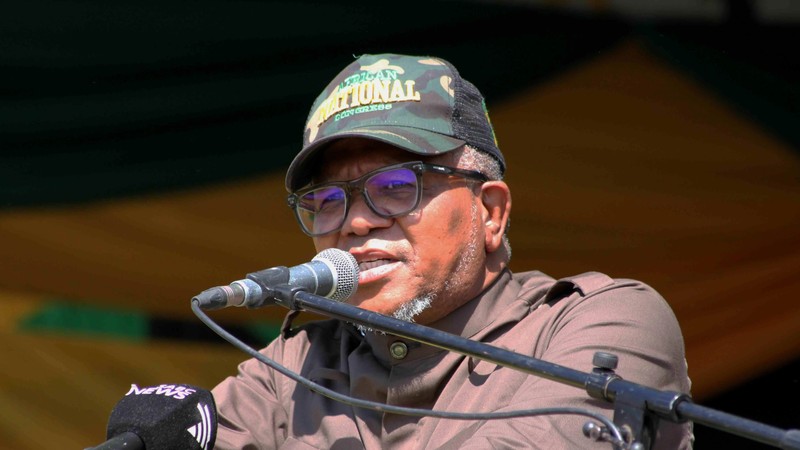
A legal dispute over candidate lists could cost the ANC more than just a court case — it could reshape the outcome of the November 4 local government elections entirely.
ANC secretary-general Fikile Mbalula has issued a stark warning: if the party’s challenge before the Constitutional Court over disputed proportional representation candidate lists falls short, the electoral consequences could be severe. Speaking to the SABC on the sidelines of the ANC’s National Working Committee meeting in the Eastern Cape, Mbalula was candid about the stakes. “Should it not be successful, of course it will have a negative impact, and that’s not what we are hoping for,” he said, in remarks that cut through the usual optimism of pre-election party messaging.
The roots of this legal battle stretch back to late August, when the Electoral Court dismissed the ANC’s appeal against the Independent Electoral Commission (IEC) over 181 candidates who were excluded from the upcoming elections. The court found that candidate information entered into the IEC’s online system before the August 28 deadline did not constitute a formal submission, because the party had not completed the final stage of the process. For the ANC, this distinction felt like a technicality weaponised against them — and so they escalated the matter to the Constitutional Court, the highest legal authority in the land.
The municipalities caught in the crossfire of this dispute are spread across three provinces: Port St Johns, Ngquza Hill, Walter Sisulu and Sundays River Valley in the Eastern Cape, uMshwathi in KwaZulu-Natal, and Mangaung in the Free State. These are not peripheral battlegrounds — they represent communities where local governance decisions directly shape the everyday lives of young people, from access to water and electricity to opportunities for economic participation. The absence of 181 ANC candidates from these contests is not a minor procedural footnote; it is a structural disruption with real political weight.
Mbalula was unapologetic in his framing of the party’s legal argument, insisting the ANC is not seeking anything beyond what is lawful. “All we are asking for is that what was submitted must be recognised as delivered. That is the matter,” he said, projecting a confidence that the party’s case rests on solid legal and moral ground. He went further, suggesting the IEC itself should have resolved the issue without forcing the matter into the courts — a pointed critique of the commission’s handling of the dispute that signals the ANC’s frustration runs deeper than the litigation alone.
Beyond the courtroom, the party is also navigating turbulent waters in the Eastern Cape, where questions about the state of its internal structures have been circulating with growing intensity. Mbalula pushed back firmly against any narrative of institutional collapse, acknowledging challenges while refusing to concede the picture of chaos that critics have painted. “The projection that there is almost a state of collapse and chaos in the province is far from the truth,” he insisted, pointing to regional conferences that have been held and grassroots campaigning already underway as evidence that the party’s machinery remains functional.
Yet the very fact that Mbalula felt compelled to address those rumours so directly speaks to the pressure the ANC is operating under. A governing party heading into local elections while simultaneously fighting a legal battle over its own candidate lists, in a province where litigation has repeatedly disrupted its structures, is a party navigating genuine fragility — whatever the official messaging might suggest. For young South Africans watching this unfold, the episode raises uncomfortable questions about institutional accountability, electoral integrity, and whether the country’s democratic processes are robust enough to withstand the strain placed on them by political and procedural disputes of this kind.
The Constitutional Court’s ruling will come with consequences that extend well beyond the ANC’s seat count. It will set a precedent for how candidate submission processes are interpreted, and it will test whether South Africa’s electoral institutions can be trusted to adjudicate fairly between procedural rigidity and democratic participation. The outcome, whenever it arrives, will matter — and not just to Fikile Mbalula.



