Physical Address
304 North Cardinal St.
Dorchester Center, MA 02124
Physical Address
304 North Cardinal St.
Dorchester Center, MA 02124

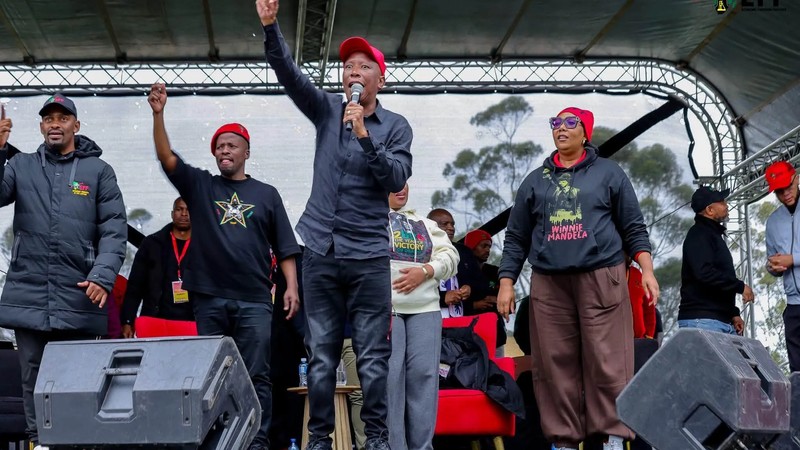
At a packed manifesto rally held at Riverview Sports Field in Kokstad, KwaZulu-Natal, Economic Freedom Fighters (EFF) leader Julius Malema made a bold and direct call: every South African receiving a SASSA grant should be automatically exempt from paying for water and electricity. The statement, delivered with characteristic force, landed at a moment when millions of grant recipients are caught between the modest financial relief of social support and the relentless monthly burden of municipal bills.
The rally forms part of the EFF’s intensifying campaign ahead of the November 4 local government elections, where the party has positioned basic service delivery, unemployment and municipal governance as the central pillars of its agenda. For a generation of young South Africans watching their grandparents struggle, the message hit close to home.
Malema framed his argument around a fundamental contradiction embedded in the current system. The state acknowledges that SASSA recipients are poor — that is precisely why they receive grants — yet municipalities still send them monthly bills for water and electricity, effectively clawing back a portion of the very support the government provides. “You cannot be poor when it’s time to receive SASSA, but rich when it’s time to pay for electricity and water,” he told the crowd.
Beyond the rallying rhetoric, Malema put forward a concrete structural proposal. He argued that government systems should be digitally integrated, allowing municipalities to automatically identify SASSA beneficiaries and exempt them from basic service charges without requiring those individuals to register separately or prove their poverty a second time. Under the current Free Basic Electricity (FBE) programme, recipients must actively register with their local municipality — a process that many elderly or vulnerable people simply cannot navigate.
His vision is one of administrative coherence: if the state has already determined that someone is indigent through the SASSA system, that determination should flow automatically across all government services. “The only place where you’re going to tell people you’re poor is at SASSA,” he said, signalling that the EFF sees bureaucratic fragmentation as a tool that quietly sustains poverty rather than alleviating it.
Malema also drew a sharp comparison to no-fee schools, pointing out the inconsistency in how the state applies its own logic. When a community is deemed too poor to afford school fees, the government waives them entirely — yet those same communities face monthly water and electricity bills. School fees are annual; utility bills are relentless. The parallel is difficult to dismiss.
He further called for the old-age pension to be raised to at least R4,500 per month, arguing that the current rates of R2,400 and R2,420 are wholly inadequate for dignified living. For elderly South Africans who spent decades in the formal workforce, contributing taxes and building the economy, the current grant represents a fraction of what a liveable retirement should look like.
Whether the EFF secures enough municipal seats on November 4 to translate these proposals into policy remains to be seen. What is clear, however, is that the party is staking its local government campaign on the daily economic realities of South Africa’s most vulnerable — and betting that young voters, many of whom live in households where a grandparent’s SASSA grant is a lifeline, are paying close attention.



