Physical Address
304 North Cardinal St.
Dorchester Center, MA 02124
Physical Address
304 North Cardinal St.
Dorchester Center, MA 02124

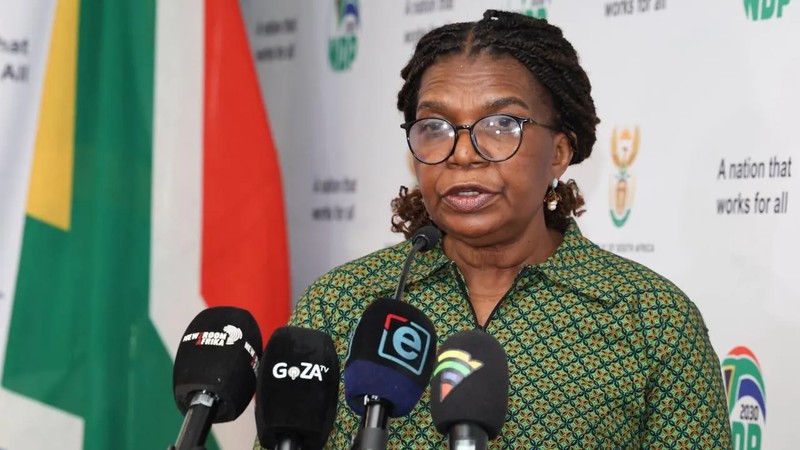
For years, South Africa’s Central Drug Authority has struggled to make a meaningful dent in one of the country’s most persistent crises. The CDA, established under the Prevention of and Treatment for Substance Abuse Act to guide national drug policy and drive prevention, treatment and aftercare services across the country, had long been seen as an institution with a mandate far larger than its achievements. Then, on March 31 this year, its board’s term expired — and the authority was left without leadership entirely.
The months that followed were telling. By August, members of Parliament were openly telling CDA officials that there was little to show for the body’s work, a damning verdict for an institution funded by the Department of Social Development and tasked with protecting millions of South Africans from the ravages of substance abuse.
Parliament moved to fill the vacuum, calling for applications to reconstitute the board. Of the 102 CVs submitted, 71 applicants failed to meet the basic requirements. A recheck by the parliamentary research team added two more names to the qualifying list, bringing the total to 33 eligible candidates — from whom a joint parliamentary subcommittee shortlisted 27 on Wednesday.
What made the shortlisting process remarkable, however, was not the numbers but the names. Several of the candidates recommended for the new board had previously served on the very authority that MPs had recently criticised for underperforming. The committee moved forward anyway, with members offering varying justifications for their choices.
MP Nicola du Plessis acknowledged the authority’s poor record but defended her selection of a former member, arguing that institutional knowledge and memory were too valuable to discard. “They have a deep understanding of research and they also have experience within substance abuse services, which is all important,” she said. MP Rev Nhlanhla Gcwabaza echoed that reasoning, framing the decision as one of continuity and, in his words, giving people “another chance.”
Not everyone on the committee was entirely comfortable with the approach. MP Thokozile Sokhanyile admitted she was “taking a risk” by selecting people who had already held positions on the authority, while MP Makhi Feni struck a more demanding tone, insisting that the new board would be expected to deliver on everything the previous one had left undone.
The urgency behind those expectations is hard to overstate. The South African Medical Research Council’s latest drug-trend report, released in May, revealed that of the 7,975 people admitted to specialist drug treatment centres in the first half of 2025, a growing proportion were 18 years old or younger — up from 18% in the previous six months. Young people are increasingly at the centre of the crisis, and the institution meant to respond to it has spent months without a functioning board.
Social development minister Dina Pule will make the final appointments once she receives the committee’s recommendations. Whether the reconstituted CDA will break from its past or simply repeat it now rests, in large part, on the choices she makes — and on whether the familiar faces shortlisted this week are ready to prove the sceptics wrong.



