Physical Address
304 North Cardinal St.
Dorchester Center, MA 02124
Physical Address
304 North Cardinal St.
Dorchester Center, MA 02124

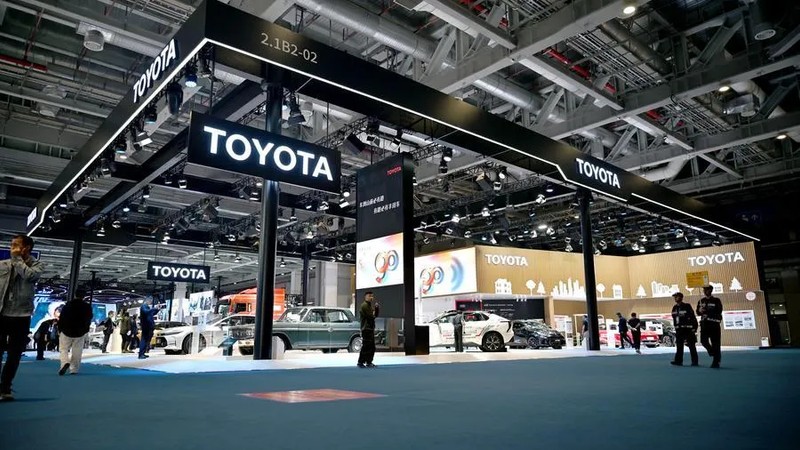
For nearly three decades, the city of Zárate in Buenos Aires province has quietly hummed with the rhythm of Toyota’s assembly lines. Since 1997, the Japanese automaker has built vehicles there, shipping them across Latin America with the steady confidence of a brand that once seemed untouchable. Then, over the past two years, something shifted — and the response that arrived this month makes clear that the era of quiet confidence is over.
The disruption came, as it so often does now, from China. Led by BYD and a wave of aggressively priced competitors, Chinese automakers began rewriting the rules of the South American market with a speed that caught legacy brands visibly off guard. Argentina’s electric vehicle market, which had barely registered on any analyst’s radar just a year ago, is now projected by some forecasters to post a higher EV market share than the United States by early 2027. That is not a gradual shift — that is a leapfrog, and established players have had to decide whether to watch it happen or fight back.
Toyota chose to fight back.
The company announced a $1.34 billion investment to build a fully electrified vehicle plant at its existing Zárate complex, a commitment that Argentina’s Economy Minister Luis Caputo described as the largest single investment ever made in the country’s automotive industry. The scale alone commands attention. But the timing, the framing and the strategic logic behind it reveal something deeper about where the global auto industry is heading — and what it means for a continent that Western manufacturers had long treated as a secondary market.
The investment did not emerge from nowhere. It was made possible, at least in part, by Argentina’s RIGI large-investment incentive scheme, a regulatory framework designed to attract major capital commitments by offering long-term predictability and improved competitiveness. Toyota’s project became the first automotive beneficiary of the scheme, and the company was explicit that securing RIGI approval was a key milestone enabling the project to move toward its final green light. In a country where economic instability has historically frightened off long-term industrial bets, that signal carries real weight.
With RIGI backing confirmed, the numbers attached to the project begin to tell their own story. The plant is expected to generate $1.28 billion in annual exports, with roughly 70 percent of total output destined for markets beyond Argentina’s borders. During construction, approximately 3,600 jobs would be created, followed by around 2,600 operational roles combining direct and indirect positions. Toyota already exports about 80 percent of its Zárate output to 22 Latin American markets, and in 2025 alone produced 180,352 vehicles there — a 5.8 percent increase on the previous year — making Zárate one of the most export-intensive automotive facilities on the continent.
The new electrified line would build directly on that foundation. Industry reports have linked the project to an electrified version of the Toyota Hilux, the pick-up truck that dominates South American roads with a near-mythological status among buyers across the region. Toyota has not officially confirmed the model, describing the project only as producing an electrified vehicle at the Zárate industrial site, but the association has done little to dampen the excitement among analysts who see the Hilux as the perfect vehicle through which to contest Chinese dominance in a market that skews heavily toward utility vehicles.
Toyota is not alone in reading this moment as one that demands a local response rather than a retreat. Renault, which operates a plant in Córdoba in partnership with China’s Geely, announced earlier this month that it will build an entirely new pick-up model there, aimed directly at South American buyers. The pattern is becoming clear: legacy automakers are localising production, committing to export-oriented strategies and betting that proximity to the market — combined with brand recognition built over decades — can blunt the momentum of Chinese competitors who have moved with remarkable speed and discipline.
What makes the Toyota announcement resonate beyond the corporate press release is what it implies about the continent’s new industrial significance. Latin America, and Argentina specifically, is no longer peripheral to the global auto industry’s strategic calculations. It is a battleground, and the investments now flowing into it reflect a genuine reckoning with what Chinese expansion has set in motion. For young Africans watching parallel dynamics unfold across their own continent — where Chinese automakers are equally aggressive and legacy brands equally slow to respond — the Zárate story offers both a warning and a possible blueprint.
The final investment decision from Toyota’s global leadership has not yet been confirmed. But the direction of travel is unmistakable.



