Physical Address
304 North Cardinal St.
Dorchester Center, MA 02124
Physical Address
304 North Cardinal St.
Dorchester Center, MA 02124

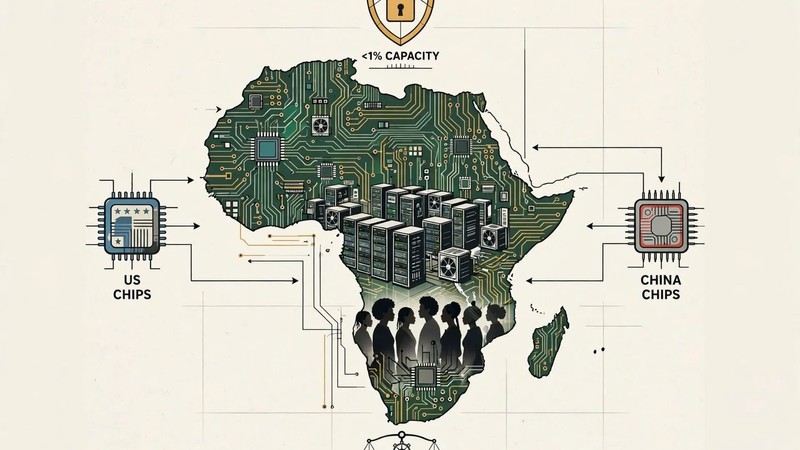
The world is not waiting. Artificial intelligence has already moved far beyond the simple chatbots and recommendation algorithms most people think of when they hear the term. The global conversation has shifted toward Artificial General Intelligence (AGI) — systems capable of learning and reasoning across entirely different fields without being reprogrammed each time. And beyond that, researchers and policymakers are already debating Artificial Superintelligence (ASI), machines that could one day surpass human capability and improve themselves on their own. This is not science fiction anymore. It is the terrain Africa must now navigate.
So where does Africa stand in all of this? The continent holds the world’s youngest population — a demographic advantage that could become its greatest economic engine. Yet persistent gaps in healthcare infrastructure, agricultural systems, education, connectivity and computing power mean that this potential remains largely untapped. The question is not whether AI will reach Africa. It already has. The real question is who controls it when it arrives.
Right now, two superpowers are locked in a fierce race. The United States and China are competing over frontier AI models, hardware supply chains, technical standards and governance rules. African governments are caught in the middle, and the stakes could not be higher. Remaining passive — simply importing whatever technology either bloc decides to export — carries serious risks for long-term sovereignty and self-determination.
Think about what dependency actually means in practice. When a government builds its public health system, its agricultural data infrastructure, or its education platforms on a single foreign technology stack, it becomes vulnerable. A shift in vendor policy, a new round of export controls, a diplomatic fallout — any of these could cripple essential services overnight. Africa has seen this kind of vulnerability before, in different sectors, under different names. The pattern is familiar. The consequences are real.
The smarter path forward borrows from a diplomatic tradition Africa already knows well: strategic non-alignment. During the Cold War, many African states refused to bind themselves exclusively to either Washington or Moscow, using multiple partnerships to preserve their freedom of action. The same logic applies today. In the AI era, non-alignment should not mean sitting on the sidelines. It should mean actively cultivating diverse technological partnerships — with the US, China, Europe and homegrown innovators — to build domestic capacity rather than deepen foreign reliance.
Concrete steps matter here. African governments should require multi-vendor resilience in public procurement, meaning that no critical public-sector AI system can depend entirely on a single foreign model, cloud provider or hardware supplier. Portability and interoperability must be built into contracts from the start, so that institutions retain operational control even when vendors change their terms. This is not protectionism. It is basic strategic sense.
Regulatory sandboxes are another powerful tool. Startups, universities, public agencies and civic innovators across the continent need the freedom to experiment with AI systems under supervision before facing the full weight of compliance requirements. Sandboxes tied to rights protection, public safety and clear pathways for responsible scale-up could unlock a wave of homegrown solutions that actually reflect African realities rather than being imported wholesale from Silicon Valley or Shenzhen.
And then there is the question of culture and language — often overlooked, always consequential. Africa is home to over two thousand languages and an extraordinary diversity of cultural contexts. If the AI systems deployed across the continent are trained exclusively on foreign data, built around foreign assumptions and optimised for foreign users, they will serve foreign interests. Local and cultural representation in AI development is not a soft concern. It is a structural requirement for tools that actually work for African people.
Lower-risk, high-impact sectors offer the ideal starting point. Agriculture, education, small-business support, public service delivery and health administration are areas where carefully supervised AI experimentation could generate enormous returns without requiring Africa to bet everything on unproven frontier systems. The wins are achievable. The risks are manageable. The moment to act is now.
Africa stands at a genuine crossroads, and the decisions made in the next few years will shape the continent’s technological future for decades. Embracing AI is not the danger. The danger is embracing it passively, on someone else’s terms, without a strategy of your own.



