Physical Address
304 North Cardinal St.
Dorchester Center, MA 02124
Physical Address
304 North Cardinal St.
Dorchester Center, MA 02124

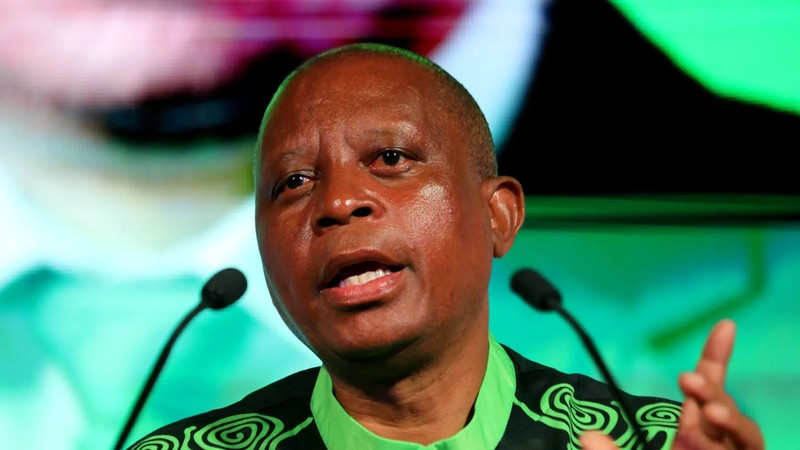
South Africa’s 2026 local government elections are fast approaching, and ActionSA has fired its opening shot with a sweeping manifesto that puts broken municipalities squarely in its crosshairs. Launched on Saturday, 26 September at Johannesburg City Hall by party president and mayoral candidate Herman Mashaba, the plan lays out a nine-point agenda for rescuing a local government sector in deep, measurable crisis — and it arrives at a moment when the stakes for ordinary South Africans, especially young people, could not be higher.
The numbers behind that crisis are staggering and demand attention. Ratings Afrika puts the 2025 operating deficit of 128 municipalities at R39 billion — roughly US$2.4 billion — while the Auditor-General’s 2024–25 report uncovered R145.21 billion in irregular municipal spending since 2021–22. In July 2026, National Treasury went as far as withholding the monthly equitable share grant — the primary national transfer that funds basic services — from 69 municipalities, including the metros of Johannesburg and Nelson Mandela Bay, citing unfunded budgets, unchecked irregular spending and unpaid bills to Eskom and water boards. This is the broken landscape ActionSA is promising to fix.
Mashaba framed the manifesto launch in combative terms, declaring that ActionSA was “declaring war” on the collapse of local government — a collapse he linked directly to deteriorating infrastructure, unreliable water and electricity, crumbling roads, rising crime and entrenched corruption. The nine priorities his party has set out are concrete and interconnected, covering everything from financial recovery to community safety and economic development. Taken together, they form a picture of what functional local government is supposed to look like, even if achieving it demands enormous political will.
The coalition question, however, is where ActionSA’s position becomes both principled and politically delicate. Mashaba acknowledged openly that coalition government will be the reality in many municipalities after the November 4 vote, and he signalled that ActionSA is willing to govern alongside any party that genuinely aligns with its service-delivery agenda. Yet he drew a firm line against pre-election coalition deals, insisting that the party will not trade its values for a seat at the table. “We will not enter into any pre-election conditions. We are going to contest elections on our own values, policies and records,” he said, outlining a sequencing logic in which voters decide first, the programme comes second, and political positions come last.
For a generation of young South Africans who have grown up watching municipal dysfunction deepen — load-shedding, burst pipes, uncollected rubbish, unsafe streets — the real question is whether this kind of principled positioning can translate into actual governance. ActionSA already holds the mayoralty of Tshwane, the metro around Pretoria, giving it a track record to point to, though critics will demand harder evidence of delivery before November. The manifesto is bold, the crisis is real, and the election is five weeks away. Whether ActionSA can build coalitions strong enough to act on its promises, without compromising the promises themselves, will define its credibility long after the votes are counted.



