Physical Address
304 North Cardinal St.
Dorchester Center, MA 02124
Physical Address
304 North Cardinal St.
Dorchester Center, MA 02124

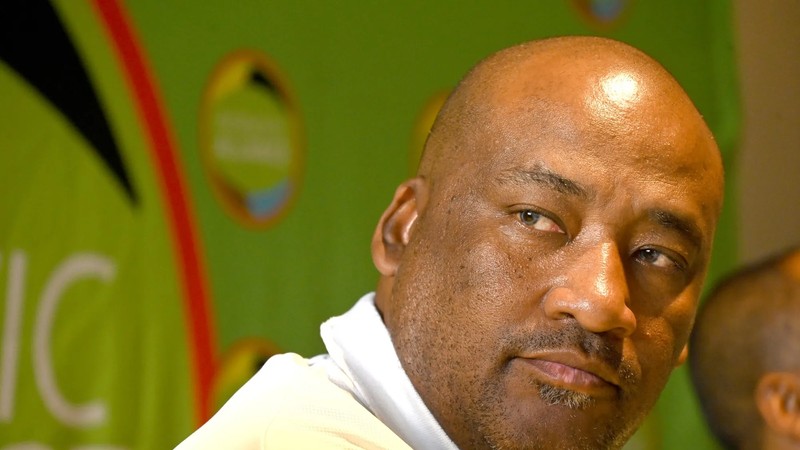
Something raw and unfiltered is happening in Johannesburg’s political landscape right now, and Patriotic Alliance leader Gayton McKenzie is making sure nobody looks away. At a recent PA campaign event in Joburg, McKenzie made headlines by throwing his full support behind Kenny Kunene as the city’s next mayor — and by firing sharp, pointed questions at Helen Zille, the Democratic Alliance’s pick for the same seat. This is not your typical, polished political endorsement. This is a clash of visions, personalities, and accountability — and it matters deeply for young South Africans watching their cities struggle.
McKenzie’s pitch for Kunene was blunt and deliberately provocative. “The people of Joburg need a ruffian like Kenny Kunene to attack the criminals,” he told journalists, making clear that he sees Johannesburg’s spiralling crime crisis as a problem that demands a fighter, not a diplomat. In McKenzie’s framing, a city drowning in gang violence, corruption, and urban decay does not need a polished politician who will “stand back” — it needs someone willing to get into the trenches. Whether you agree with that logic or not, the message lands hard in a city where residents in areas like Eldorado Park and Soweto have long felt abandoned by their leaders.
The attack on Zille was equally direct, and arguably more politically calculated. McKenzie did not simply dismiss her — he challenged her record. His central argument was devastatingly simple: if Zille genuinely has the solutions she is now promising Johannesburg communities, why have those same solutions never materialised in the Western Cape communities she has governed for years? “The things she says she’s going to do for Soweto, why has she not done them for Langa? Why has she not done them for Gugulethu? Why has she not done them for Khayelitsha?” he asked, letting the silence answer for him.
McKenzie pushed the comparison even further by zeroing in on Eldorado Park, one of Johannesburg’s most neglected coloured communities, where the PA has built significant support. He questioned why similar promises Zille is making for that neighbourhood were never delivered in Mitchells Plain, Bellville, Valhalla Park, and Kraaifontein — all communities in the Cape that have lived under DA governance. For young voters in these areas, that question is not rhetorical. It is a lived reality, and McKenzie knows exactly how to weaponise it politically.
Beyond the personal attacks, McKenzie also laid out the PA’s broader coalition strategy with surprising candour. The party, he confirmed, is willing to work with any political formation that gives it the leverage to deliver on its core priorities — jobs, clean water, and meaningful change for ordinary people. “The PA will work with anybody that gives us power. Power to give jobs. Power to change people’s lives. Power to bring clean water,” he said, adding that the party is already in partnership with the Freedom Front Plus. It is a pragmatic, transactional approach to politics that strips away ideology and focuses on outcomes — a stance that may resonate strongly with a generation tired of empty party loyalty.
What makes this moment worth paying close attention to is what it reveals about the shifting power dynamics in South African urban politics. The PA is a young, hungry party punching well above its weight, and McKenzie understands the media game better than most. By positioning Kunene as a street-smart disruptor against Zille’s establishment credibility, he is drawing a cultural and generational battle line. For the youth of Joburg — who bear the heaviest cost of crime, unemployment, and failing municipal services — the question of who actually runs this city is not abstract. It is urgent, immediate, and deeply personal. The race for Johannesburg’s mayoral seat just got a whole lot more interesting.



