Physical Address
304 North Cardinal St.
Dorchester Center, MA 02124
Physical Address
304 North Cardinal St.
Dorchester Center, MA 02124

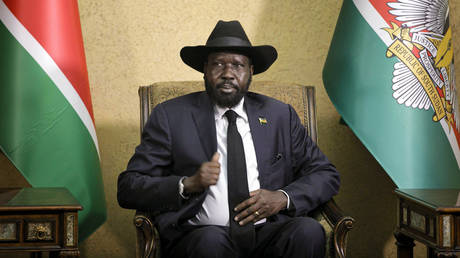
South Sudan’s President Salva Kiir has dismissed the head of the National Elections Commission just three months before the country’s first national election since independence — with no explanation, no transparency, and a replacement named overnight. The move is raising serious alarm about whether December’s vote will happen at all.
Abednego Akok Kacuol was removed as commission chair by presidential decree, announced on state television on Tuesday. Gabriel Bol Deng Majok, former Secretary-General of the commission, was appointed to replace him ahead of presidential and parliamentary elections scheduled for December 22. No reason was given. None.
Akok had led the commission since 2012. He was reappointed in 2023 when the body was reconstituted under the landmark 2018 peace deal — the agreement that ended a brutal five-year civil war which killed an estimated 400,000 people and tore the country apart along ethnic lines. When asked about his dismissal, Akok told local broadcaster Eye Radio he found out through a phone call from “somebody.” He welcomed the decision. The whole thing is deeply strange.
South Sudan’s electoral law does allow for the commission chair’s removal — but only on specific grounds like proven partiality, incapacity, or gross misconduct, and only through a defined procedure. None of that was cited here. Political analyst Abraham Kuol Nyuon told AP bluntly: “This is a delay tactic.” He argued the incoming chair would need significant time to get up to speed, disrupting voter registration and other critical preparations.
This firing is not an isolated incident either. Last November, Kiir removed Benjamin Bol Mel — a vice president and senior SPLM figure widely seen as a potential presidential successor — again without explanation. A pattern is forming. Unexplained reshuffles. Silenced rivals. A peace deal fraying at the seams.
South Sudan has delayed elections repeatedly since independence in 2011, each time citing failures to implement the peace accord. Kiir has not formally announced a postponement of the December 22 vote. But with an election chief fired in the dark, a country at war with itself, and millions of citizens locked out of basic security and services, the question isn’t just whether these elections will be free and fair — it’s whether they’ll happen at all.



