Physical Address
304 North Cardinal St.
Dorchester Center, MA 02124
Physical Address
304 North Cardinal St.
Dorchester Center, MA 02124

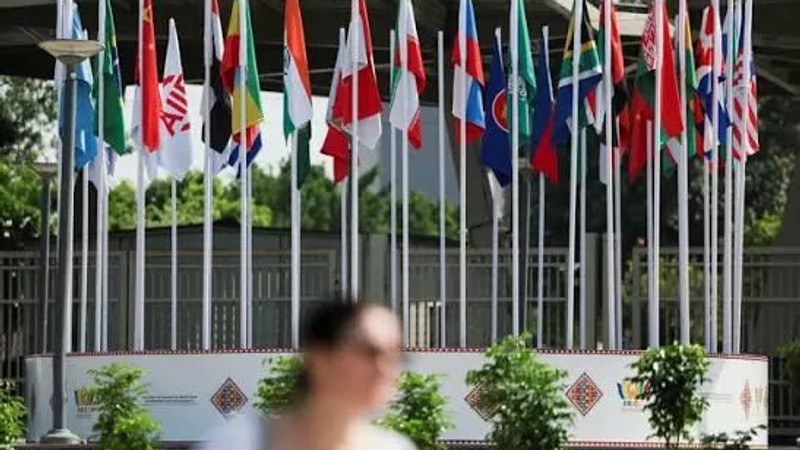
Twenty years after its founding meeting in September 2006, the BRICS grouping — now comprising Brazil, Russia, India, China, South Africa and several newly admitted members — stands at a defining crossroads. Leaders of the bloc have convened to take stock of its journey and map out its ambitions, raising a central question that resonates far beyond diplomatic circles: can a coalition of emerging economies genuinely reshape how the world is governed?
The bloc’s origins were modest. Four foreign ministers — representing Brazil, Russia, India and China — sat down to explore whether their countries’ growing economic muscle could translate into real influence on the global stage. South Africa joined five years later, in 2011, anchoring the African continent in the grouping and completing the now-familiar BRICS acronym.
What started as a loose cooperation mechanism has evolved into something far more ambitious. BRICS today positions itself as a vehicle for South-South cooperation — a framework through which developing nations can build alliances, share resources and challenge the dominance of Western-led financial institutions.
Central to this ambition is the New Development Bank (NDB), which offers member states access to local-currency financing, reducing their dependence on dollar-denominated debt and the conditions attached to loans from institutions like the IMF or World Bank. For young economies still fighting for fiscal breathing room, this matters enormously.
Chinese President Xi Jinping has become the most vocal architect of what he calls “Greater BRICS” — a concept that goes beyond simply adding new member countries. At the 2024 Kazan Summit, Xi described the bloc’s recent enlargement as a major milestone and called for deeper, more structured cooperation among all member states.
The expansion reflects a broader hunger among developing nations for a seat at the table in global economic governance — a seat proportional to their actual and growing contribution to the world economy. The bloc now accounts for roughly 27% of global GDP, with an average growth rate of approximately 6.2% recorded between 2003 and 2024, figures that signal a genuine and sustained shift in where economic power now lives.
Raw economic size, however, does not automatically convert into decision-making clout. The gap between BRICS’ economic footprint and its influence over international institutions like the UN Security Council or the WTO remains wide, and bridging it requires sustained political will from all members — a challenge given the bloc’s internal diversity.
The grouping’s members do not always share the same foreign policy priorities, and that tension is real. Yet BRICS argues that this very diversity is a strength, reflecting the pluralism of the Global South it claims to represent.
The stakes stretch well beyond trade figures and summit communiqués. The world today is more interconnected, more multipolar and more volatile than it was when the post-1945 international order was designed — and BRICS members argue loudly that the institutions governing that order have not kept pace.
For the young generations across Africa and the broader Global South, this debate is not abstract. It determines who controls access to climate finance, who sets the rules of digital trade and whose development models get legitimacy and funding. BRICS frames its mission as making global governance more representative, more responsive and more accountable to the countries that were largely excluded when those rules were first written.
BRICS is not positioning itself as a rival bloc designed to tear down the existing international architecture. Its stated goal is to reform that architecture from within — to make it reflect the world as it actually is in 2025, not as Western powers imagined it in 1945. Whether the bloc can turn that ambition into concrete institutional change remains the open question that will define its next two decades.
For Africa’s youth — a generation that will inherit both the opportunities and the contradictions of a shifting global order — watching how BRICS navigates this challenge is not optional. It is essential.



