Physical Address
304 North Cardinal St.
Dorchester Center, MA 02124
Physical Address
304 North Cardinal St.
Dorchester Center, MA 02124

Almost a decade of silence.
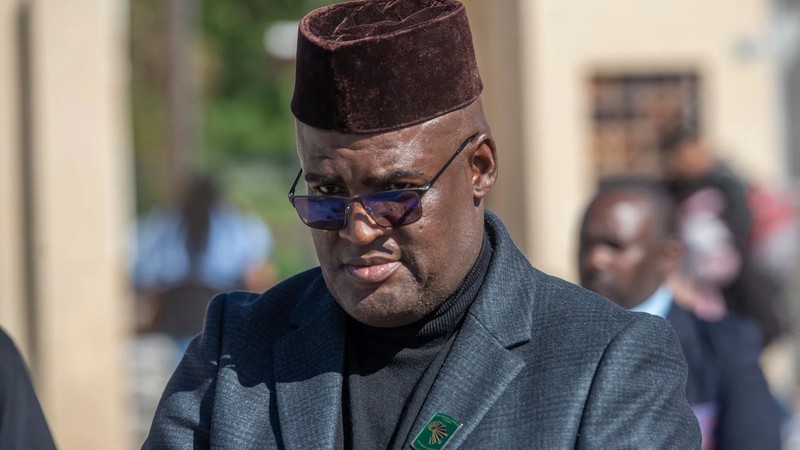
That is essentially what Land Reform and Rural Development Minister Mzwanele Nyhontso admitted when he stood before Parliament and confirmed that the South African government has no updated data on how much of the country’s land is owned by foreign nationals. In a country where land ownership sits at the very heart of political identity, historical injustice and economic debate, that admission lands hard.
The moment came in response to a parliamentary question from African Transformation Movement (ATM) leader and MP Vuyo Zungula, who asked the minister to clarify what percentage of South African land was held by foreign nationals and foreign-owned corporations. The answer Nyhontso gave was, in its own way, more revealing than any statistic could have been: “There are currently no updated statistics available.” The most recent figures, he explained, come from a Land Audit conducted back in 2017 — a snapshot of a country that has since lived through a global pandemic, sweeping economic shifts and years of fierce political debate about the very question being asked.
According to that 2017 audit, foreign nationals owned 789,932 hectares of South African land, representing just 0.56% of the country’s total land area. The Northern Cape held the largest share of foreign-owned land at 298,226 hectares, followed by the Western Cape at 117,063 hectares and the Free State at 73,168 hectares. Limpopo, North West, Gauteng, the Eastern Cape, KwaZulu-Natal and Mpumalanga accounted for the remainder, in descending order. These are the numbers South Africa is still working with — frozen in time, nearly eight years old, and already incomplete when they were published.
That incompleteness is a story in itself. The 2017 audit could only determine the nationality of landowners where land was registered in the names of individuals. Where ownership ran through companies, trusts or other legal entities, the audit hit a wall. Foreign ownership through corporate structures — arguably the more consequential category, given the scale at which corporations can acquire and hold land — remained and still remains essentially invisible to the state. Nyhontso acknowledged that the provincial distribution of land held by foreign-owned corporations could not be determined, nor could the land-use classification of such properties.
Zungula was blunt in his response. “Almost a decade later, and Minister Mzwanele Nyhontso still does not know who owns South Africa’s land,” he said, framing the data gap not as a bureaucratic inconvenience but as a governance failure on one of the most politically charged issues in the country. And it is hard to argue with that framing. Land reform has defined South African political conversation since the end of apartheid, shaping election campaigns, fuelling community protests and sitting at the centre of constitutional debates. To not know, with any current precision, who holds the land is to navigate that conversation half-blind.
There is, at least, movement on the legislative front. Nyhontso confirmed that the department is currently developing legislation specifically aimed at regulating landholding by foreign persons, though the proposed law still awaits Cabinet approval before it can advance further. The direction of that legislation — whether it will restrict foreign ownership outright, introduce transparency requirements, or simply create a clearer regulatory framework — remains to be seen. What is certain is that without a fresh, comprehensive land audit, any new law will be built on an outdated foundation.
For young South Africans, this matters in ways that go beyond political debate. Land shapes where communities can grow, where food is produced, where wealth is accumulated and passed down, and who gets to benefit from the country’s natural resources. When the government cannot answer a basic question about who owns that land, it is not just a statistical gap — it is a gap in accountability, in transparency, and ultimately in the promise of transformation that so many are still waiting to see fulfilled.



