Physical Address
304 North Cardinal St.
Dorchester Center, MA 02124
Physical Address
304 North Cardinal St.
Dorchester Center, MA 02124

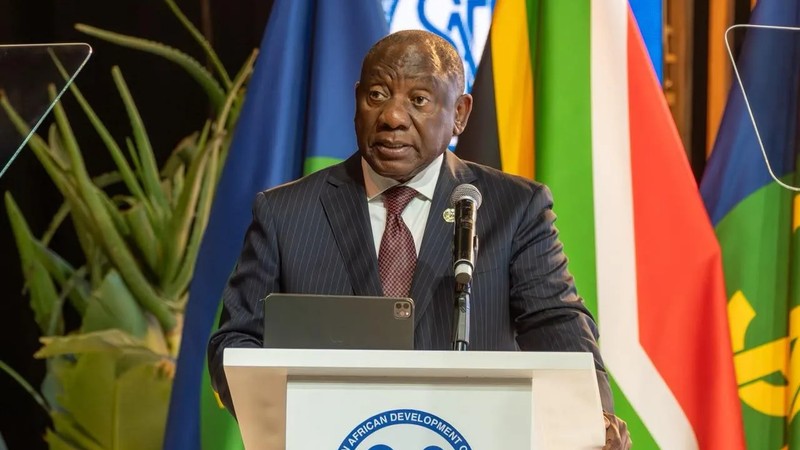
For years, Southern Africa has wrestled with the same stubborn realities — sluggish economic growth, crumbling infrastructure, raw minerals shipped off to be processed elsewhere, and borders that slow trade to a crawl. On 17 August 2026, at the Inkosi Albert Luthuli International Convention Centre in Durban’s eThekwini, leaders from across the region gathered for the 46th Ordinary Summit of the Heads of State and Government of SADC, and the stakes felt higher than usual. It was here that South Africa’s President Cyril Ramaphosa formally accepted the SADC chairpersonship from Zimbabwe’s Emmerson Mnangagwa, stepping into a role that carries enormous weight at an enormously difficult moment for the region.
The handover did not happen in a political vacuum. In the weeks leading up to the summit, South Africa had been shaken by a wave of violent anti-immigration protests that forced tens of thousands of undocumented migrants — most of them from Zimbabwe and Malawi — to flee the country. The images were damaging, the diplomatic fallout real, and Ramaphosa did not shy away from it when he took the floor. He told assembled heads of state that South Africa was “deeply concerned and ashamed” by the discrimination and ill-treatment directed at fellow African nationals, a remarkable admission of failure that set an unusually candid tone for the summit’s opening hours.
From that moment of candour, Ramaphosa pivoted to argument: migration pressures, he insisted, cannot be policed away. The only durable solution lies in addressing the underlying conditions — poverty, unemployment, instability — that drive people to leave their countries in the first place. “South Africa’s future is inseparable from the future of the African continent,” he said, framing regional unity not as a diplomatic nicety but as a practical necessity. No single country, he argued, can build an integrated power grid, manage shared rivers, develop cross-border transport corridors, or absorb the full force of climate change entirely on its own — and the region’s recent history of going it alone has proven exactly that point.
As the summit progressed, infrastructure development emerged as the centrepiece of South Africa’s chairship agenda. Ramaphosa described regional transport corridors as the arteries of integration — connecting landlocked countries to ports, linking production centres to markets, and enabling people and goods to move more freely and at lower cost across borders. He pushed corridor countries to finalise the legal and institutional frameworks needed to make these routes functional, and called for the urgent acceleration of One-Stop Border Posts, which would dramatically reduce the time and cost of cross-border commerce. Investment in roads, rail and ports was not framed as optional infrastructure spending; it was presented as the foundational condition for everything else the region wants to achieve.
Woven tightly into the infrastructure agenda was a sharper, more politically charged priority: industrialisation and the transformation of regional value chains. For too long, Southern Africa has exported raw minerals and agricultural commodities, only to import finished goods manufactured elsewhere from those same resources. Ramaphosa made clear that his chairship intends to push back against that dynamic, urging member states to invest in local processing and manufacturing — particularly around critical minerals — so that the economic value generated by the region’s natural wealth actually stays within it. The summit’s overarching theme placed agriculture, infrastructure and critical minerals at the heart of SADC’s industrial ambitions, signalling a collective shift in how the bloc’s 16 member states think about their own resources.
The trade dimension extended well beyond SADC’s internal borders. Ramaphosa reminded member states that their combined population of more than 400 million people represents a market they have barely begun to exploit, and that the African Continental Free Trade Area (AfCFTA) theoretically opens access to a continental market of over 1.4 billion people. The gap between theory and reality, however, remains wide: differing product standards, cumbersome border procedures and non-tariff barriers continue to strangle intra-regional commerce, and Ramaphosa acknowledged that closing that gap requires concrete, unglamorous administrative work — not just summit declarations.
Beyond trade and infrastructure, leaders at the summit grappled with a cluster of interconnected crises that no single agenda item could fully contain. Energy insecurity, water scarcity, digital exclusion, climate-driven food shocks and the slow operationalisation of the SADC Regional Development Fund — a vehicle intended to finance regional projects — all featured prominently in discussions. The Southern African Power Pool was highlighted as a mechanism for strengthening collective energy resilience, while building climate-proof food systems was identified as an urgent priority for a region where millions already face food insecurity. High unemployment and deepening poverty, particularly among young people, hung over the entire conversation.
By the time the summit closed and a communiqué was issued, the regional body had reaffirmed what Ramaphosa had said at the outset: that the prosperity, security and development of each member state are fundamentally tied to the prosperity, security and development of the region as a whole. The real test, as it always is after a summit, will come in the months that follow — when the speeches end, the corridors empty, and the hard work of turning commitments into action begins. For Southern Africa’s young people, who stand to gain or lose the most from these decisions, that work cannot come soon enough.



