Physical Address
304 North Cardinal St.
Dorchester Center, MA 02124
Physical Address
304 North Cardinal St.
Dorchester Center, MA 02124

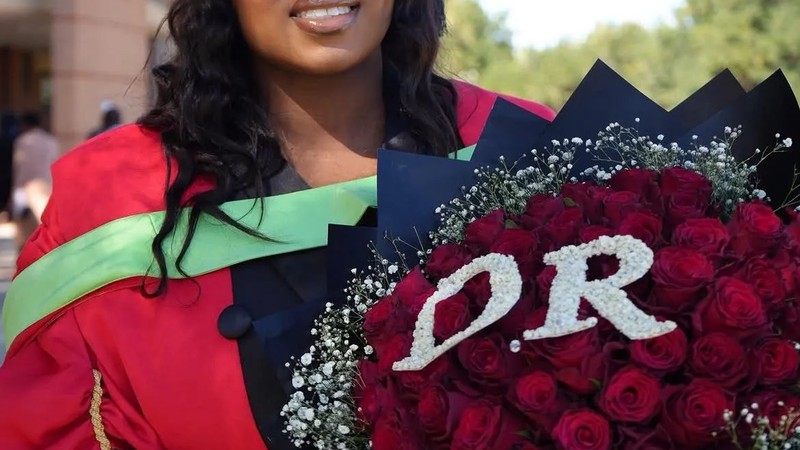
Misinformation does not wait for a translation. It spreads in every language at once — and for too long, the tools built to stop it have only understood English.
That is the structural injustice at the heart of a landmark PhD study by Dr Seani Rananga, a lecturer in Computer Science at the University of Pretoria. Her research, completed at North-West University, makes a clear and urgent case: AI systems that ignore African languages do not protect everyone equally — they protect some people and leave others exposed. Her multilingual framework, designed to detect misinformation across IsiZulu, English and Sepedi, is a direct challenge to that imbalance, and the global research community has taken notice.
The argument starts with a simple, uncomfortable fact. South Africa is one of the most linguistically diverse countries on the planet, home to eleven official languages, yet the overwhelming majority of AI-powered misinformation detection tools are built almost exclusively for English. Platform moderation systems, fact-checking pipelines, automated content filters — they catch the English fraction of false information traffic reasonably well, and they miss much of the rest. Speakers of indigenous languages are therefore not just underserved by these systems; they are structurally disadvantaged, left navigating a polluted information environment without the same digital defences that English speakers take for granted.
Dr Rananga chose the Covid-19 pandemic as her pilot case study, and that choice was deliberate. The pandemic demonstrated, with devastating clarity, how quickly false health information can travel and how lethal the consequences can be when communities cannot identify it. By training her multilingual AI framework on pandemic-era misinformation across three languages, she built a proof of concept that is simultaneously specific enough to be rigorous and broad enough to matter well beyond healthcare. The methods she developed are designed to transfer — to elections, to public emergencies, to any high-stakes moment when false narratives spread fast and the cost of believing them is high.
The research also confronts a technical bottleneck that runs deeper than detection: the weakness of machine translation for low-resource African languages. Most AI systems that do attempt to process non-English content rely on translation as a first step, but translation quality for languages like Sepedi or IsiZulu remains far behind what exists for European languages. Dr Rananga’s framework works directly with these languages rather than routing around them, which matters enormously if the goal is accuracy rather than approximation. Her broader ambition extends further still — she aims to develop large language models, retrieval-augmented generation systems and knowledge graphs that embed African languages properly into the next generation of AI infrastructure, not as an afterthought bolted on at the end, but as a foundational design choice from the start.
The recognition her work has earned reflects how significant the research community considers this gap. Dr Rananga received the Google PhD Fellowship, one of the world’s most competitive awards for doctoral AI research. She also won the Best Poster Award at the 2025 Deep Learning IndabaX South Africa, securing funding to present her findings at the 2026 Deep Learning Indaba at Pan-Atlantic University in Lagos, Nigeria. These are not regional consolation prizes — they are globally competitive honours that place her work at the centre of the international conversation about equitable AI development.
The implication is straightforward and worth stating plainly. A continent where young people are online in growing numbers, consuming news and health information and political content in dozens of languages, cannot afford AI systems designed around a single linguistic reality. Dr Rananga’s research proves that a better approach is technically achievable. The question now is whether institutions, governments and technology platforms will treat that proof as an invitation to act — or let another generation of African-language speakers navigate the information age without adequate protection.



