Physical Address
304 North Cardinal St.
Dorchester Center, MA 02124
Physical Address
304 North Cardinal St.
Dorchester Center, MA 02124

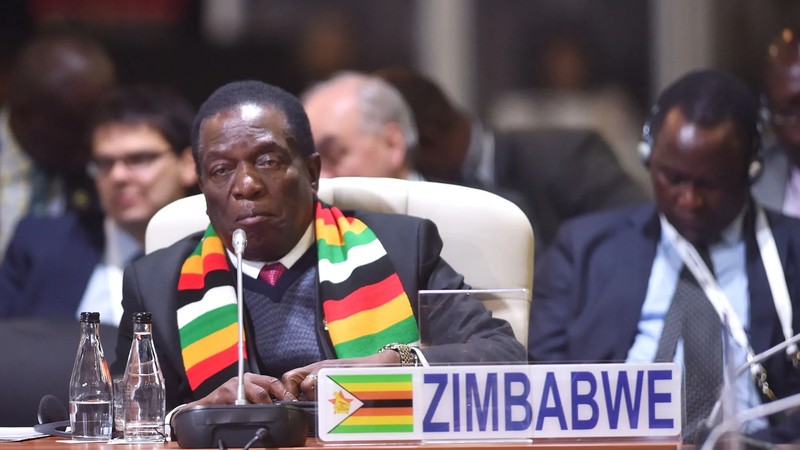
Zimbabwe is in the grip of a constitutional crisis, and the evidence points to one uncomfortable truth: President Emmerson Mnangagwa is systematically dismantling the democratic guardrails that were meant to limit his power. On 7 July, Mnangagwa signed into law a constitutional amendment extending the presidential term from five to seven years and replacing the direct popular election of the president with a parliamentary selection process. This is not a technical adjustment — it is a calculated power grab, and young Zimbabweans are paying the price for it.
The numbers tell the story plainly. Zimbabwe’s 2013 Constitution capped the presidency at two five-year terms, which would have forced Mnangagwa out of office in 2028. Under the new law, each term stretches to seven years, pushing the next election to 2030 and handing him two extra years in power without a single vote from the public. His Cabinet greenlit the proposal in February, Parliament — where ZANU-PF holds a two-thirds majority in the lower house — approved it in June, and Mnangagwa signed it into law weeks later. The ruling party also passed a resolution in October 2025 declaring that extending Mnangagwa’s rule was necessary for “continuity, stability, and the sustained transformation of the nation.” That is the language of incumbents who have stopped asking for permission.
The legal argument used to justify bypassing a referendum is worth scrutinising, because it is as thin as it sounds. Justice Minister Ziyambi Ziyambi and Mnangagwa’s allies insist that since the two-term limit technically remains in place, Parliament had the authority to pass the changes without putting them to a public vote. In other words: the limit stays, it just gets longer. Opposition figures and constitutional lawyers have demolished this logic. Former CCC leader Nelson Chamisa has argued that ZANU-PF resolutions bind only party members, not the Zimbabwean people. CCC interim leader Jameson Timba has gone further, insisting that only a referendum can decide on constitutional changes of this magnitude — and that even then, a sitting president cannot personally benefit from the outcome. Several legal challenges are now before Zimbabwe’s courts, though no ruling has yet been issued.
What makes this moment especially alarming is the violence and repression that has accompanied the amendments. This is not political disagreement playing out in debate chambers — it is playing out in the streets, in detention cells, and at public hearings that spiral into chaos.
Human Rights Watch has documented a pattern of attacks and arbitrary arrests targeting civil society groups, opposition parties, student leaders, and activists who dared to oppose the amendments. At a parliamentary public hearing in Harare, prominent human rights lawyer Doug Coltart was physically attacked, leaving him bruised, with his phone stolen and his glasses broken. Tendai Biti, who leads the Constitutional Defenders Forum, was detained alongside programs director Morgan Ncube in Mutare on the charge of holding a public meeting without notifying police. Biti was later released on bail but barred from convening or addressing any public gathering without prior police notification — a restriction that effectively silences one of the amendment’s most vocal critics. Police have banned public meetings across the country, and reports of harassment and intimidation against critics have multiplied.
ZANU-PF has governed Zimbabwe since independence from the United Kingdom in 1980. That is over four decades of single-party dominance, and this amendment is its latest instrument of entrenchment. Mnangagwa himself — who came to power in a 2017 military coup before winning elections in 2018 and 2023 — had previously stated he would step down in 2028. He has made no such statement since his party began pushing for an extension. The silence is its own kind of answer.
For the 15 million Zimbabweans navigating this moment, and especially for the young people who will inherit whatever political system survives it, the stakes could not be clearer. When a government rewrites the constitution to keep one man in power, bans meetings, arrests lawyers, and beats human rights advocates at public hearings, it is not governing — it is consolidating. The constitutional crisis in Zimbabwe is not a distant institutional dispute. It is a live test of whether the rule of law can survive the ambitions of those who are supposed to be bound by it.



