Physical Address
304 North Cardinal St.
Dorchester Center, MA 02124
Physical Address
304 North Cardinal St.
Dorchester Center, MA 02124

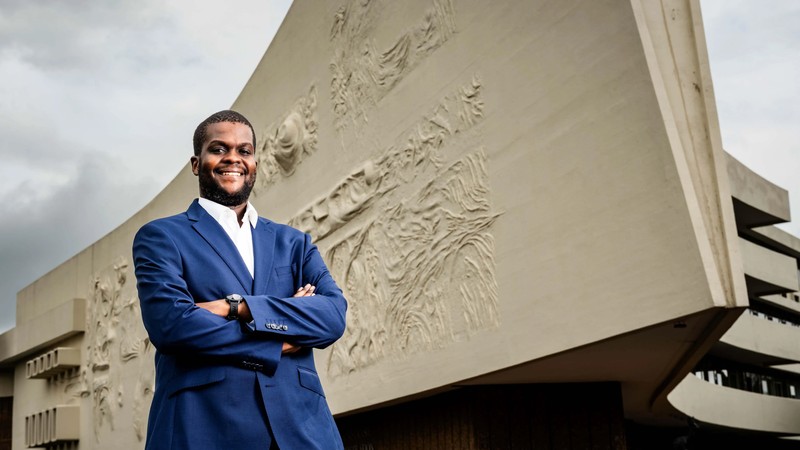
A South African-built open-source tool is quietly reshaping how artificial intelligence handles the world’s most neglected languages — and its reach now stretches from the streets of Nairobi to the steppes of Central Asia.
TextAugment, developed by computer scientist Vukosi Marivate and his research team, was designed to tackle one of the most stubborn problems in AI development: the chronic shortage of high-quality digital data for languages that the tech industry has long ignored. On 16 July 2026, Marivate and his team received the inaugural NSTF-SADiLaR Research Software Award for Human Language Technologies, a recognition that underscores just how far this homegrown innovation has travelled since its inception.
The core challenge TextAugment addresses is one that rarely makes headlines but quietly determines whose voices get heard in the digital age. Languages like isiZulu, Sesotho, and Yoruba — spoken by tens of millions of people across the African continent — lack the vast pools of clean, labelled text that mainstream AI models demand in order to function reliably. Without that data, building tools like spell checkers, translation engines, or sentiment analysis systems for these communities remains extraordinarily difficult. TextAugment works around this barrier by synthetically expanding existing datasets, most notably by substituting words with contextually appropriate synonyms while preserving the original meaning of sentences — a deceptively simple approach with profound implications.
The software supports a broad spectrum of language-processing applications — translation, summarisation, sentiment analysis, and the construction of foundational literacy tools — making it a genuinely versatile piece of what researchers now describe as global language infrastructure.
Marivate himself has emerged as one of the continent’s most decorated figures in data science. Born in Ga-Rankuwa, he received the Order of Mapungubwe in Silver on 19 May 2026, with the Presidency commending him for contributions that have, in their words, “significantly advanced both national and continental technological capabilities” in data science, artificial intelligence, and natural language processing. The NSTF-SADiLaR award, arriving less than two months later, adds institutional weight to what is becoming an unmistakable pattern of recognition for work that began, like so many transformative ideas, as a focused academic research project.
What makes the TextAugment story particularly resonant for a generation growing up in an AI-saturated world is the underlying principle it embodies: that the communities historically excluded from technological progress do not have to wait for Silicon Valley to notice them. A tool built in South Africa, solving a problem rooted in African linguistic reality, is now part of the global toolkit for building fairer, more inclusive artificial intelligence. That is not a small thing.



