Physical Address
304 North Cardinal St.
Dorchester Center, MA 02124
Physical Address
304 North Cardinal St.
Dorchester Center, MA 02124

A Zimbabwean man walks up to an accreditation desk in Durban, claiming to be a performing artist. His documents, he says, were stolen. Security personnel check, double-check, and then make the call — he is arrested on the spot. It is a small but telling moment, a glimpse into just how tight the net has been drawn around the city as it prepares to host one of the continent’s most significant diplomatic gatherings.
The 46th Ordinary Summit of the Southern African Development Community is set to convene on 17 August 2026 at the Durban International Conference Centre, bringing together 12 Heads of State and Government under the theme “Resilient, sustainable and inclusive industrialisation through Infrastructure Development, Agricultural and Critical Minerals Transformation in Pursuit of a Just World.” The stakes — political, economic, and symbolic — could hardly be higher for the region.
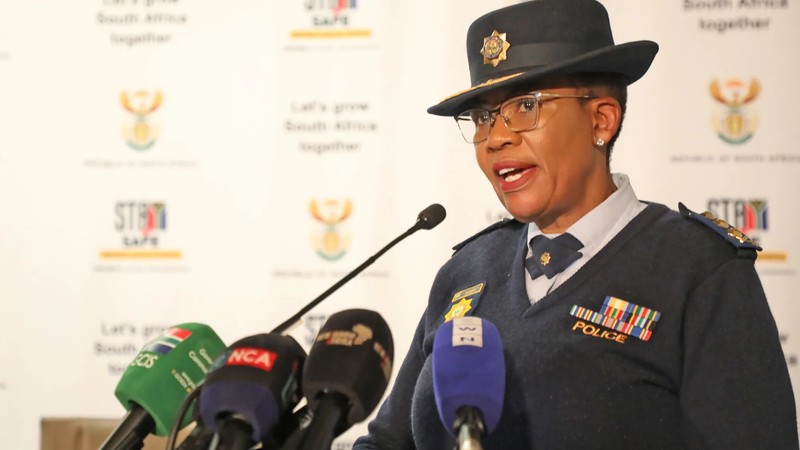
South Africa’s National Joint Operational and Intelligence Structure (NATJOINTS) has made one thing abundantly clear: this summit will not be disrupted. Briefing the media in Durban on Tuesday, NATJOINTS chairperson Lieutenant General Tebello Mosikili — who also serves as Deputy National Commissioner for Policing in the South African Police Service — confirmed that security operations kicked off as early as 3 August, covering build-up meetings and side events without a single reported incident.
“This is a clear demonstration that the security apparatus of South Africa is equal to the task,” Mosikili said, her confidence measured but firm. The operation spans intelligence gathering, crime prevention, public order policing, and traffic management, with all specialised units placed on standby and deployed under a unified command structure. It is, by any measure, a major mobilisation.
What makes this approach notable is its explicitly proactive character. NATJOINTS is not waiting for something to go wrong before responding — it is identifying potential threats in advance, assessing them, and neutralising them before they can materialise. “Our intelligence structures are on the ground, and all security agencies are working together under the NATJOINTS framework,” Mosikili stated. For young South Africans watching how their government handles a moment of regional spotlight, this coordination signals something worth paying attention to.
Not everyone arriving in Durban this week is coming to celebrate the summit. Planned marches and demonstrations are scheduled during the event, and NATJOINTS has been careful — at least in tone — to distinguish between legitimate protest and outright disruption. Mosikili acknowledged that the constitutional right to peaceful protest is protected, and that most demonstrations held across South Africa in recent months have unfolded without incident.
But the message to those who might push beyond that boundary was unambiguous. “Let me be unequivocal: the disruption of the 46th SADC Ordinary Summit will not be allowed. You have a right to protest peacefully and lawfully. You do not have a right to commit criminal acts, intimidate others, damage property or disrupt a major international event,” she said.
That line — between constitutionally protected dissent and criminal interference — matters enormously in the current political climate. Across Southern Africa, young people are increasingly using public demonstrations to push back against economic inequality, government failures, and regional instability. The SADC summit itself is framed around industrialisation and infrastructure, themes that speak directly to the unemployment and underdevelopment that fuel much of that frustration. The tension between the right to be heard and the imperative to protect a high-level diplomatic event is real, and it is not easily resolved by a press briefing.
Beyond the security theatre, the summit carries genuine weight for the region’s economic future. The SADC bloc represents a combined population of hundreds of millions, and the decisions made in Durban — around infrastructure corridors, agricultural investment, and the governance of critical minerals — will shape economic trajectories for years to come. For a generation of young Africans facing high unemployment and climate vulnerability, these are not abstract policy conversations. They are decisions about whose futures get prioritised.
Critical minerals, in particular, have emerged as one of the defining economic battlegrounds of the 2020s. Southern Africa sits atop some of the world’s most significant deposits of lithium, cobalt, and platinum — resources that global powers are actively competing to access. Whether SADC member states can negotiate terms that genuinely benefit their own populations, rather than simply extracting wealth for external interests, is a question this summit is expected to grapple with.
Back in Durban, the message from NATJOINTS to anyone thinking of testing the perimeter is blunt: “No accreditation, no access. No documentation, no attempt to acquire accreditation.” Road closures around the International Convention Centre are expected throughout the summit period, and the public has been asked to cooperate with law enforcement and plan their movements accordingly.
Mosikili closed her briefing with a line that felt almost cinematic in its brevity. “We are ready. We are watching. We will act.” Whether that confidence translates into a genuinely smooth summit — one where the real conversations about Africa’s economic future can happen without disruption — remains to be seen. But for now, Durban holds its breath, and the continent watches.



