Physical Address
304 North Cardinal St.
Dorchester Center, MA 02124
Physical Address
304 North Cardinal St.
Dorchester Center, MA 02124

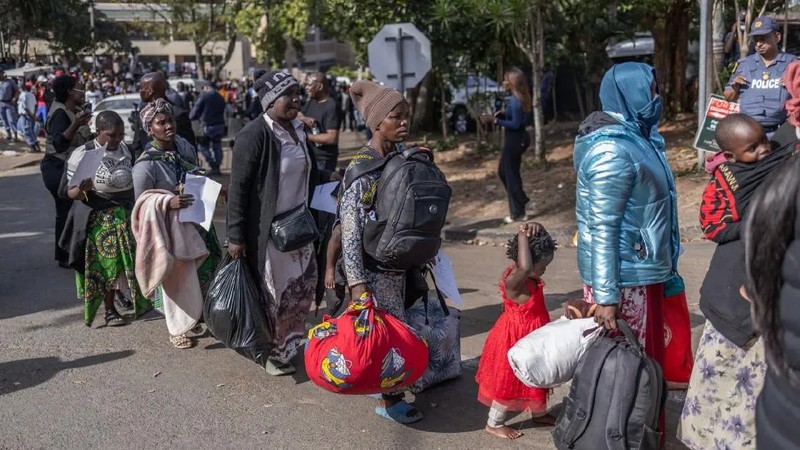
South Africa’s government has announced a major reduction in operations at the Musina Temporary Repatriation Processing Centre (TRPC), cutting its capacity from 20,000 to just 1,500 from August 1, 2026 — following the processing of more than 68,000 foreign nationals since mid-June as part of an intensified national migration crackdown.
Speaking on behalf of the Inter-Ministerial Committee (IMC) on Migration, Minister of Justice and Constitutional Development Mmamoloko Kubayi confirmed on Sunday that the decision was taken at the IMC’s regular meeting on Friday, July 24, after authorities observed a steady decline in the number of people requiring processing over the preceding three weeks.
“Since Malawian nationals assembled at Sherwood in KwaZulu-Natal between June 14, 2026, and July 24, 2026, a total of 68,138 foreign nationals have been processed, the majority repatriated following processing at the Musina centre,” Kubayi stated. Malawian nationals made up roughly 80% of those processed, with Zimbabweans and Mozambicans accounting for most of the remainder.
Separately, the Border Management Authority (BMA) processed 72,906 repatriations through official ports of entry between June 7 and July 14, covering multiple nationalities across the region.
The Musina centre was established in June as part of the government’s Five-Point Plan on Migration Management, announced on June 7, with President Cyril Ramaphosa setting up the IMC to coordinate the state’s response to rising migration pressures. Kubayi stressed that the phased scaling down would not compromise ongoing deportation and repatriation processes, and that government would continue supporting foreign missions with repatriation efforts.
Those joint operations have produced significant legal outcomes. Authorities registered 205 criminal cases, arrested 350 individuals, and brought 112 matters before the courts — covering charges including illegal border crossings, human trafficking, fake identity documents and worker exploitation. An additional 69 cases remained under active investigation.
Individuals flagged as wanted for serious crimes such as murder, armed robbery and rape were removed from the repatriation process and handed directly to police.
On the question of costs, Kubayi clarified that no government funds were spent on meals at the Musina centre, with humanitarian organisations covering those expenses — a point raised in response to concerns from certain sectors about conditions at the facility.
Looking ahead, the government is also moving to accelerate immigration case processing by establishing a dedicated migration court at OR Tambo International Airport, with space identified for up to three courtrooms. Upgrades to court facilities at the Lindela repatriation centre are already underway.



