Physical Address
304 North Cardinal St.
Dorchester Center, MA 02124
Physical Address
304 North Cardinal St.
Dorchester Center, MA 02124

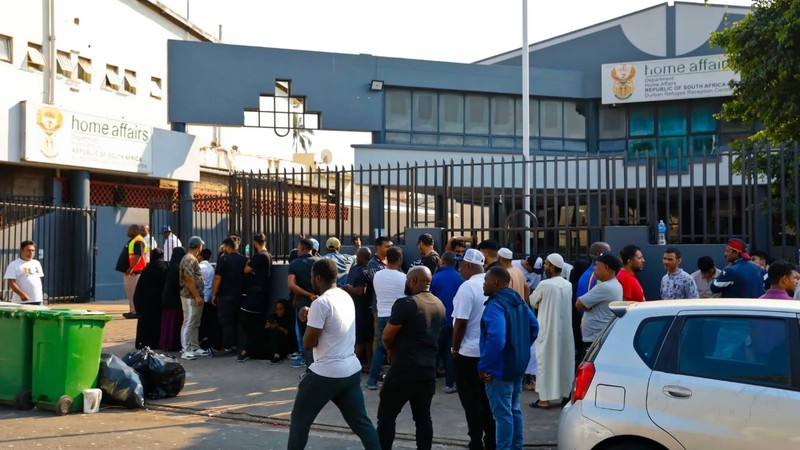
Picture this: a refugee reception office somewhere in South Africa, a person who crossed the border without papers standing at the door, uncertain whether they will be turned away. For years, that uncertainty was baked into the law itself. Then, on July 7, 2026, South Africa’s Constitutional Court changed the rules — and what followed was not just a legal shift, but a storm of misinformation that the Department of Home Affairs says is threatening lives.
The department came out swinging on Wednesday, publicly rejecting claims that the Constitutional Court’s ruling grants asylum seekers South African citizenship or amounts to a blanket legalisation of all foreign nationals in the country. Home Affairs called those assertions “categorically false”, and described what it sees as an “apparent co-ordinated disinformation campaign” deliberately distorting the meaning of the judgment.
The ruling at the centre of the controversy stems from a case brought by the Scalabrini Centre of Cape Town, a non-profit organisation that works with migrants, refugees and vulnerable South Africans. The case challenged specific provisions of the Refugees Act that had long made it harder for people to access the asylum system in the first place.
The Constitutional Court confirmed a Western Cape High Court declaration that those provisions were unconstitutional and invalid. Specifically, the court struck down sections of the Act that allowed immigration officials to deport an asylum seeker simply for being in the country without a transit visa. The court found that the existing system created multiple and inconsistent thresholds — terms like “good cause”, “valid reasons” and “compelling reasons” — without giving officials any clear guidance on how to apply them, effectively building walls around a process that is supposed to be accessible.
In plain terms, the court said that an asylum seeker cannot be turned away from refugee protection solely because they lack the required documents or missed the prescribed five-day window to report to a Refugee Reception Office. The ruling is about access to the process, not about the outcome of that process or about citizenship.
Home Affairs was direct about one thing: it did not want this outcome. The department stressed that it vigorously opposed the court case and pushed back against any suggestion that the changes now being implemented were the department’s own initiative, or that of the minister or any political party. This was a binding judgment from the highest court in the land, and implementing it is not optional.
An operational directive was subsequently issued to refugee reception offices, instructing them to admit anyone who presents in person and indicates a wish to apply for asylum — including people who entered the country unlawfully. That directive exists solely to bring the department into compliance with the court ruling, which is standard legal practice. As the department put it, “respect for binding court judgments is fundamental to the rule of law and our constitutional democracy.”
The suspension of so-called “good cause” interviews — another flashpoint in the public debate — was similarly not a political decision. It flows directly from the court’s finding that the thresholds those interviews were built around were unconstitutional. Home Affairs says claims to the contrary are simply false.
The stakes here go beyond a legal technicality. Home Affairs warned explicitly that the spread of misinformation around this judgment risks inflaming tensions on the ground and could contribute to violence against Home Affairs officials. That warning carries real weight in a country where xenophobic sentiment has, in the past, escalated quickly from rhetoric to physical attacks on foreign nationals and the institutions that serve them.
The department announced it would refer the matter to the Independent Electoral Commission (IEC) for further action under the newly published Code of Conduct on Countering Disinformation, signalling that it views the false narratives circulating online and in public discourse as serious enough to warrant formal accountability.
For young South Africans watching this unfold, the episode reveals something important about how power works in the information age. A court ruling designed to protect vulnerable people from an arbitrary bureaucratic system gets twisted into a narrative about open borders and lost citizenship — and that twist, if left unchallenged, can do real damage. The law changed who gets to knock on the door. It did not change who becomes a citizen. Those are two very different things, and the difference matters enormously.



