Physical Address
304 North Cardinal St.
Dorchester Center, MA 02124
Physical Address
304 North Cardinal St.
Dorchester Center, MA 02124

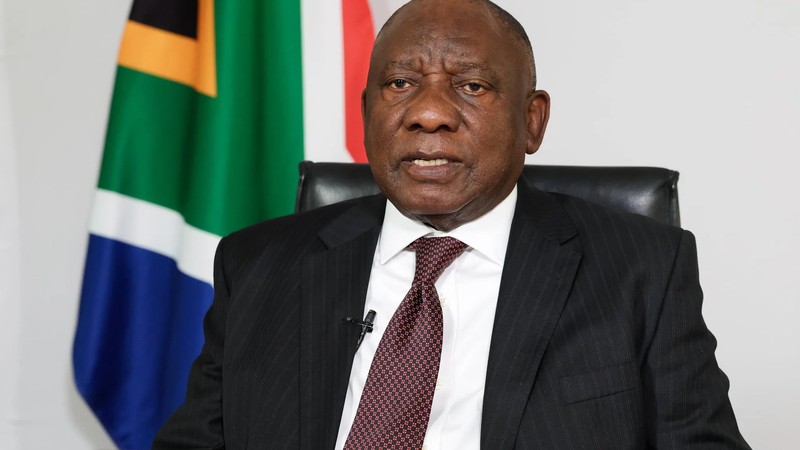
South Africa is navigating an uncomfortable political moment. President Cyril Ramaphosa has been booked off from all public engagements due to ill health, just days after returning from the 18th BRICS Summit in New Delhi — and he is not the only one absent. Deputy President Paul Mashatile is also recovering from a minor medical procedure. For the first time in recent memory, both of the country’s top two leaders are simultaneously out of public view, and that should prompt some serious questions about governance, continuity, and what this means for South Africa’s standing on the global stage.
The thesis here is straightforward: Ramaphosa’s sudden withdrawal is not just a health story. It is a governance story, one that exposes the fragility of South Africa’s executive capacity at a moment when the country needs visible, active leadership more than ever.
The Presidency confirmed on Wednesday, 17 September 2026, that Ramaphosa, 73, had been advised by his medical team to rest and recover after returning from India on Monday, 15 September. The official statement was brief and deliberately vague: “Due to ill health, President Cyril Ramaphosa is currently booked off from public engagements.” No diagnosis was shared. No timeline for his return was given. No detail about the severity of his condition was offered to the public.
That opacity matters. South Africans deserve to understand the health status of the person leading their country.
In Ramaphosa’s absence, the Presidency has asked relevant cabinet ministers to step in and represent him at scheduled public engagements. His planned campaign programme in eThekwini has been suspended, with the ANC promising to communicate revised details once he has recovered. The ANC also issued a message of support, stating it “joins South Africans in wishing President Ramaphosa strength and good health.”
The timing could hardly be more awkward. Ramaphosa had just played an active role at the BRICS Summit in New Delhi, held from 12 to 13 September under India’s chairship. On 13 September, he addressed a session on inclusive global growth, pushing for deeper cooperation between member states on trade, finance, technology, and sustainable development — themes that sit at the heart of South Africa’s foreign policy agenda.
Now, with the United Nations General Assembly on the horizon, South Africa will be represented not by its president but by Foreign Affairs Minister Ronald Lamola. Lamola is a capable diplomat, but there is a meaningful difference between a head of state making the case for Africa’s economic interests on the world stage and a minister standing in. In multilateral spaces, presence signals priority, and absence signals something else entirely.
South Africa has worked hard in recent years to position itself as a serious player in global economic and diplomatic conversations — BRICS membership, G20 engagement, African Union leadership. Ramaphosa’s personal brand has been central to that effort. His absence, even if temporary, creates a gap that ministerial representation cannot fully fill.
The deeper issue this moment reveals is structural. When both the president and deputy president are simultaneously unavailable, who holds the executive centre? The answer, technically, is the cabinet acting collectively — but collective responsibility is not the same as decisive, visible leadership. South Africa’s young people, who already feel disconnected from a political class that often seems remote and unaccountable, are watching a government that cannot currently put either of its top two figures in front of a camera.
This is not about blaming Ramaphosa for falling ill. People get sick. That is human. But it is entirely reasonable to ask whether South Africa’s executive architecture is resilient enough to absorb the simultaneous absence of its two most senior leaders without a clear, communicated plan for continuity.
The ANC has called on its members and the public to give the president the time he needs to recuperate. That is fair. But recuperation and accountability are not mutually exclusive — and the public deserves more transparency about what happens to governance in the interim.
South Africa’s leadership gap is temporary. The questions it raises are not.



