Physical Address
304 North Cardinal St.
Dorchester Center, MA 02124
Physical Address
304 North Cardinal St.
Dorchester Center, MA 02124

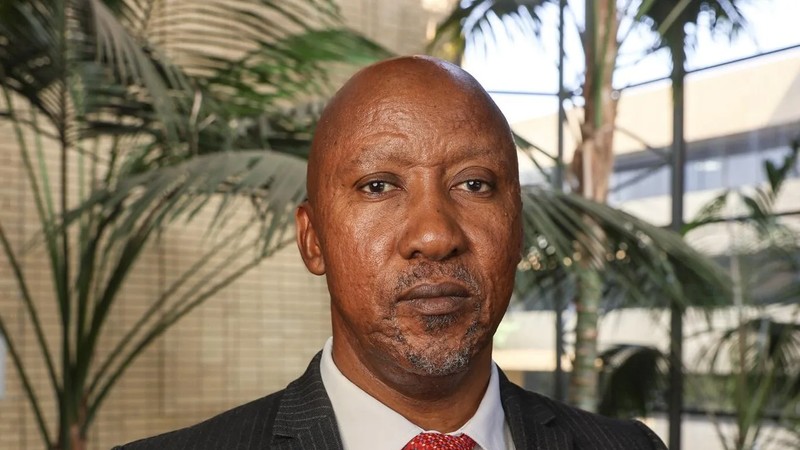
For nearly two decades, Leonard Lekgetho has been working quietly inside one of South Africa’s most consequential institutions, building the kind of institutional knowledge that turns complex corruption cases into courtroom victories. Now, as the newly confirmed head of the Special Investigating Unit (SIU), he is stepping into the spotlight with a direct message aimed at the country’s political elite: your title, your party card, and your connections will not save you.
Lekgetho’s journey to the top of the SIU began in 2007, when he joined the organisation as an investigator, bringing with him experience from the now-defunct Directorate of Special Operations — the feared anti-corruption body better known as the Scorpions. Over the years that followed, he moved steadily through the ranks, taking on roles that placed him at the centre of high-profile corruption probes, forensic audits, and cybercrime investigations, eventually rising to the position of Chief Operations Officer. When Advocate Andy Mothibi departed the SIU earlier this year to take up the role of National Director of Public Prosecutions, Lekgetho stepped in as acting head in February, effectively running the unit through a critical transitional period.
By September 1, President Cyril Ramaphosa had made it official, appointing Lekgetho as the permanent head of the SIU — a decision that reflected both the confidence the presidency placed in him and the weight of expectation now resting on his shoulders. In an exclusive interview with IOL this week, Lekgetho wasted little time in setting the tone for his tenure, promising that the unit would operate “without fear, favour or prejudice,” regardless of the political status or affiliation of those it investigates. That is not merely a slogan — for a generation of young South Africans who have watched corruption drain public resources for years, it reads like a direct challenge to a system that has long seemed to protect the powerful.
When pressed on whether he had already encountered attempts to derail or influence the unit’s work, Lekgetho was unequivocal. “No, no, we haven’t. We haven’t come across political interference,” he said, adding that the SIU had built internal systems designed to prevent any single individual from making unilateral decisions on sensitive cases — a structural safeguard that distributes accountability and reduces the risk of outside pressure finding a single point of entry. The unit currently requires a presidential proclamation before it can open an investigation, a mechanism Lekgetho defended as providing important oversight and structure, even while acknowledging that he remains open to legislative reforms that could eventually grant the SIU greater operational autonomy.
Under his watch, the SIU has also expanded the scope of what it considers worth investigating, moving beyond conventional procurement fraud into territory that directly affects ordinary people’s sense of justice. Among the new areas of focus are suspicious lifestyle audits targeting government officials who appear to live far beyond what their salaries could plausibly support — think luxury homes, high-end vehicles, and unexplained assets — as well as academic fraud at universities, a form of corruption that strikes at the very opportunities young Africans depend on to build better futures. These are not abstract institutional concerns; they are the kinds of abuses that distort the playing field for an entire generation.
Lekgetho brings to the role an unusually broad academic foundation, holding degrees in law, education, and science, alongside qualifications in forensic auditing and cyber law — a combination that positions him well for an era in which corruption increasingly hides behind digital systems and complex financial structures. The SIU itself is an independent statutory body empowered to investigate serious allegations of corruption, malpractice, and maladministration across state institutions, and to pursue civil litigation to recover financial losses suffered by the public — meaning it does not just expose wrongdoing, it actively works to claw back what was stolen. For a continent where accountability has too often been promised and too rarely delivered, the question now is whether Lekgetho’s record and resolve will translate into results that young South Africans can actually feel.



