Physical Address
304 North Cardinal St.
Dorchester Center, MA 02124
Physical Address
304 North Cardinal St.
Dorchester Center, MA 02124

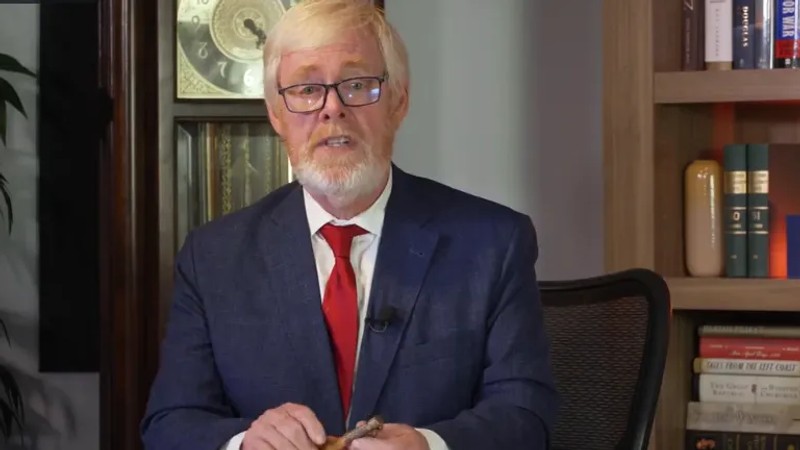
It started with five demands. In December 2025, the United States formally presented the South African government with a list of five specific “asks” — a diplomatic signal that Washington was running out of patience. The demands covered a range of sensitive issues: the US refugee programme, expropriation without compensation, rural farm safety, economic access for American companies, and one phrase that would prove far harder to resolve than the rest.
That phrase was “Kill the Boer, Kill the Farmer.”
The chant has deep roots in South Africa’s liberation struggle, sung at rallies for decades as a symbol of resistance against apartheid-era white minority rule. But for Washington, its continued use — and the South African government’s refusal to formally condemn it — had become a serious diplomatic flashpoint. By March 2025, the matter had already reached the country’s highest court. The Constitutional Court upheld a ruling that the phrase did not constitute hate speech under South African law, following an appeal brought by civil rights organisation AfriForum. The court had spoken. For many South Africans, that was supposed to settle it.
It did not settle it for the Americans.
US Ambassador to South Africa Leo Brent Bozell III made that crystal clear in a recent interview with the SABC. Speaking directly and without diplomatic softening, Bozell argued that a court ruling does not — and should not — prevent a head of state from taking a moral stance. “I understand what the court said,” he acknowledged. “This doesn’t mean the president can’t say, look, any court in the United States makes a decision that the president can disagree with.” His point was blunt: President Cyril Ramaphosa had the power to denounce the chant as an incitement to violence, and his choice not to do so was being read in Washington as a deliberate political decision.
Bozell was careful to frame the US position as a call for consistency, not an attack on South African sovereignty. “Find something the Boers have said and say the exact same thing about that song,” he told the SABC. “We’re talking about incitements to violence.” The ambassador confirmed that two of the original five demands had effectively been resolved, but the chant remained the stubborn sticking point — the issue that kept the bilateral relationship from moving forward.
This was not Bozell’s first time wading into controversy over the matter. Weeks earlier, at a BizNews conference in Hermanus, he had made headlines with a far more aggressive statement: “I don’t care what your courts say.” That remark triggered a formal démarche — an official diplomatic protest — from South Africa’s Department of International Relations and Cooperation (DIRCO). It was a rare and pointed rebuke, a sign that Pretoria was not willing to simply absorb Washington’s pressure without pushing back.
By then, the chant had long since escaped the borders of South Africa’s domestic political debate. US President Donald Trump and tech billionaire Elon Musk had both publicly amplified concerns about violence against white farmers in South Africa, injecting the issue into the global media cycle and giving it a charged, racially polarised edge. During a face-to-face meeting with Trump, Ramaphosa attempted to defuse the tension, saying the chant “is not meant to be a message that elicits or calls upon anyone to be killed.” It was a careful, measured response — but not the outright condemnation Washington was demanding.
Julius Malema, leader of the Economic Freedom Fighters, has shown no interest in backing down. He has repeatedly and publicly defended the chant as liberation history, refusing to stop singing it despite sustained pressure from white farming groups and international critics. For Malema and many of his supporters, silencing the song would mean erasing a piece of the anti-apartheid struggle.
The stakes are now escalating fast. Last week, Bozell warned that newly announced US visa restrictions on South African officials represent “only the first step” in a broader set of punitive measures, declaring that Washington’s patience with Pretoria’s non-aligned foreign policy stance had run out. He also confirmed that the US would not publicly release the names of those hit by the restrictions — a move that leaves South African officials uncertain about who exactly is in the crosshairs. “If you can’t say that ‘Kill the Boer, Kill the Farmer’ is an incitement to violence,” Bozell said, “we’ve got a fundamental problem.” That problem, for now, remains very much unresolved.



