Physical Address
304 North Cardinal St.
Dorchester Center, MA 02124
Physical Address
304 North Cardinal St.
Dorchester Center, MA 02124

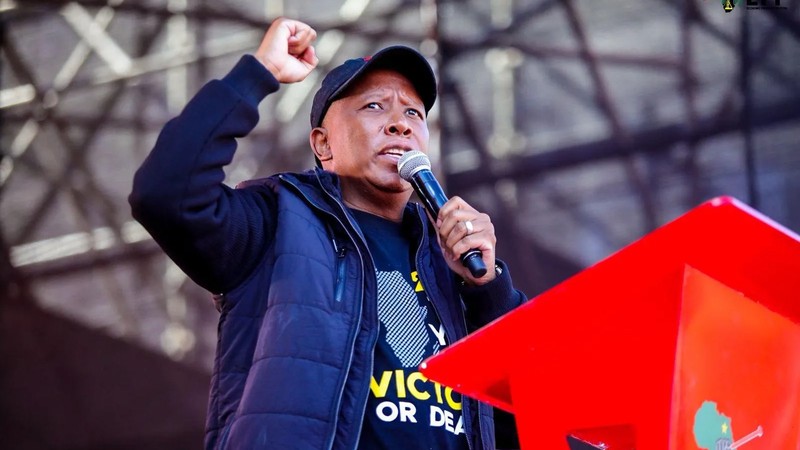
South Africa’s ongoing impeachment saga has reached a critical inflection point, and the central question it raises cuts to the heart of how democracy actually functions: can a sitting president use the courts to pause an investigation into his own conduct? The Economic Freedom Fighters (EFF) says no — and they are taking that argument directly to the Constitutional Court. Their thesis is clear and urgent: the Western Cape High Court’s decision to grant President Cyril Ramaphosa an interim interdict halting Parliament’s Section 89 impeachment proceedings is not just legally wrong, it is constitutionally dangerous.
This is not a procedural squabble. It is a fundamental dispute about the separation of powers, the independence of Parliament, and whether accountability in South Africa is real or merely performative.
On 24 July, the Western Cape High Court granted Ramaphosa an interim interdict that effectively froze Parliament’s impeachment committee hearings, pending a separate court review of the independent panel report that first triggered the Section 89 process. The ruling was itself divided: of three judgments delivered, one found that Ramaphosa had not made his case and should be dismissed, while the other two granted the interdict for a limited period. That split alone signals how contested this legal terrain is.
The EFF’s core argument is that the majority judgment unlawfully encroached on Parliament’s constitutionally protected functions. Section 89 of the Constitution explicitly entrusts Parliament with the responsibility to establish whether circumstances exist that could justify removing a president from office. By stopping that process before it could reach any findings — before the committee had even concluded its investigative work — the High Court, in the EFF’s view, crossed a line that courts are not supposed to cross.
EFF leader Julius Malema has been pointed in his criticism, arguing that the High Court failed to apply a landmark Constitutional Court ruling in the OUTA matter, which held that a temporary restraining order must not encroach on the work of other branches of government. The majority, the EFF contends, misapplied that very principle, producing what the party calls a “constitutional interdict” — one that temporarily immobilises Parliament from carrying out its core and exclusive constitutional function. Every day the order stands, Malema warns, Parliament’s accountability role is curtailed.
Perhaps the most consequential dimension of this case is what it could mean going forward. If Ramaphosa is permitted to use litigation to suspend a constitutional accountability mechanism specifically designed to scrutinise his conduct, the implications ripple far beyond this particular dispute. EFF deputy president Godrich Gardee drew a sharp analogy: allowing this interdict to stand would be equivalent to interdicting the South African Police Service or the National Prosecuting Authority simply because prima facie evidence exists against a public official. That, he argued, would set a precedent that future presidents and public officials could exploit to frustrate accountability through an endless cycle of review applications and interim orders.
EFF MP Omphile Maotwe reinforced this concern, warning that the Constitutional Court had already signalled its intent that the independent panel report proceed through Parliament’s impeachment process. Allowing successive review applications to derail that process, she argued, would hollow out the very accountability architecture the Constitution was designed to build.
It is also worth noting what the impeachment committee has not done: it has made no finding against Ramaphosa. Its function, at this stage, is purely investigative. The EFF’s position is that preventing an investigation — not a conviction, not a removal, but an investigation — on the basis of a review application sets a chilling standard for how public power can be shielded from scrutiny.
The EFF has applied for direct leave to appeal the High Court’s interim interdict and to formally join the matter alongside the African Transformation Movement (ATM) and its leader Vuyo Zungula. In its application, the party has asked the Constitutional Court to urgently set aside the High Court’s order, dismiss the application that suspended the impeachment process, and allow Parliament’s Section 89 inquiry to continue without delay.
Meanwhile, Parliament’s own legal services are finalising an opinion on whether Ramaphosa can be compelled to appear before the committee should he choose not to testify voluntarily. Parliamentary legal adviser Sueanne Isaac has also clarified that the High Court’s interim order only prohibits public hearings — it does not prevent the committee from continuing its preparatory work behind the scenes. Ramaphosa’s review of the panel report is scheduled to be heard from 2 to 4 September.
The broader timeline matters here. In May this year, the Constitutional Court had already ruled that Parliament acted unlawfully by not processing the panel report, and ordered the Speaker to refer it to the impeachment committee so the Section 89 process could continue. Ramaphosa then launched a fresh review application in the Western Cape High Court, challenging that very referral — which produced the interdict now being contested. In other words, a lower court has effectively been used to push back against a Constitutional Court directive. That alone should give anyone invested in South Africa’s constitutional order serious pause.
The EFF’s appeal is not simply about one man’s political fate. It is a stress test for whether South Africa’s institutions can hold the powerful to account — or whether those with resources and legal teams can indefinitely delay the moment of reckoning. The Constitutional Court’s response will say a great deal about which kind of democracy South Africa intends to be.



