Physical Address
304 North Cardinal St.
Dorchester Center, MA 02124
Physical Address
304 North Cardinal St.
Dorchester Center, MA 02124

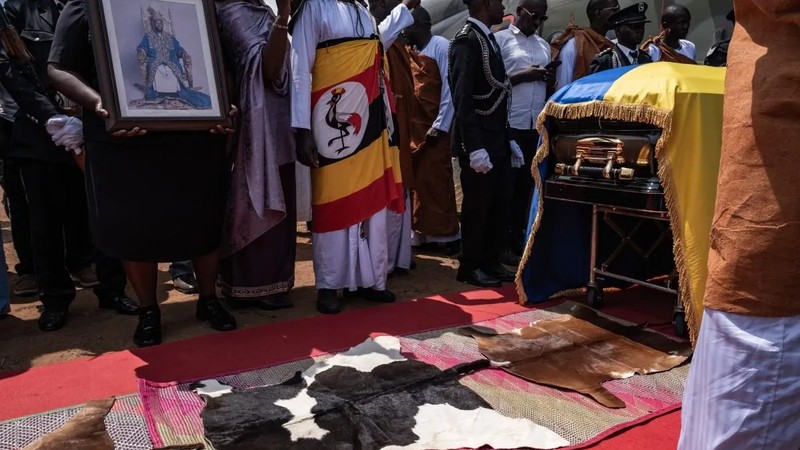
A kingdom is mourning — and at war with itself.
It started with a record. In 1995, a three-year-old boy named Oyo Nyimba Kabamba Iguru Rukidi IV ascended to the throne of Uganda’s Tooro Kingdom, becoming the youngest reigning monarch in the world — a title Guinness World Records officially confirmed. For over three decades, King Oyo ruled his kingdom, growing into adulthood under the public eye, championing causes like HIV/AIDS prevention and environmental protection, and earning the loyalty of his people. His reign, which began in extraordinary circumstances, would end the same way.
On August 27, 2025, King Oyo died at the age of 34 while receiving cancer treatment in the United States. He had reigned for 31 years. Back in Uganda, a country that officially recognises traditional kings as cultural institutions — not political powers — the news sent shockwaves through the Tooro Kingdom and beyond. The question everyone immediately began asking was the same: who comes next?
For weeks, that question simmered beneath the surface of public grief. King Oyo had never been officially married, and the existence of a son and heir — claimed by his family — quickly became the centre of a heated dispute. No one could agree on who the child’s mother was, or even whether the child existed at all. Andrew Mwenda, a prominent Ugandan public figure and native of Tooro, put the tension into words on X, writing that “if he left a son, Tooro needs to know the mother and her background.” The ambiguity left a power vacuum that rival factions rushed to fill.
By early September, the situation had escalated dramatically. On Wednesday, September 10, the Babiito clan — the royal lineage of the Tooro Kingdom — convened at Karuziika Palace and announced that Prince Edward Rukidi Kijanangoma had been selected as the next Omukama, the kingdom’s king. The announcement was read aloud by Monsignor Isaiah Mayombo on behalf of the Babiito clan and the 21-member Royal Succession Committee. For some, it felt premature. For others, it felt like a betrayal.
According to Queen Mother Best Kemigisa, representatives of the royal family and the government had earlier gathered to hear the reading of King Oyo’s will. Present at that meeting were Princess Ruth Komuntale, Margaret Komubaizi Kajoyo, the head of the Tooro royal family known as the Omusuuga, Monsignor Mayombo, and Gender Minister Maj Gen Henry Tumukunde, who attended on behalf of President Yoweri Museveni. Kemigisa says the will clearly laid out the order of succession, and that everyone agreed to continue discussions the following day under Tumukunde’s leadership. That agreement did not hold.
“They chose to jubilate while my son was still lying in his casket next to them,” Kemigisa said. “That is what has hurt us most.” That same evening, a faction of clan members broke away from the agreed process, held their own press conference, and declared their preferred successor — three days before King Oyo’s scheduled burial on September 12.
Then came the soldiers. On Thursday, September 11, Kemigisa released a public statement alleging that Lieutenant General Kayanja Muhanga, Commander of Land Forces of the Uganda Peoples’ Defence Forces (UPDF), had arrived at the palace and removed the royal guards without warning. Troops were deployed around the palace grounds. The Omusuuga, Charles Kamurasi Kayondo, was taken to an undisclosed location. The royal family, Kemigisa said, could no longer leave freely or receive visitors — conditions she described plainly as house arrest.
“I appeal to Gen. Kayanja Muhanga, UPDF leadership, and the president to allow our family the freedom and dignity to mourn and bury King Oyo in peace,” she wrote in her statement, directing her words at the military chain of command and President Museveni himself.
The military’s involvement raises questions that go beyond royal protocol. Mwenda, the commentator who weighed in on the succession dispute, is a known close associate of General Muhoozi Kainerugaba — Museveni’s son and the army chief, who has made no secret of his ambitions to succeed his father as president. The intersection of royal succession and national political power is not lost on observers watching Uganda’s political landscape shift.
King Oyo’s remains arrived at Humura grounds in Kyegegwa on September 4, received by members of the royal family alongside police and military officials. His burial is set for September 12. He was formally crowned with full powers on his 18th birthday in April 2010, with President Museveni in attendance — a moment that marked the end of a regency period overseen by a series of relatives since his childhood coronation. He was 34 when he died, having spent virtually his entire life as a king.
As the burial date approaches, the Tooro Kingdom finds itself at a crossroads — caught between grief, political pressure, and a fight over the future. For the young people of Uganda and across the region watching this unfold, the crisis is a stark reminder of how quickly tradition, power, and the state can collide, and how ordinary people — even queens — can find themselves locked inside a palace with no way out.



