Physical Address
304 North Cardinal St.
Dorchester Center, MA 02124
Physical Address
304 North Cardinal St.
Dorchester Center, MA 02124

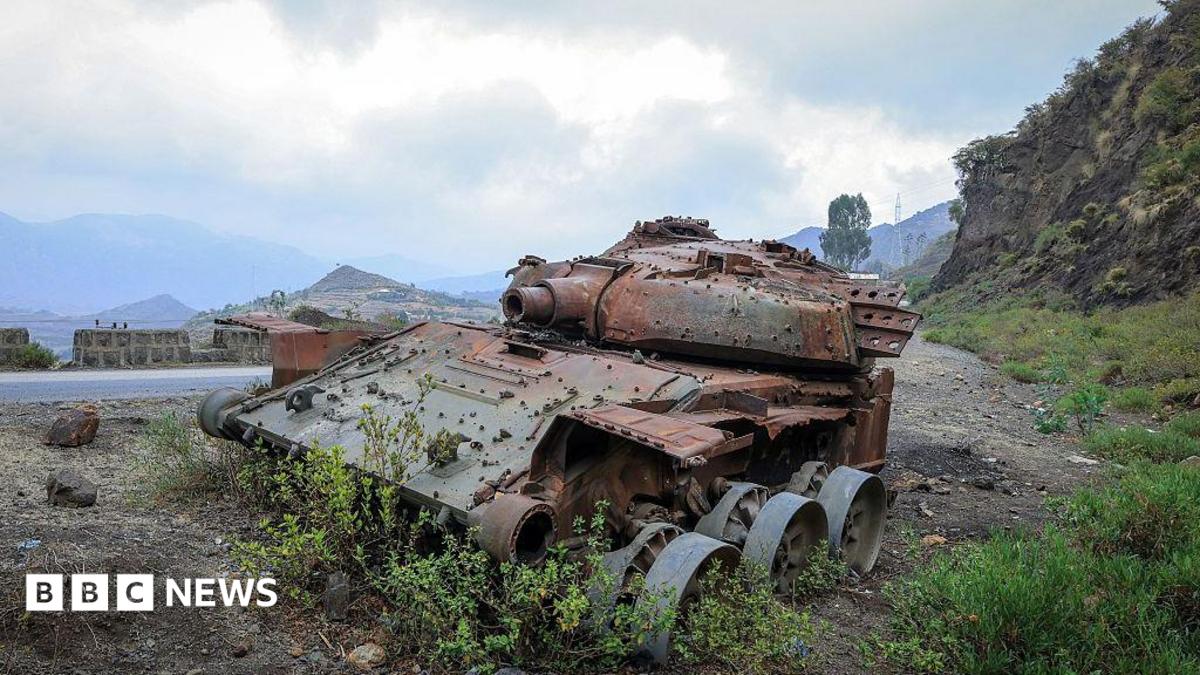
Hundreds of Ethiopians have fled across the border into Sudan after intense fighting erupted between Tigray regional forces and the Ethiopian federal army on Saturday. The clashes broke out in Shererina, a small but strategically loaded locality in western Tigray, near the Sudanese border. Heavy artillery and drones were deployed — this was not a minor skirmish.
A member of the Tigray People’s Liberation Front (TPLF) confirmed that the violence continued well into Sunday. Witnesses on the ground reported explosions, heavy gunfire, and aircraft overhead throughout the day. Sudanese medical and local sources told AFP that both civilians and wounded fighters crossed the border seeking safety.
To understand why this matters so much, you need to go back to 2022. That year, an African Union-brokered peace deal ended a devastating two-year civil war between the TPLF and Ethiopia’s federal government — a conflict that killed hundreds of thousands of people. It was supposed to be a turning point. It wasn’t.
The peace agreement has never been fully implemented. Since then, the TPLF has pushed out the interim administration that was established as part of the deal and reasserted control over Tigray. That power move left the agreement hanging by a thread, and Saturday’s clashes suggest that thread has now snapped.
This is one of the most serious confrontations the region has seen since the war officially ended. The stakes could not be higher for the millions of young people living across Tigray, Amhara, and the broader Horn of Africa.
Predictably, both sides pointed fingers at each other. The TPLF-led regional administration accused the federal government of launching an “open war” in the Shererina area, calling the offensive a direct violation of the peace agreement and an attempt to “subjugate and divide” the people of Tigray. Strong words — and a clear signal that the regional leadership sees this as an existential fight.
The federal government has not released an official statement. However, minister Abraham Belay confirmed on social media that clashes had occurred, blaming the “TPLF clique” for starting the violence and warning of “worse consequences” if the conflict escalated further. He also called for dialogue, writing: “Today, it is better to reach out for peace before destruction.”
The death toll from the weekend remains unclear. No verified figures have emerged yet, but the scale of displacement and the weaponry involved suggest the human cost is significant.
Location is everything here. Shererina sits in western Tigray, a zone that has been fiercely disputed between the Tigray and Amhara regional states ever since the civil war. Control of this territory is not just symbolic — it carries deep political and economic weight for both sides.
Western Tigray’s disputed status has been one of the biggest unresolved issues from the 2022 peace process. The failure to settle that question has kept the region in a permanent state of low-level tension, and Saturday’s clashes may be the direct consequence of leaving that wound open for too long.
There is another dimension to this crisis that demands attention. Analysts and regional observers are raising concerns that the fighting in northern Ethiopia could become entangled with the Sudanese civil war, which has been tearing that country apart since April 2023. Accusations are already circulating that the warring factions in Sudan are backing opposing sides in the Ethiopian conflict.
If that dynamic takes hold, what is already a dangerous bilateral confrontation could transform into a regional proxy war — with devastating consequences for the entire Horn of Africa. For young people across the region, who already live with the economic fallout of instability, that scenario would mean even fewer opportunities and even more displacement.
The coming days are critical. Both sides have staked out hard positions, yet calls for dialogue are still on the table — at least rhetorically. Whether Ethiopia’s federal government and the TPLF can pull back from the brink depends largely on whether external actors, particularly the African Union, re-engage forcefully with the peace process.
The 2022 deal proved that negotiation is possible, even after extreme violence. But a deal that stays on paper while territorial disputes fester and armed groups consolidate power is a deal waiting to collapse. Northern Ethiopia is living that reality right now — and the region is watching closely.



