Physical Address
304 North Cardinal St.
Dorchester Center, MA 02124
Physical Address
304 North Cardinal St.
Dorchester Center, MA 02124

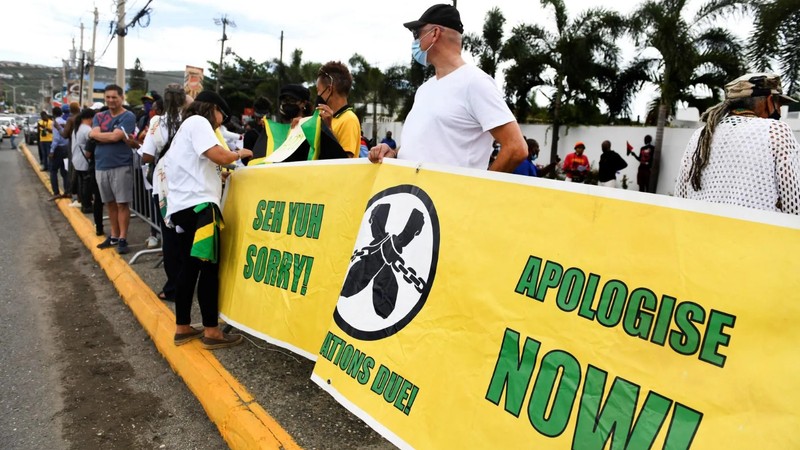
One hundred and twenty-three countries raised their hands. That number alone should stop you in your tracks.
At the United Nations, Ghana spearheaded a historic vote on the “Declaration of the Trafficking of Enslaved Africans and Racialised Chattel Enslavement of Africans as the Gravest Crime Against Humanity” — and the world, by an overwhelming majority, agreed. Only three countries voted against it. Fifty-two abstained. The resolution does not hand anyone a cheque, and it carries no legal enforcement mechanism, but what it does carry is weight: the formal, multilateral acknowledgement that the transatlantic slave trade was not merely a dark chapter, but a crime against humanity demanding real redress. For a generation that grew up hearing reparations dismissed as a fantasy, this moment feels different.
Between the 15th and 19th centuries, at least 12.5 million Africans were kidnapped from their homelands, packed into ships by mostly European merchants, and sold into brutal forced labour across the Americas and beyond. The numbers are staggering, but numbers alone flatten the reality. What was stolen was not just bodies and labour — it was generational wealth, cultural continuity, political sovereignty, and human dignity on a continental scale. For many young Africans today, the consequences of that theft are not abstract. They show up in debt crises, in underfunded schools, in climate vulnerability, in museums abroad filled with artefacts that were never freely given.
The African Union moved decisively in 2025, adopting the theme “Justice for Africans and People of African Descent Through Reparations” and declaring 2026–2035 a full decade of reparations. At the AU summit in Addis Ababa, leaders went further, formally recognising slavery, deportation, and colonisation as crimes against humanity and genocide against African peoples. The political momentum is real, and it is accelerating.
So what does reparations actually look like in practice? The AU’s vision is broad and deliberately so. It calls for the creation of an African-based Global Reparations Fund, drawing contributions from states, institutions, universities, churches, and private sector entities that directly or indirectly profited from the slave trade and colonial extraction. The fund would channel resources into indigenous development, education, cultural institutions, and programmes targeting systemic racism. Beyond money, the framework demands formal apologies, policy reforms, and where necessary, legal action at international courts.
Much of this thinking echoes the CARICOM Reparations Commission’s 10-point plan, developed by Caribbean nations in 2013. That plan includes the cancellation of debts carried by Caribbean countries — debts whose origins trace directly to colonial-era slavery — and the right of African descendants worldwide to return to an African homeland through an internationally supported resettlement programme. The alignment between African and Caribbean demands signals something important: this is not a scattered, fragmented plea. It is a coordinated, cross-continental political strategy.
Advocates are clear that reparations extend well beyond financial compensation. The AU’s 2019 definition of reparative justice encompasses material support for rebuilding communities damaged by colonial regimes, trauma healing programmes, and the repatriation of cultural artefacts seized during colonial rule. Across Europe and North America, institutions — from Ivy League universities to national museums — are only beginning to reckon with the extent to which their foundations were built on enslaved African labour and looted African heritage.
The connection between historical injustice and present-day crisis is direct and documented. African nations were saddled with enormous debts at the moment of independence, debts that constrained their development for decades. The continent contributes a fraction of global carbon emissions yet absorbs a disproportionate share of the climate crisis — itself a legacy of the industrialisation that colonial extraction made possible. Reparations, in this framing, is not charity. It is correction.
Predictably, the backlash has arrived alongside the momentum. U.S. President Donald Trump has flatly dismissed the prospect of reparations, and several European governments have refused to engage with the conversation at all. Their resistance is not surprising — it is, in many ways, part of the same political logic that made the injustice possible in the first place. But African and Caribbean leaders say they will not be waiting for permission. They are building a united front through the United Nations and other intergovernmental bodies, applying diplomatic pressure and pursuing legal avenues with increasing sophistication.
For young Africans between 15 and 25, this debate is not a history lesson. It is a live political question about who controls resources, who sets the terms of global economic relationships, and whether the international system can ever be made to account for its own founding crimes. The UN vote did not deliver justice. But it cracked open a door that powerful interests have kept shut for centuries — and a new generation, watching closely, is already moving through it.



