Physical Address
304 North Cardinal St.
Dorchester Center, MA 02124
Physical Address
304 North Cardinal St.
Dorchester Center, MA 02124

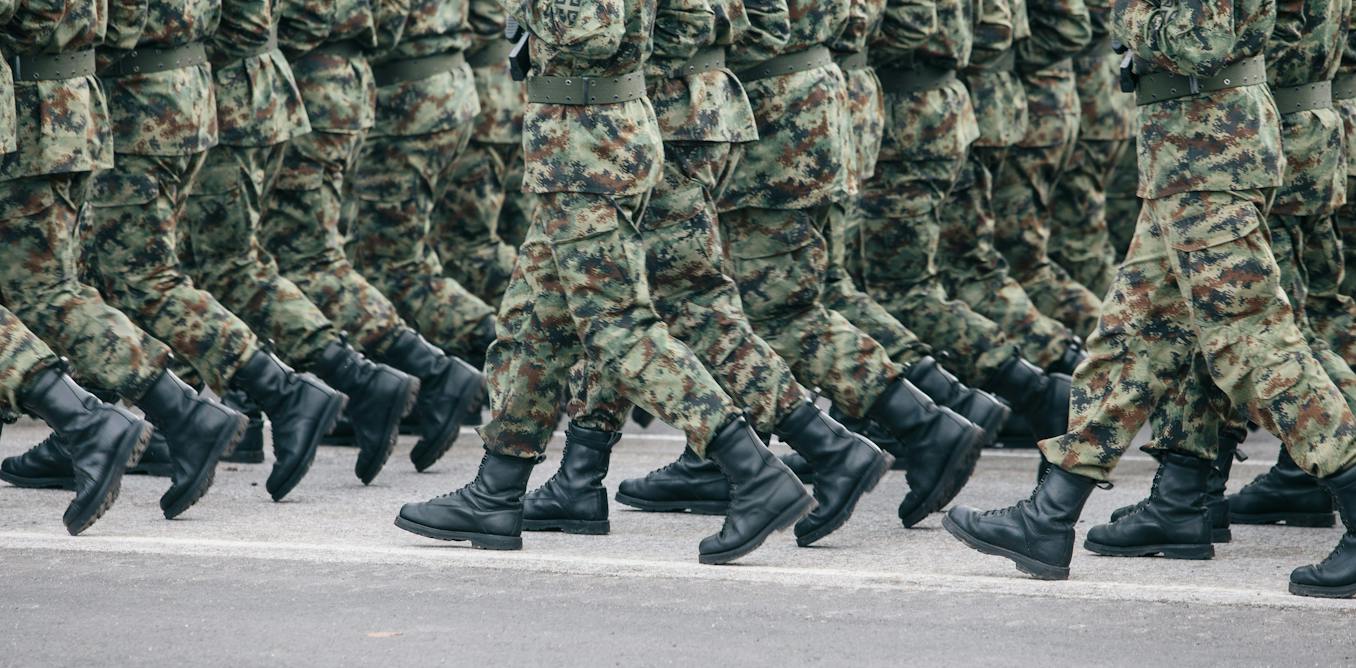
When soldiers roll tanks into a capital city and announce over state radio that the government has fallen, many people — exhausted by corruption, economic hardship, and political dysfunction — feel a flicker of hope. The generals promise a reset. They speak of restoring dignity, fighting mismanagement, and returning the country to its people. But across Africa, from Egypt to the Sahel, the evidence tells a far more sobering story about what military coups actually deliver.
A military coup d’état is the forced removal of an elected president or head of state, typically through violence or the credible threat of it. The soldiers who seize power — known as putschists — almost always frame their actions as a necessary correction: the old government was corrupt, the economy was collapsing, the people were suffering. What they rarely acknowledge is that military rule has a documented track record of making each of those problems significantly worse, not better.
Research into military and constitutional takeovers across Egypt, Nigeria, Sierra Leone, The Gambia, and Sudan has identified a consistent pattern of consequences that follow coup events. These consequences are not random or incidental — they are structural, rooted in how military regimes operate and what they prioritise. Understanding them is essential for any young African citizen trying to make sense of the political turbulence reshaping the continent right now.
The first and perhaps most immediate consequence is the deepening of intergroup conflict. Most African nations are ethnically and religiously diverse, and most post-independence governments have struggled to build institutions that allow different communities to coexist and share power fairly. Military elites do not solve this problem — they exploit it. A practice known as ethnic stacking, documented in Kenya, Ethiopia, and Nigeria, sees coup leaders fill senior military and security positions with officers from their own ethnic group, concentrating power and triggering resentment among marginalised communities. When a coup dismantles whatever power-sharing arrangements or democratic frameworks previously existed, those excluded minorities often turn to violence as the only remaining tool of self-protection. The coup that promised unity ends up fracturing it further.
The economic damage is equally concrete and well-documented. A 2026 International Monetary Fund report estimates that coups reduce GDP growth by approximately 2.3 percentage points in the year they occur, and that coups in Africa specifically reduce investment by 14.3%, with effects that linger for years afterward. This makes intuitive sense: entrepreneurs and investors need legal predictability — stable tax rules, enforceable contracts, reliable courts — to take the risks that generate jobs and wealth. A military regime that rules by decree and can rewrite the rules overnight destroys exactly that predictability. The people who suffer most from this investment freeze are not the wealthy, who can move their capital elsewhere, but young workers and small business owners who cannot.
Human rights deteriorate sharply under military rule, and this is not a side effect — it is almost a structural inevitability. Constitutional democracies exist precisely to place limits on government power and protect citizens from abuse. When coup leaders suspend or discard the constitution, those protections vanish overnight. Freedom House warned in 2023 that the surge of coups across Africa was directly threatening human rights and the rule of law, and the evidence on the ground backs this up: arbitrary detentions, torture, censorship of the press, and the jailing of critics without trial are standard features of post-coup governance. Women, children, and ethnic or religious minorities tend to bear the heaviest burden of this violence, losing the legal protections that, however imperfect, at least existed under civilian rule.
Perhaps the most lasting damage is what coups do to democratic institutions and the rule of law. The first act of most coup leaders is to concentrate executive, legislative, and judicial power in military hands, eliminating the checks and balances that make accountable governance possible. From that point forward, the state is governed by decree rather than by elected representatives or independent courts. This creates a dangerous precedent: forceful regime change tends to invite counter-coups, civil conflict, and cascading political violence, as has been seen repeatedly in Egypt, Sudan, and across the Sahelian states. Each coup makes the next one more likely.
The path forward is not a mystery, even if it is difficult. African states need to build genuine democratic cultures grounded in civilian control of the military, credible elections, and professional armed forces that are accountable to the constitution rather than to any individual general. The African Charter on Democracy, Elections and Governance already provides that coup leaders should be barred from participating in subsequent elections or holding positions in political institutions — but the African Union has consistently failed to enforce this provision. The cases of Egypt’s Abdel Fattah el-Sisi, who overthrew a democratically elected president in 2013 and became president himself a year later, and Gabon’s Gen. Brice Oligui Nguema, who led the 2023 coup and then won the 2025 presidential election, illustrate exactly why enforcement matters. Countries like Botswana, Mauritius, South Africa, and Namibia demonstrate that the alternative is achievable: strong constitutions, civilian oversight of armed forces, and institutions capable of resolving political grievances without violence. The data from Afrobarometer surveys shows that majorities across the continent already want this — 90% of respondents in Zambia and 87% in Uganda oppose military coups. The challenge is building the institutions that make coups not just unpopular, but genuinely impossible.