Physical Address
304 North Cardinal St.
Dorchester Center, MA 02124
Physical Address
304 North Cardinal St.
Dorchester Center, MA 02124

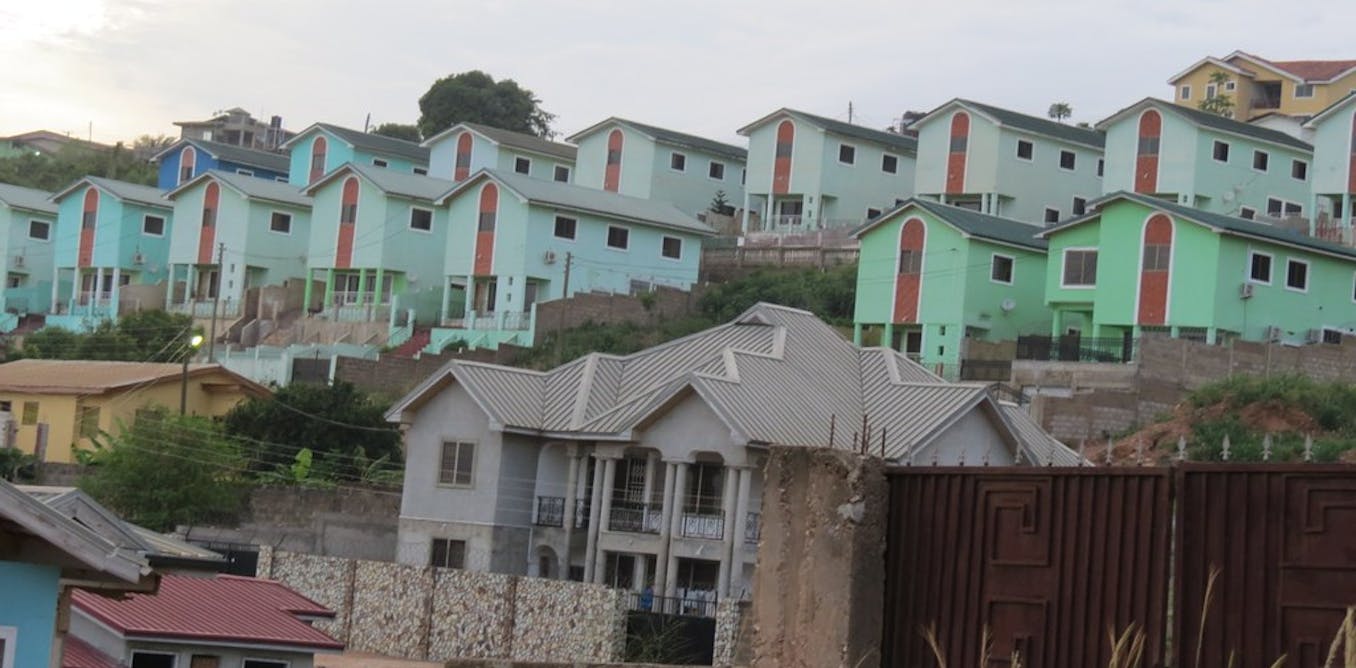
Everyone keeps citing the same number: 1.8 million homes. That’s the estimated housing shortage Ghana has been grappling with for years — and yes, it matters. It tells us that supply hasn’t kept up with a growing, urbanising population. But here’s what that figure doesn’t tell you: whether the homes that do exist are actually safe, healthy or liveable.
A household can have four walls and a roof and still lack a proper toilet, clean cooking fuel, safe waste disposal or enough space for the people living inside. Counting missing homes is one thing. Measuring the quality of the homes already standing is another challenge entirely — and it’s one that Ghanaian housing policy has largely ignored.
A recent study used Ghana’s 2021 Population and Housing Census to examine 836,515 households across all 261 districts. Researchers built what they called a Multidimensional Housing Quality Index, combining nine conditions drawn directly from census data. The index covered structural durability, room crowding, drinking water access, electricity, toilet and bathing facilities, cooking fuel type, cooking space, and waste disposal methods.
Each condition was measured against a minimum adequacy threshold. The nine indicators were then combined and rescaled onto a 0–100 score, where higher numbers reflect better material and service-related housing conditions. The national average landed at 62.2 — a figure that, on its own, sounds moderate, but becomes alarming the moment you start breaking it down.
The urban-rural gap is the first thing that jumps out. Urban households score an average of 73.1, while rural households average just 45.3 — a difference of nearly 28 points. That’s not a slight advantage for city dwellers; it’s a structural divide in who gets access to basic housing-related infrastructure.
The researchers also applied a multidimensional poverty lens to identify households facing overlapping deficits. A household is classified as housing poor when its combined deficits account for at least one-third of the total indicator weight, and severely housing poor when they account for at least half. The results: 56.5% of Ghanaian households are housing poor, and 37.2% are severely housing poor. These aren’t income poverty figures — they specifically measure how many households live under a sufficiently broad or intense combination of inadequate housing conditions.
This is where the data gets genuinely eye-opening. Electricity access meets the adequacy threshold for 86.2% of households. Safe drinking water reaches 82.4%. On those two metrics, Ghana looks reasonably well-served. But clean cooking fuel? Only 37.3% of households use it. Improved toilet facilities? Just 42.9%. Adequate waste disposal? A mere 33.4%.
The gap between electricity access and sanitation access is stark — and it matters because housing quality isn’t produced by a single service working in isolation. Electricity cannot compensate for unsafe sanitation. A structurally solid house doesn’t protect you from the health risks of cooking over polluting fuels every day. When one service improves while others stagnate, households remain exposed to overlapping, compounding risks.
The north-south divide is real and the data confirms it. Greater Accra scores highest at 78.5, while Savannah Region in northern Ghana scores lowest at 36.1. But reducing the problem to a regional binary misses what’s happening at the district level — and that’s where the story gets more complex.
In Ashanti Region, home to Kumasi, district scores range from as low as 24.3 to as high as 84.1. Even Greater Accra, the top-performing region, contains districts scoring as low as 51.0. A region that performs well on average can still harbour deeply deprived localities. Any national programme that targets only the lowest-performing regions risks leaving those pockets of deprivation entirely unaddressed.
The research also found that neighbouring districts tend to share similar housing outcomes — a pattern consistent with shared infrastructure networks, settlement histories and the uneven geographic reach of public services.
The researchers are clear: the Multidimensional Housing Quality Index doesn’t replace the housing deficit figure. The two tools answer different questions. The deficit asks how many new homes are needed. The index asks where existing homes fall short, which deficits overlap and which services deserve priority investment.
Using both together would produce a far more targeted and realistic housing policy. A district where the main problem is structural fragility needs a different intervention from one where homes are solid but sanitation infrastructure is absent. Another district might urgently need clean cooking support or improved water access. A single national remedy cannot address these variations — and pretending it can wastes resources and leaves the most vulnerable communities behind.
The researchers propose that district-level estimates could power a housing quality atlas or public dashboard, giving national agencies, local assemblies and development partners a live view of local conditions and the ability to track which deficits are shifting over time. Housing policy, they argue, must also be coordinated across sanitation, waste management, energy, water, local government and spatial planning — because all of these sectors together determine whether a dwelling is genuinely fit to live in.
No index captures everything. The census doesn’t measure housing affordability, tenure security, how reliable services actually are in practice, neighbourhood safety or how residents themselves feel about their homes. The Multidimensional Housing Quality Index measures observable, material conditions — not the full lived experience of housing adequacy.
That’s an important limitation to acknowledge. But it’s not a reason to keep relying on a single deficit number as the whole story. Ghana already collects detailed housing data through its census. The opportunity — right now — is to use that data in a smarter, more integrated way that can genuinely guide local decisions and push housing quality up for the young Ghanaians who will inherit whatever gets built next.



