Physical Address
304 North Cardinal St.
Dorchester Center, MA 02124
Physical Address
304 North Cardinal St.
Dorchester Center, MA 02124

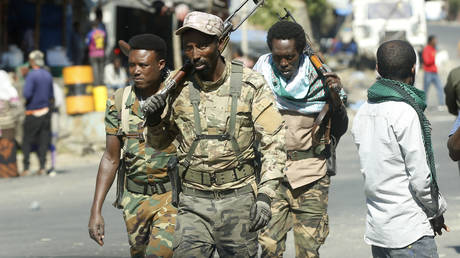
Ethiopia is sliding back toward large-scale conflict. World Health Organization Director-General Tedros Adhanom Ghebreyesus issued a stark warning this week, declaring that the country’s northern Tigray region is “teetering back into open fighting” — and that several other regions are simultaneously engulfed in violence. For millions of Ethiopians, especially the young, this is not a distant political crisis. It is an existential threat.
Tedros posted his alarm on X, writing bluntly: “#Ethiopia needs peace, not more war.” He called on the federal government and all regional leaders to “choose dialogue over guns, and to pursue real political solutions.” His message was urgent, personal, and politically loaded — coming from a Tigrayan who has watched his homeland suffer through years of devastating war.
Between 2020 and 2022, Tigray became the site of one of the deadliest conflicts of the 21st century. Federal forces and the Tigray People’s Liberation Front (TPLF) fought a brutal war that, according to former African Union mediator Olusegun Obasanjo, killed approximately 600,000 people and displaced millions more. The human cost was catastrophic, and the trauma runs deep.
A peace deal — the Pretoria Agreement — was signed in November 2022, brokered by the African Union. It called for the disarmament of Tigrayan forces, the restoration of federal authority, and the withdrawal of foreign and non-federal troops. But implementation has repeatedly stalled over disputes around disarmament, contested territories, and the TPLF’s political standing. The agreement held the line — until now.
On August 1, fighting broke out between the Ethiopian National Defense Force and Tigrayan forces near Shererina in western Tigray. Tigray’s regional authorities accused federal troops of launching both ground and air offensives. In the days that followed, hundreds of civilians and wounded fighters crossed into Sudan, seeking safety across the border.
The Ethiopian government wasted no time pointing fingers. Irrigation and Lowlands Minister Abraham Belay accused the TPLF of “opening the war” near Shererina, claiming the group was “driving Tigray’s young people and children into a purposeless war they do not understand, causing them to fall like leaves.” He warned of severe consequences if the fighting does not stop.
Tigrayan authorities, meanwhile, framed the situation as a federal aggression. This cycle of accusation is familiar — and dangerous. When both sides publicly justify escalation, the space for negotiation narrows fast. Young Ethiopians, many of whom have grown up knowing nothing but conflict, are once again being pulled into a war not of their making.
What makes this moment especially alarming is that Tigray is not the only flashpoint. Tedros painted a picture of a country fracturing across multiple fault lines simultaneously. The northern Amhara region has endured three years of armed conflict, with a toll Tedros described as “countless lives.” The vast Oromia region, which surrounds the capital Addis Ababa, “continues to bleed.”
Further north, the Afar region has been drawn into the unrest, while Benishangul-Gumuz remains gripped by persistent violence. Each of these crises has its own roots — ethnic tensions, resource competition, political marginalization — but together they form a deeply destabilizing pattern that threatens the country’s cohesion.
For young Africans watching from across the continent, this is a reminder of how quickly post-conflict recovery can unravel when political grievances go unresolved and peace agreements remain on paper rather than on the ground.
Tedros Adhanom Ghebreyesus is not simply a global health official commenting from a distance. Born in Tigray, he served as Ethiopia’s Minister of Health and later as Foreign Minister before rising to lead the WHO. In December 2022, he revealed that his uncle had been murdered alongside more than 50 other villagers amid the violence that continued even after the peace deal was signed.
His public intervention carries both institutional weight and raw personal stakes. When the world’s top health official — himself a son of Tigray — warns that his region is on the brink of war again, it demands attention. His words are not a diplomatic formality. They are a cry for action.
The Pretoria Agreement was a hard-won diplomatic achievement, and its collapse would be a serious blow not only to Ethiopia but to the African Union’s credibility as a peace broker on the continent. The AU’s role in mediating African conflicts is central to the vision of a self-determined Africa — one that solves its own crises without waiting for external powers to intervene.
For Ethiopia’s youth, who make up the vast majority of the country’s population, renewed war means interrupted education, shattered economies, and a generation of trauma. The stakes could not be higher. Whether Ethiopia’s leaders choose dialogue or guns in the coming weeks will shape the lives of millions of young people for decades to come.
War only brings death, destruction, displacement, and deprivation — as Tedros put it plainly. Ethiopians, and Africans broadly, deserve far better than that.



