Physical Address
304 North Cardinal St.
Dorchester Center, MA 02124
Physical Address
304 North Cardinal St.
Dorchester Center, MA 02124

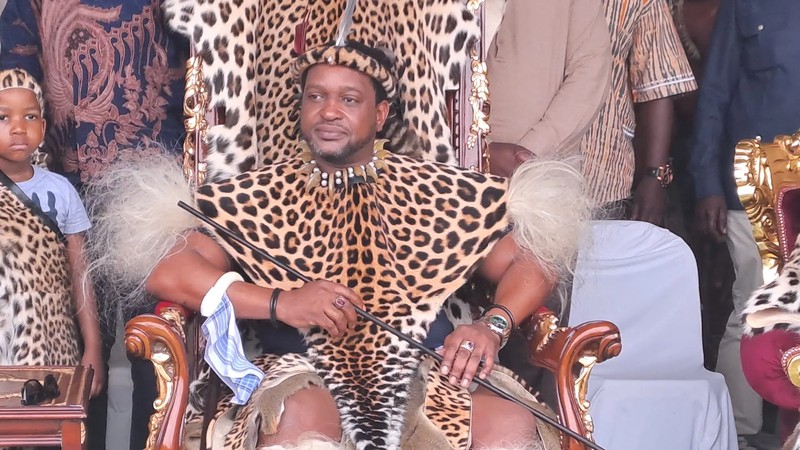
Something significant just shifted inside the AmaZulu royal house. King Misuzulu kaZwelithini, who leads South Africa’s largest ethnic group, has officially reinstated Inkosi Malusi Zondi and Prince Africa of Onkweni as royal Chancellor and Vice Chancellor respectively — reversing a controversial dismissal that had thrown the kingdom into a public dispute and raised serious questions about who actually holds power around the throne.
The reinstatement, announced on Friday, effectively erases the decisions made by former Traditional Prime Minister Reverend Thulasizwe Buthelezi and former royal spokesperson Prince Thulani Zulu — two figures who, just weeks earlier, had used their platforms to announce sweeping changes to the King’s inner circle. King’s spokesperson Mpikayise Buthelezi confirmed the reversal, quoting the King’s direct instruction: “As directed by His Majesty, the King of the Zulu nation, I wish to announce that Inkosi Malusi Zondi and His Royal Highness Prince Africa Zulu of Onkweni royal residence have returned to their positions as both Chancellor and Vice Chancellor respectively.” Despite this announcement, neither official will immediately resume duties — their return still awaits the King’s final formal approval.
To understand why this matters, you need to rewind to May, when Reverend Buthelezi blindsided the Zulu nation with a statement announcing the closure of the King’s Private Office and the dismissal of three key figures: Arnold Ndamase, the King’s Private Secretary, alongside Inkosi Zondi and Prince Africa. The move sent shockwaves through royal circles, not least because both Zondi and Prince Africa immediately and publicly pushed back, pointing out that the King himself had appointed them — and that no one had informed them of any removal. Their defiance was pointed and deliberate, signalling that something was deeply off about how these decisions had been made.
The central question that hung over the whole episode was whether King Misuzulu had actually sanctioned any of it. Within two weeks, the answer became clear. The King announced that Ndamase had never been removed in the first place, then moved decisively to strip Buthelezi and Prince Thulani of their own positions. That sequence of events told a story: a competing faction inside the royal household had apparently engineered the dismissals without the King’s blessing, using Buthelezi’s authority as a vehicle to sideline figures seen as close confidants of the monarch.
Prince Thulani had further complicated the picture by issuing a follow-up statement doubling down on the closure of the Private Office and introducing Prince Khishwangubani Zulu of the Gazini royal residence as the King’s new diary controller — a role that had effectively been held by Ndamase. Yet on the ground, the reality told a different story, since Ndamase continued to be seen at the King’s side and led the royal salutation in line with established protocol, suggesting the announced changes had never truly taken hold. The gap between what was being declared publicly and what was actually happening inside the palace only deepened the confusion and the sense that a factional battle was playing out in real time.
What this episode reveals is a kingdom navigating real internal tensions around access and influence at the highest level. For young South Africans watching this unfold, it is a sharp reminder that traditional institutions — just like governments and corporations — are not immune to power plays and political maneuvering. The King’s decision to reinstate his allies and remove those who overstepped sends a clear message about where authority ultimately rests in the AmaZulu royal house, even as the formal paperwork catches up with the political reality.



