Physical Address
304 North Cardinal St.
Dorchester Center, MA 02124
Physical Address
304 North Cardinal St.
Dorchester Center, MA 02124

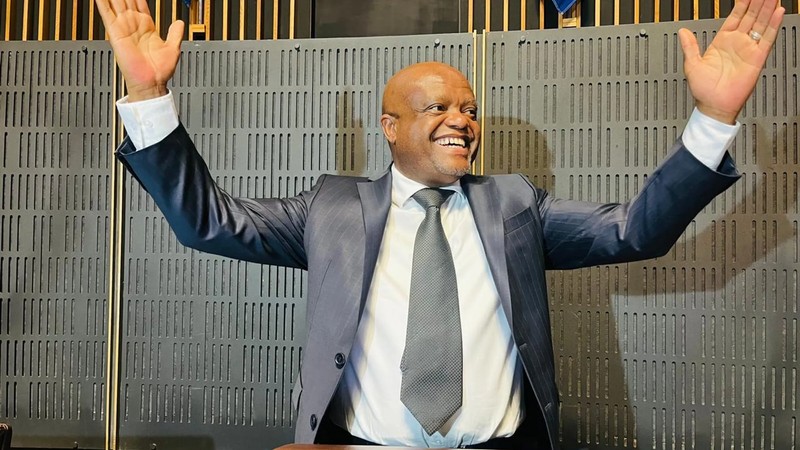
Johannesburg is drowning in debt, facing potential power cuts, and staring down a qualified audit — and its politicians are busy pointing fingers at each other. Mayor Dada Morero and former mayor Herman Mashaba clashed publicly this week over who is responsible for the city’s deepening financial and governance crisis.
Morero appeared before Parliament’s Standing Committee on Public Accounts (SCOPA) on Tuesday to answer for Johannesburg’s dismal financial state. ActionSA’s Alan Beesley described the city’s financial statements — which recorded over 500 findings by the Auditor-General in the 2024/25 audit — as “pathetic.”
Rather than taking full accountability, Morero turned the spotlight on Mashaba, who served as a Democratic Alliance (DA) mayor between 2016 and 2019. He argued that Mashaba’s aggressive anti-corruption stance had created a culture of fear inside the city’s administration.
“The drop that you are seeing today in terms of performance on revenue collection was as a result of the employees throughout the value chain in the revenue department deciding not to do anything anymore because anything you touch, you are then accused of corruption by Mashaba,” Morero told the committee.
Morero also took a personal jab at Mashaba, telling Parliament: “Let me also remind the honourable member that, Mashaba only has matric” — a remark that drew sharp criticism.
Mashaba swiftly rejected Morero’s version of events, calling the remarks “one of the biggest insults to our Members of Parliament.” He pointed to Johannesburg’s audited financial records from his tenure and challenged anyone to compare them directly with the city’s current state.
Mashaba claimed the city recorded its highest customer satisfaction levels since 1994 during his administration. For ActionSA, the crisis is simple: it is a leadership failure, not a funding problem.
“Johannesburg does not have a financing problem,” Mashaba has stated. “It faces a negligence and leadership problem of individuals who don’t have the competence to uphold basic governance and fiscal discipline to manage the city effectively.”
The numbers tell a sobering story. Johannesburg received a qualified audit opinion on its core municipality’s performance information and annual financial statements for 2024/25, signalling persistent failures in internal controls and financial management.
Eskom has warned the city that it owes more than R5 billion in arrears and faces potential power disconnections if it does not clear its debt by 8 July 2026.
Finance Minister Enoch Godongwana went further, stating in an April 2026 letter that the city is “effectively” bankrupt. Morero has disputed this, claiming Godongwana relied on incorrect financial reports.
Business Leadership South Africa CEO Busisiwe Mavuso offered a more balanced take, arguing that Johannesburg’s financial woes have been building for years and cannot be blamed on any single administration — while also noting that the situation has worsened under Morero’s watch.
Morero himself traced some of the city’s structural problems back to the Egoli 2002 restructuring programme, which created 14 municipal-owned entities — including City Power, Johannesburg Water, and the Johannesburg Roads Agency. While the model saved the city from near-insolvency two decades ago, several entities are now struggling badly.
Johannesburg Water is losing 44.7% of its water as non-revenue losses, while City Power records total electricity losses of around 30% — figures that reflect just how deep the rot runs.
For the city’s youth — who make up a significant share of Johannesburg’s population — the stakes could not be higher. A city on the verge of bankruptcy means deteriorating services, unreliable electricity, and fewer opportunities for economic growth.
Whether the blame lies with Mashaba, Morero, or decades of mismanagement, one thing is clear: Johannesburg’s crisis demands urgent solutions, not political point-scoring.