Physical Address
304 North Cardinal St.
Dorchester Center, MA 02124
Physical Address
304 North Cardinal St.
Dorchester Center, MA 02124

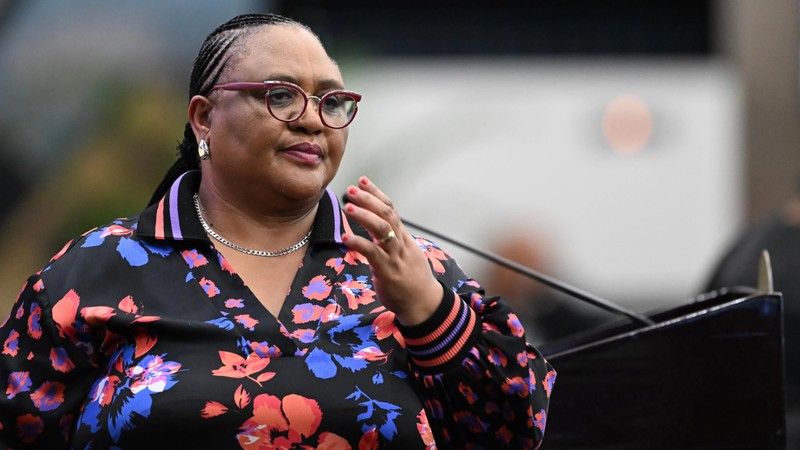
South Africa’s National Assembly Rules Committee clashed on Wednesday over whether members of the presidential impeachment committee must meet a ‘fit and proper’ standard — a debate that cuts to the heart of who gets to hold President Cyril Ramaphosa accountable over the Phala Phala foreign currency theft scandal.
The impeachment process follows a landmark Constitutional Court ruling last month, which found that Parliament acted unconstitutionally in 2022. Back then, the ANC used its parliamentary majority to block a Section 89 independent panel report that found Ramaphosa had a prima facie case to answer regarding the theft of more than $580,000 at his Phala Phala game farm in Bela-Bela, Limpopo.
The apex court ordered the panel’s report to be referred to an impeachment committee for further investigation into whether Ramaphosa committed serious violations of the Constitution and his oath of office.
The proposal, originating from the Democratic Alliance (DA), would require MPs serving on the impeachment committee to meet higher ethical and integrity standards. The debate has been further charged by the possible participation of John Hlophe — an impeached former judge and now an MK Party MP — on the committee.
Parliamentary legal advisor Michael Prince, whose 14-page opinion followed consultations with two senior counsels, confirmed that Parliament is constitutionally empowered to introduce such a requirement. However, he warned that doing so would limit MPs’ political rights protected under Section 19 of the Constitution, and that any such requirement must be rational.
DA chief parliamentary leader George Michalakis argued that the impeachment process is the most serious accountability mechanism available against a sitting president, and therefore demands the highest ethical standards from those involved. He pointed to a court order that found Hlophe unsuitable to serve on the Judicial Service Commission as a relevant precedent.
DA MP Glynnis Breytenbach backed the proposal, saying the committee’s critical constitutional role requires members who meet a stricter standard of integrity to preserve public confidence in its outcomes. ActionSA MP Athol Trollip also supported the clause, arguing it reflects what South African citizens expect from their elected representatives.
The EFF and MK Party firmly opposed the proposal. MK Party chief whip Mzwanele Manyi argued the clause should be removed entirely until there is full agreement on its meaning and application, warning it could become arbitrary and open to political manipulation without a clearly defined process.
EFF chief whip Nontando Nolutshungu argued the proposal conflicts with Section 47 of the Constitution, which already sets out who may serve in Parliament. She called on the DA to pursue a constitutional amendment if it wants stricter membership requirements, and urged Parliament to avoid legal battles born from ambiguity.
National Assembly Speaker Thoko Didiza acknowledged broad agreement on the principle but noted a lack of clarity on what ‘fit and proper’ actually means and who would make that determination. She referred the matter back to the Rules Subcommittee and parliamentary legal services to define the phrase before it returns for final approval.
Didiza also confirmed that President Ramaphosa has the right to be heard and represented by a lawyer during the process. The impeachment committee’s work can proceed while Parliament finalises the outstanding rule changes.
Other proposed procedural rules include appointing a senior counsel as evidence leader, supported by a legal team, with Ramaphosa expected to appear in person and his legal team permitted to cross-examine witnesses. Impeachment Committee chairperson Makashule Gana confirmed the committee will begin its work without delay.