Physical Address
304 North Cardinal St.
Dorchester Center, MA 02124
Physical Address
304 North Cardinal St.
Dorchester Center, MA 02124

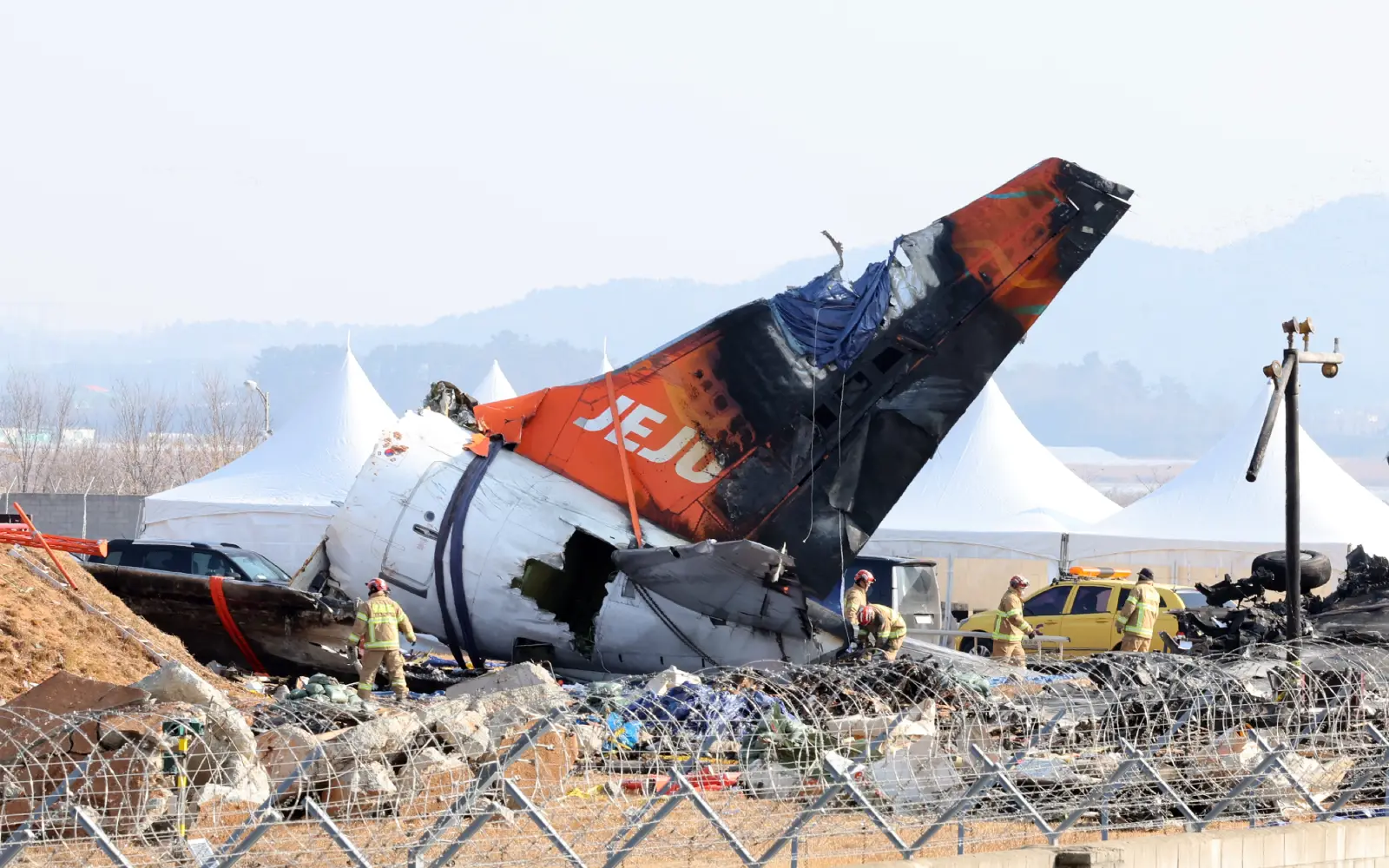
Almost a year after the deadly Jeju Air crash that killed 179 people, South Korea’s parliament has bowed to public pressure and voted to launch an independent investigation—highlighting once again the country’s recurring pattern of disaster, denial, and delayed accountability.
On 29 December 2024, a Jeju Air Boeing 737-800 arriving from Bangkok crashed at Muan International Airport after reporting a bird strike during landing. Though the aircraft managed a belly landing, it struck a concrete embankment at the end of the runway and burst into flames. Only two of the 181 people onboard survived.
Now, South Korea’s National Assembly has voted 245 to 1 to establish an 18-member special committee with sweeping powers to investigate what truly happened—amid mounting accusations of deliberate delays, mismanagement, and potential cover-up by authorities.
The newly formed committee will investigate everything from bird-strike response procedures to the decision to allow a concrete structure at the runway’s edge, to whether government agencies manipulated or suppressed evidence. It will also probe the role of Jeju Air and the Korea Airports Corporation.
Crucially, this inquiry is seen as a direct challenge to the Aviation and Railway Accident Investigation Board (Araib), the agency conducting the official probe under the authority of the Ministry of Transport—a conflict of interest that families of the victims have loudly denounced.
“The same department that built the airport infrastructure is the one investigating the crash,” said one bereaved father at a protest in Seoul. “How can we trust any findings that clear themselves?”
The Jeju Air crash inquiry has drawn comparisons to other Korean tragedies—the Sewol ferry disaster in 2014 and the Itaewon crowd crush in 2022—both marred by bureaucratic deflection, lack of transparency, and institutional indifference toward victims.
Already, Araib has cancelled scheduled public hearings, barred families from photographing evidence, and allegedly suggested that pilot error was to blame—without disclosing full data. Families called the agency’s actions a “self-investigation” and accused it of trying to “downplay and cover up the disaster.”
Police are currently investigating multiple officials from the Transport Ministry, and the parliamentary committee now holds power to subpoena key witnesses and demand documentation.
An interim report is required under international law by 29 December 2025, one year after the crash, if the final report is not ready.
As the committee begins its 40-day inquiry—with a likely extension—it will have to navigate not only technical and procedural questions, but also entrenched resistance within state institutions that have repeatedly failed to uphold public trust after mass-casualty events.
This isn’t just a question of what went wrong on 29 December 2024—it’s a question of whether South Korea can ever truly hold itself accountable for its disasters.