Physical Address
304 North Cardinal St.
Dorchester Center, MA 02124
Physical Address
304 North Cardinal St.
Dorchester Center, MA 02124

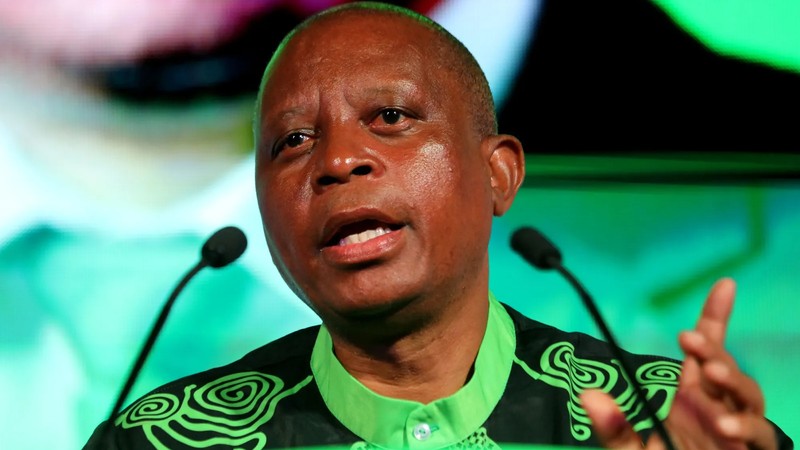
South Africa’s political landscape fractured along sharp lines this week as President Cyril Ramaphosa delivered a national address on illegal immigration — triggering a wave of contrasting reactions from opposition parties that expose deep divisions over migration, border security, unemployment, and rising tensions involving foreign nationals.
ActionSA dismissed the President’s intervention as wholly inadequate. Party president Herman Mashaba accused the government of recycling decades-old policies without delivering real change.
“Rather than presenting a clear shift in approach — which we believe must anchor on mass deportations and the urgent capacitation of enforcement capacity — the President merely repackaged the same failed and tired talking points,” Mashaba said in a Sunday statement.
Mashaba also took aim at Ramaphosa for refusing to face journalists after the address, calling it an evasion of public accountability. “South Africans deserve answers to questions about what, if anything, is genuinely different,” he said.
The Democratic Alliance (DA) struck a different tone, welcoming the President’s remarks and endorsing his argument that foreign nationals are not the root cause of South Africa’s economic struggles.
DA leader Geordin Hill-Lewis called the message “timely” amid escalating social tensions. “People must be in South Africa legally, and the law must be enforced by the state — not by mobs, vigilantes, or politicians who stoke hatred for votes,” he said.
The DA also pushed for accelerated economic reforms, arguing that unemployment is the deeper driver of frustration. “The answer to this crisis is jobs, growth and a capable state,” Hill-Lewis added.
Jacinta Ngobese-Zuma, leader of the March and March Movement, offered a more cautious welcome. She acknowledged that Ramaphosa had finally addressed the issue after months of public pressure, and credited him with correctly identifying key challenges — including crime, employment pressures, and strain on public resources.
However, her acknowledgment came with an implicit warning: the public response now depends on whether words translate into concrete action.
The Economic Freedom Fighters (EFF) were among the harshest critics. Spokesperson Matiase questioned why the President had waited so long to act. “What South Africans should ask is, why only now?” he said.
Matiase argued that the government had failed to build any sustainable migration strategy beyond deportations and detention. “Government had no intention or a system or a strategy of how to deal with this crisis,” he said.
The EFF also accused members of the Government of National Unity of fuelling anti-foreigner sentiment, calling on Ramaphosa to hold those leaders accountable for stoking xenophobia.
The sharply contrasting reactions reflect a broader political contest now gripping South Africa. Parties are split between three competing visions: stricter enforcement and mass deportations, structural economic reform, and the protection of social cohesion against rising xenophobia.
With unemployment high and tensions mounting, the immigration debate is fast becoming one of the defining political battlegrounds ahead of future elections — and young South Africans will be at the centre of it.