Physical Address
304 North Cardinal St.
Dorchester Center, MA 02124
Physical Address
304 North Cardinal St.
Dorchester Center, MA 02124

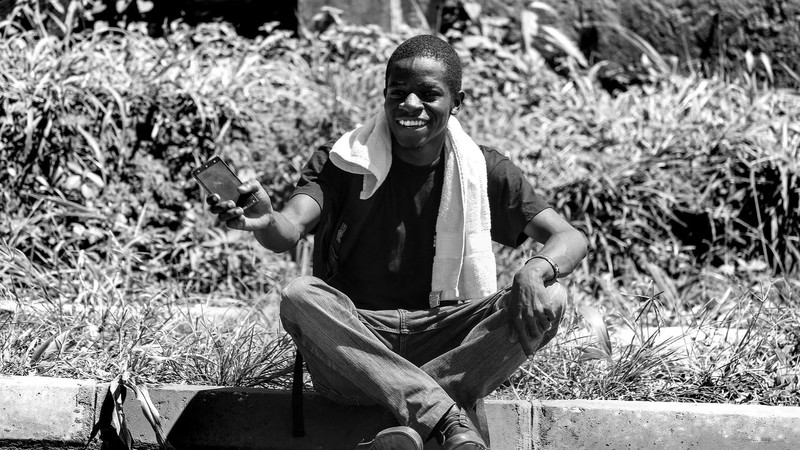
South Africa’s unemployment crisis deepened dramatically in the first quarter of 2026, with youth unemployment surging to 45.8% — meaning nearly one in two young South Africans seeking work cannot find a job. The latest Quarterly Labour Force Survey from Statistics South Africa reveals the economy shed 345,000 jobs between January and March, pushing the overall unemployment rate to a staggering 32.7%.
The total number of employed South Africans fell to 16.8 million, while the number of unemployed rose to 8.1 million. For young people aged 15 to 34, the situation is even more dire: the number of unemployed youth increased by 181,000 to reach 4.7 million, while employed youth fell by 258,000 to just 5.6 million.
At the same time, the working-age population grew by 121,000 people, piling further pressure onto an already overwhelmed labour market.
Discouraged job-seekers — those who want work but have stopped looking — rose by 178,000 to reach 3.9 million. The number of people outside the active labour force climbed to 17.3 million, a sign that many South Africans are simply giving up.
Job losses were concentrated in specific sectors of the economy. The hardest-hit industries included:
Some sectors did show modest gains. Manufacturing added 38,000 jobs, mining gained 32,000, and agriculture increased employment by 10,000. However, these gains fell far short of offsetting the overall losses.
Geographically, employment declined in every province except KwaZulu-Natal, which added 6,000 jobs. The steepest declines were recorded in North West, Gauteng and Mpumalanga.
Nkosinathi Mahlangu, a youth employment specialist at Momentum Group Foundation, called the situation a national emergency. “Youth unemployment is spiraling out of control and cannot be treated as a secondary issue,” he said. “The country needs a co-ordinated response from government, business, labour, and civil society to create sustainable economic opportunities before an entire generation is lost.”
Statistician-General Risenga Maluleke pointed to a structural driver of the crisis: large numbers of school leavers who matriculated in the previous quarter but were unable to continue into tertiary education, flooding the labour market with young people who lack qualifications.
Analysts warn that the consequences extend beyond economics. “Youth unemployment is a ticking time bomb and a threat to social stability,” one expert noted. “The middle class is shrinking, and more job losses are expected in the medium to long term.”
The crisis does not affect all young people equally. Young black women remain among the most economically vulnerable, facing compounding barriers of gender, race and class in a labour market that continues to exclude them at disproportionate rates.
Many young people who do find employment are pushed into short-term, informal jobs with no security or benefits — a precarious existence that offers little foundation for building a future.
Experts agree that reversing the trend will require bold structural reforms. South Africa must attract international investment, accelerate economic growth and develop targeted strategies to bring young people into the formal economy. Nearly 500,000 people joined the working-age population over the past year, yet the economy lost 33,000 jobs over the same period — a gap that is widening, not closing.
South Africa now holds one of the highest youth unemployment rates in the world, and one of the highest rates of unemployed graduates globally. Behind every statistic is a young person whose dreams have been deferred — and a democracy under growing strain.